In short
- Hong Kong is a Special Administrative Region of China on the south coast at the mouth of the Pearl River, with its own currency, laws, immigration and customs.
- Land area 1,114.57 km²: Hong Kong Island, the Kowloon Peninsula, the New Territories and Lantau, plus 261 other islands of 500 m² or more. About 40% of the land is country park or protected.
- Population 7.52 million (mid-2026, provisional); about 92% of Chinese ethnicity; Cantonese is the everyday language, and Chinese and English are both official.
- Divided into 18 districts: 4 on Hong Kong Island, 5 in Kowloon and 9 in the New Territories (including the Islands District).
- Practical basics: Hong Kong dollar (HK$, pegged to the US dollar), UTC+8, traffic on the left, UK-style three-pin plugs, emergency number 999.
Hong Kong facts at a glance
- Official name
- Hong Kong Special Administrative Region of the People's Republic of China (HKSAR), 香港特別行政區
- Land area
- 1,114.57 km² (GovHK)
- Islands
- 261 islands of 500 m² or more, besides Hong Kong Island and Lantau
- Highest point
- Tai Mo Shan, 957 m
- Population
- 7,518,300 at mid-2026 (Census and Statistics Department, provisional)
- Languages
- Chinese and English (official); Cantonese spoken at home by 88.2% (2021 census)
- Currency
- Hong Kong dollar (HKD, HK$), linked to the US dollar at 7.75–7.85
- Time zone
- UTC+8 all year (no daylight saving)
- Electricity
- 220 V, 50 Hz; three-pin British-style plugs (type G)
- Driving
- On the left
- Dialling code
- +852; emergency 999
- Visitors
- 49.9 million arrivals in 2025 (HKTB)
Geography: island, peninsula, mainland and islands
Hong Kong sits on the south-eastern edge of China, on the east side of the Pearl River Delta; Shenzhen lies across the border to the north and Macau 60 km to the west across the estuary. Most of the territory is steep, green and surprisingly wild: granite and volcanic hills rise straight from the sea, and the urban areas are squeezed onto narrow coastal strips and reclaimed land.
- Hong Kong Island (香港島) – about 80 km², home to Central, the government and the Peak, with beaches and country parks on its southern side.
- Kowloon (九龍) – the peninsula north of Victoria Harbour, up to the ridge of Lion Rock and Kowloon Peak; the most densely built part of the city (Tsim Sha Tsui, Mong Kok, Sham Shui Po, Kowloon City).
- The New Territories (新界) – the largest area, from Kowloon to the Shenzhen River: new towns such as Sha Tin and Tuen Mun, walled villages, wetlands, the Sai Kung peninsula and Hong Kong's highest mountain, Tai Mo Shan (957 m).
- The outlying islands – Lantau, the largest island (home to the airport, Disneyland and the Big Buddha), plus Lamma, Cheung Chau, Peng Chau and 261 smaller islands of 500 m² or more.
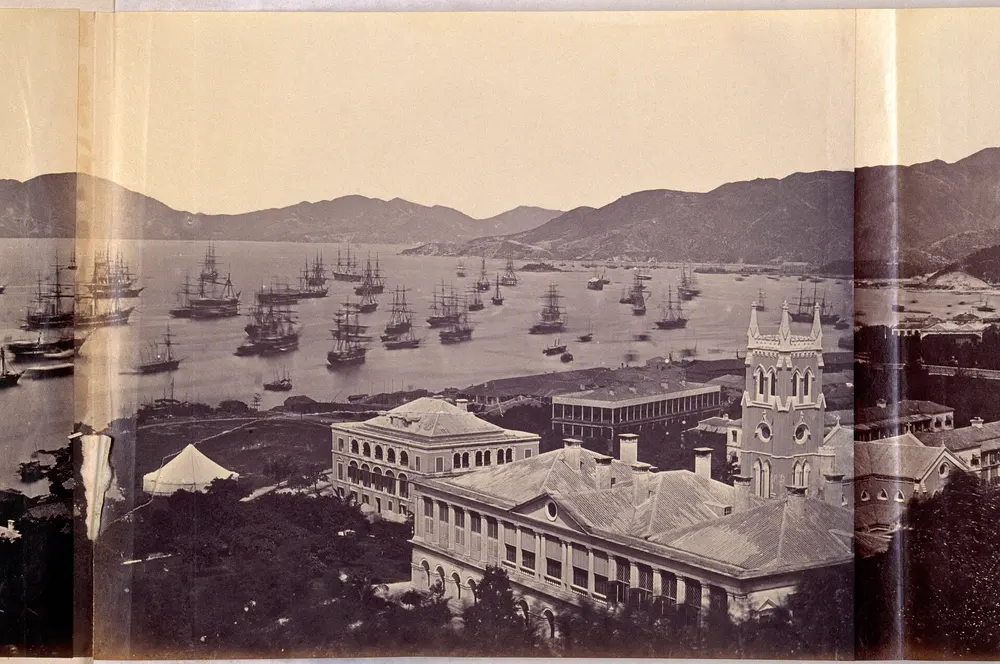
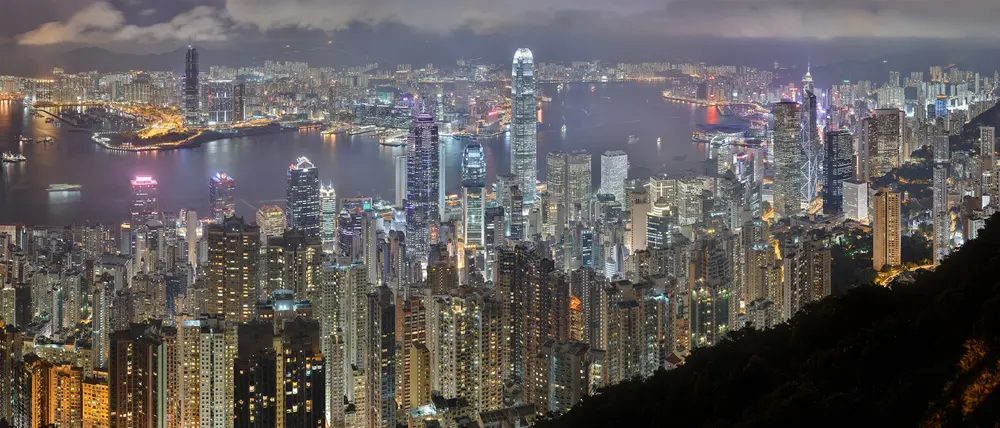
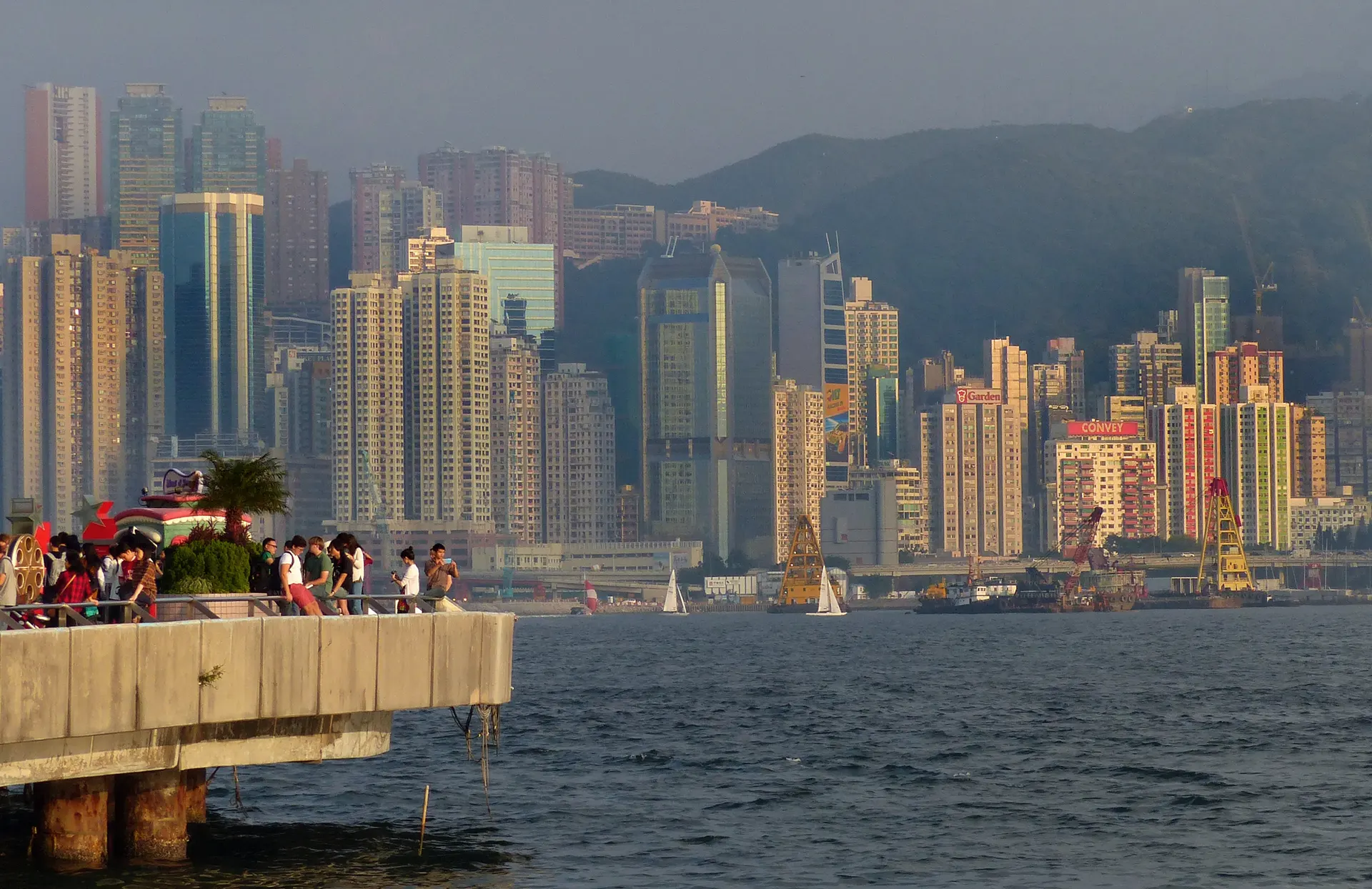
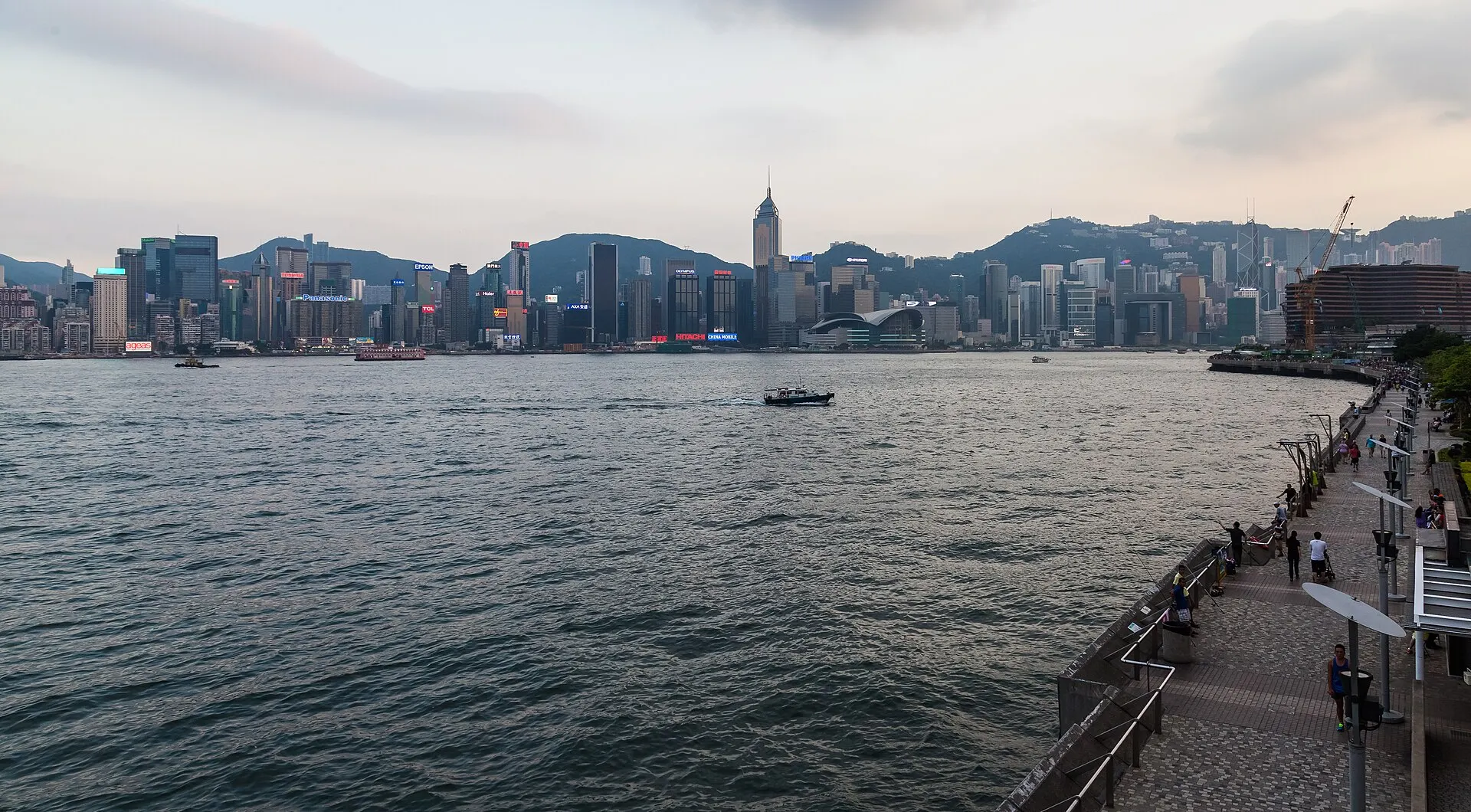
Victoria Harbour (維多利亞港), one of the world's great deep-water harbours, separates Hong Kong Island from Kowloon. Around 40% of the land is protected as country parks and special areas – which is why you can be on a mountain trail or a quiet beach within an hour of Central. See hiking, beaches and destinations.
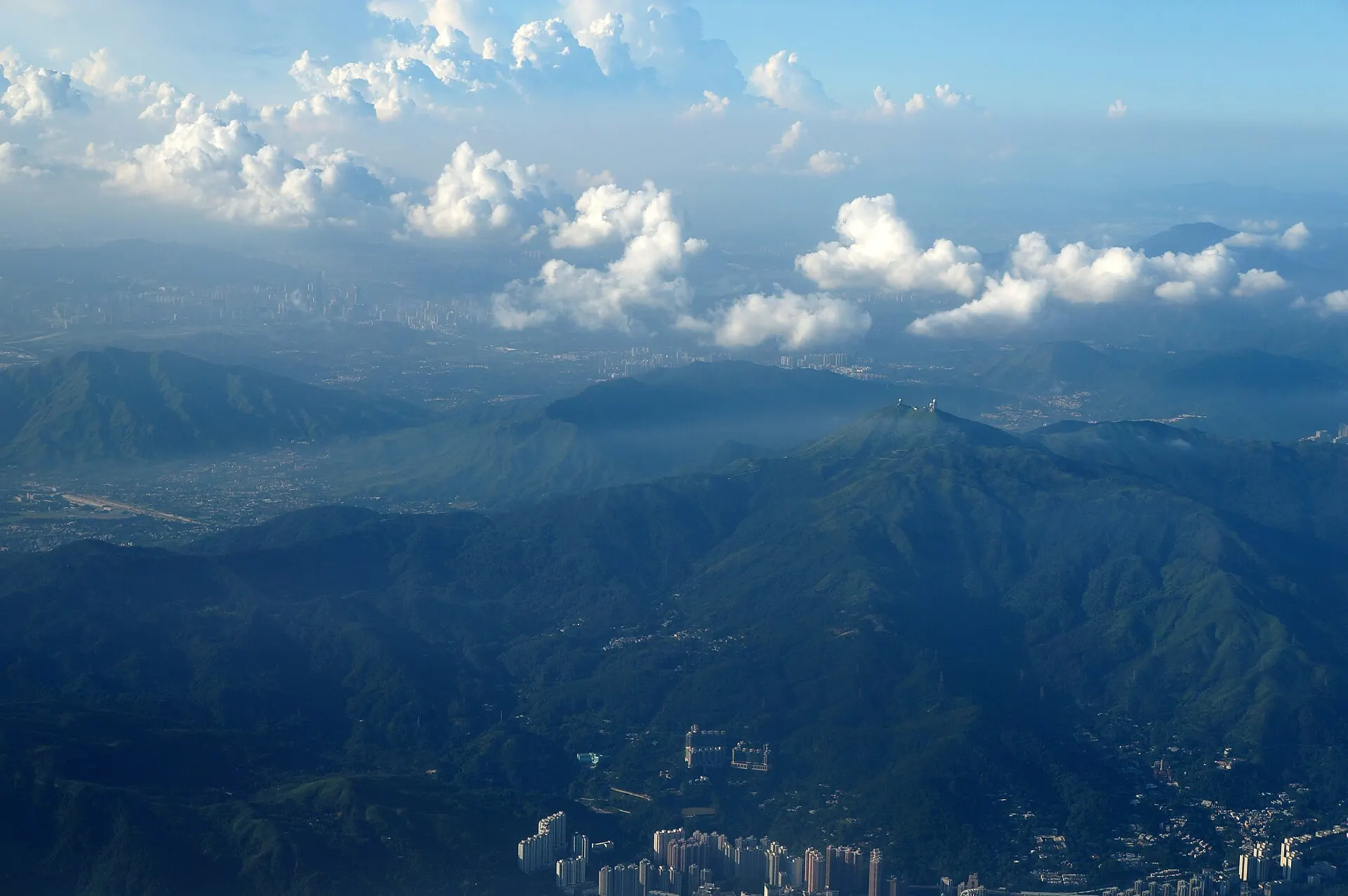
Most of Hong Kong is mountainous; about 40% of the land is country park.
The 18 districts of Hong Kong
For local government, Hong Kong is divided into 18 districts, each with a district council. You will see the names on maps, bus destinations and police notices; visitors mostly use the neighbourhood names that our destination hubs follow.
| Region | District | Includes (visitor areas) |
|---|---|---|
| Hong Kong Island | Central and Western 中西區 | Central, Sheung Wan, Mid-Levels, the Peak, Kennedy Town |
| Hong Kong Island | Wan Chai 灣仔區 | Wan Chai, Causeway Bay (west), Happy Valley |
| Hong Kong Island | Eastern 東區 | North Point, Quarry Bay, Shau Kei Wan, Chai Wan |
| Hong Kong Island | Southern 南區 | Aberdeen, Repulse Bay, Stanley, Ocean Park |
| Kowloon | Yau Tsim Mong 油尖旺區 | Tsim Sha Tsui, Jordan, Yau Ma Tei, Mong Kok, West Kowloon |
| Kowloon | Sham Shui Po 深水埗區 | Sham Shui Po, Shek Kip Mei, Mei Foo |
| Kowloon | Kowloon City 九龍城區 | Kowloon City, Hung Hom, To Kwa Wan, Kai Tak |
| Kowloon | Wong Tai Sin 黃大仙區 | Wong Tai Sin Temple, Diamond Hill |
| Kowloon | Kwun Tong 觀塘區 | Kwun Tong, Lei Yue Mun |
| New Territories | Kwai Tsing 葵青區 | Kwai Chung, Tsing Yi |
| New Territories | Tsuen Wan 荃灣區 | Tsuen Wan, Ma Wan |
| New Territories | Tuen Mun 屯門區 | Tuen Mun |
| New Territories | Yuen Long 元朗區 | Yuen Long, Tin Shui Wai, Kam Tin, Wetland Park |
| New Territories | North 北區 | Sheung Shui, Fanling, Sha Tau Kok |
| New Territories | Tai Po 大埔區 | Tai Po, Lam Tsuen |
| New Territories | Sha Tin 沙田區 | Sha Tin, Tai Wai, Ma On Shan |
| New Territories | Sai Kung 西貢區 | Sai Kung Town, Tseung Kwan O, Geopark |
| New Territories | Islands 離島區 | Lantau, Lamma, Cheung Chau, Peng Chau |
People and languages
Hong Kong's 7.52 million residents (mid-2026, provisional) live at an average density of about 6,870 people per km² – one of the highest in the world, though most of the land is empty hillside. 91.6% are of Chinese ethnicity (2021 census), most with family roots in Guangdong; there are long-established Hakka, Chiu Chow (Teochew), Shanghainese and Fujianese communities. The largest non-Chinese groups are Filipinos and Indonesians, many of them domestic workers, followed by Indians, Nepalis, Pakistanis, Thais and Westerners. On Sundays you will see Filipino and Indonesian helpers gathering on their day off in Central and Causeway Bay.
Cantonese (廣東話) is the everyday language of 88% of the population and of most signs, menus and television. English remains an official language, used in government, law, business and on all public transport and road signs; you can get by with English in hotels, the MTR, major shops and restaurants in tourist districts, less so in small eateries and markets. Putonghua (Mandarin) is widely understood, especially in shops. Hong Kong writes traditional Chinese characters, unlike the simplified characters of the mainland. A few words of Cantonese go a long way – see our Cantonese phrases.
Government
Since 1 July 1997, Hong Kong has been a Special Administrative Region of the People's Republic of China under the Basic Law, which provides for 'one country, two systems': the region keeps its own capitalist system, common-law legal system, currency, customs and immigration for 50 years, while Beijing is responsible for defence and foreign affairs. The Chief Executive – John Lee since July 2022 – heads the government with an Executive Council; the Legislative Council has 90 seats; the Court of Final Appeal is the highest court. Since 2020, national security legislation and changes to the electoral system have reshaped politics; our history page sets out the timeline. For visitors, the practical points are Hong Kong's own entry rules, laws and police (emergency number 999).
Economy and money
Hong Kong's economy is built on free trade, low taxation and services: finance, trade and logistics, professional services and tourism. It describes itself as the world's fifth-largest trading economy, with the Chinese mainland as its biggest partner. GDP was HK$3,329.8 billion in 2025, or about HK$444,000 per person, with real growth of 3.6% (GovHK).
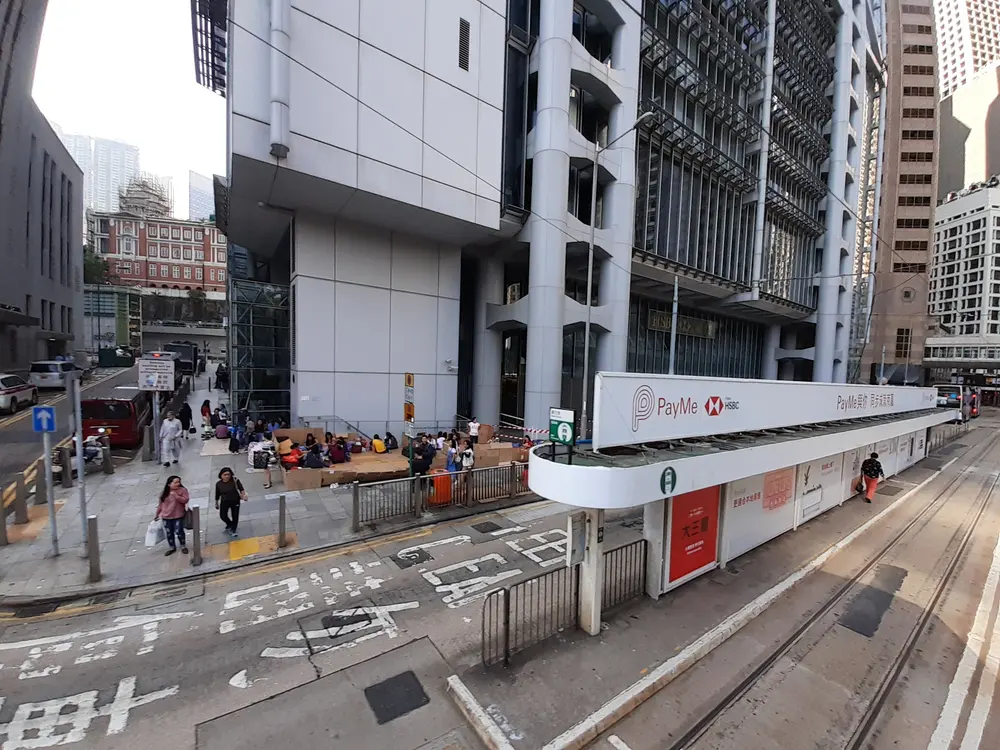
The Hong Kong dollar has been linked to the US dollar since 1983 and kept within HK$7.75–7.85 per US$ (a band set in 2005), so its value is stable for visitors. Banknotes are issued by three commercial banks (HSBC, Standard Chartered and Bank of China) plus the government's HK$10 note, so the same value comes in several designs. The Octopus card pays for transport and small purchases, and contactless cards, Apple Pay and mainland and Asian wallets are widely accepted. There is no sales tax or VAT. Details in our money guide and Octopus card guide.
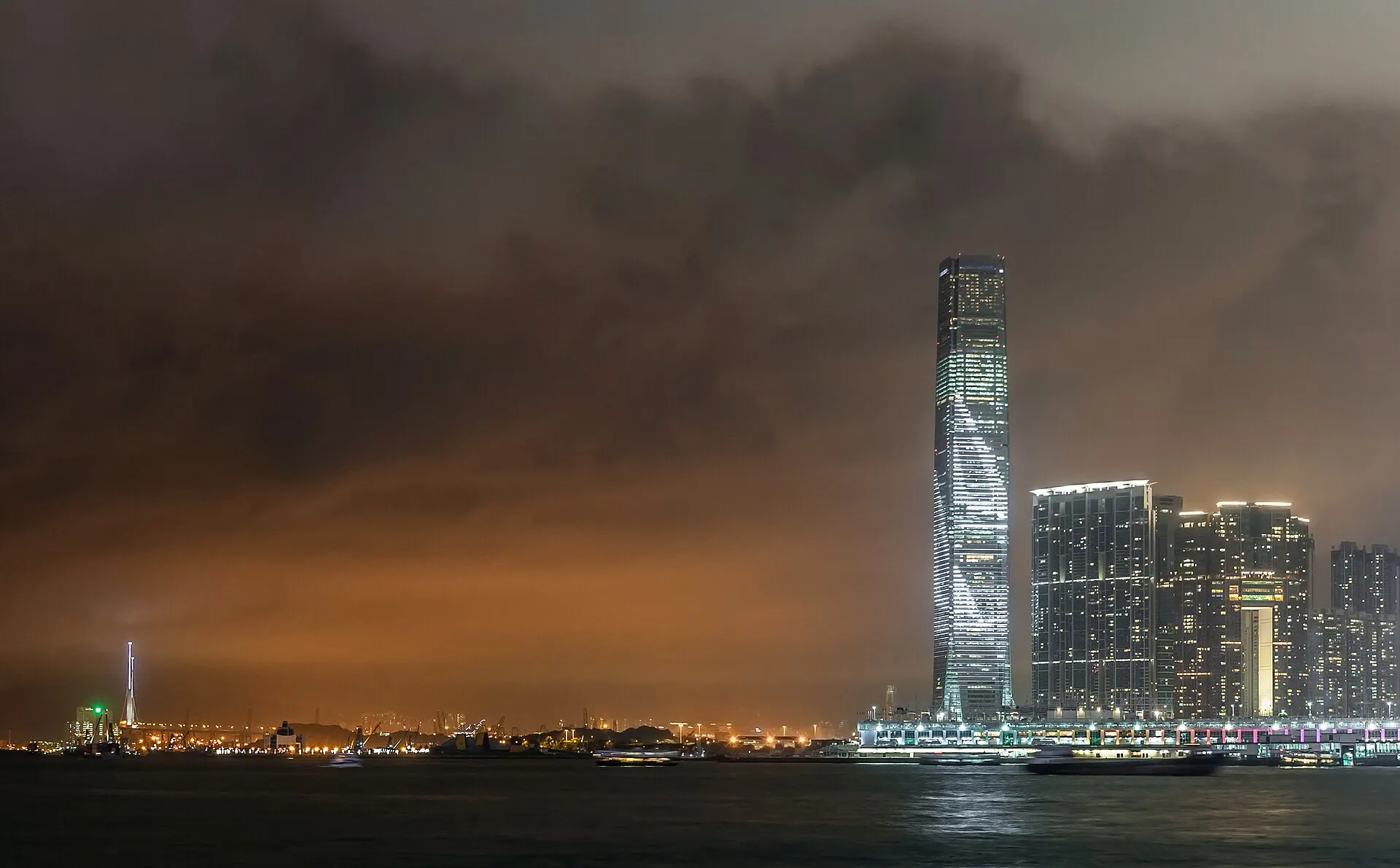
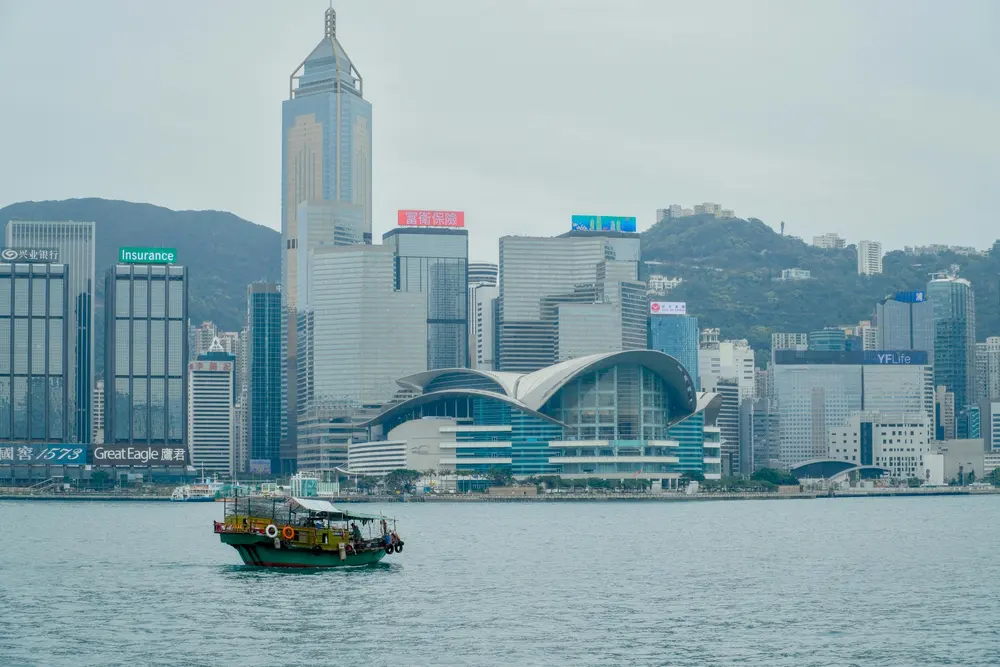
The International Commerce Centre in West Kowloon, home to offices, a hotel and the sky100 observation deck.
Climate in brief
Hong Kong is subtropical. Autumn (October–November) and early winter are the clearest and most pleasant; January–February can be cool and cloudy; spring (March–April) is mild but humid and foggy; summer (May–September) is hot and humid with heavy rain and thunderstorms. Typhoons can arrive from June to October. Average annual rainfall is about 2,430 mm, wettest in June and August. Read our month-by-month weather guide and the typhoon and rainstorm signals explainer.
Symbols of Hong Kong
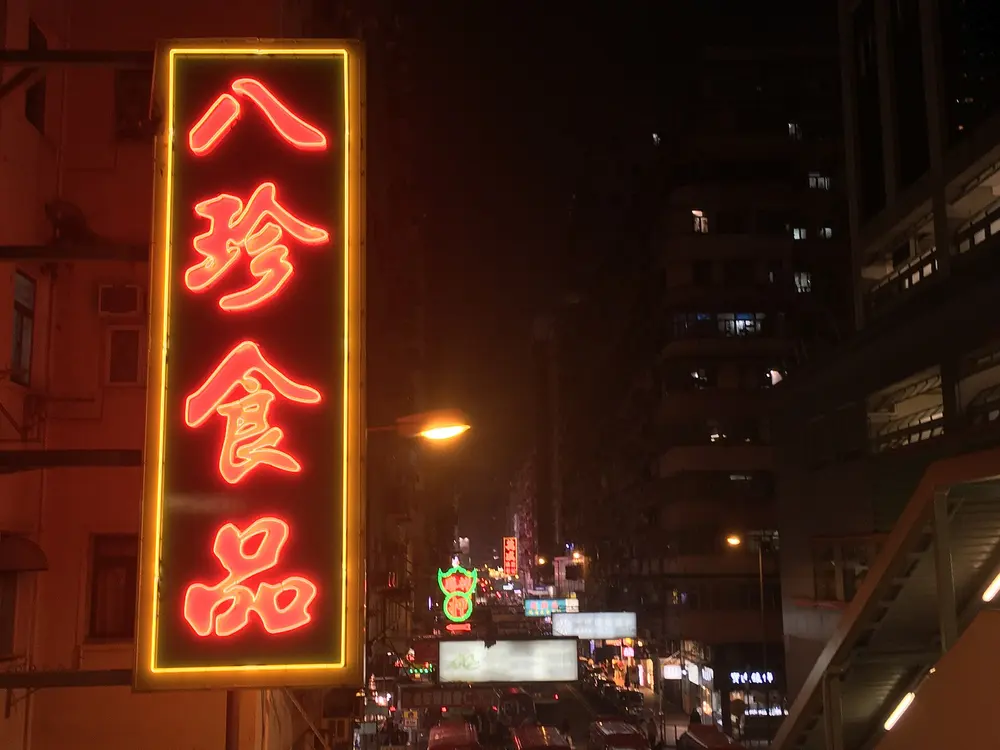
The regional flag and emblem carry a white five-petalled bauhinia (Bauhinia blakeana, 洋紫荊), the Hong Kong orchid tree, a hybrid first described here and now planted across the city; it flowers from November to March. The Star Ferry, the 'ding ding' trams, red taxis, neon signs, dim sum, milk tea in thick cups and the hillside housing estates are the everyday images locals love. The name Hong Kong (香港) means 'fragrant harbour'.
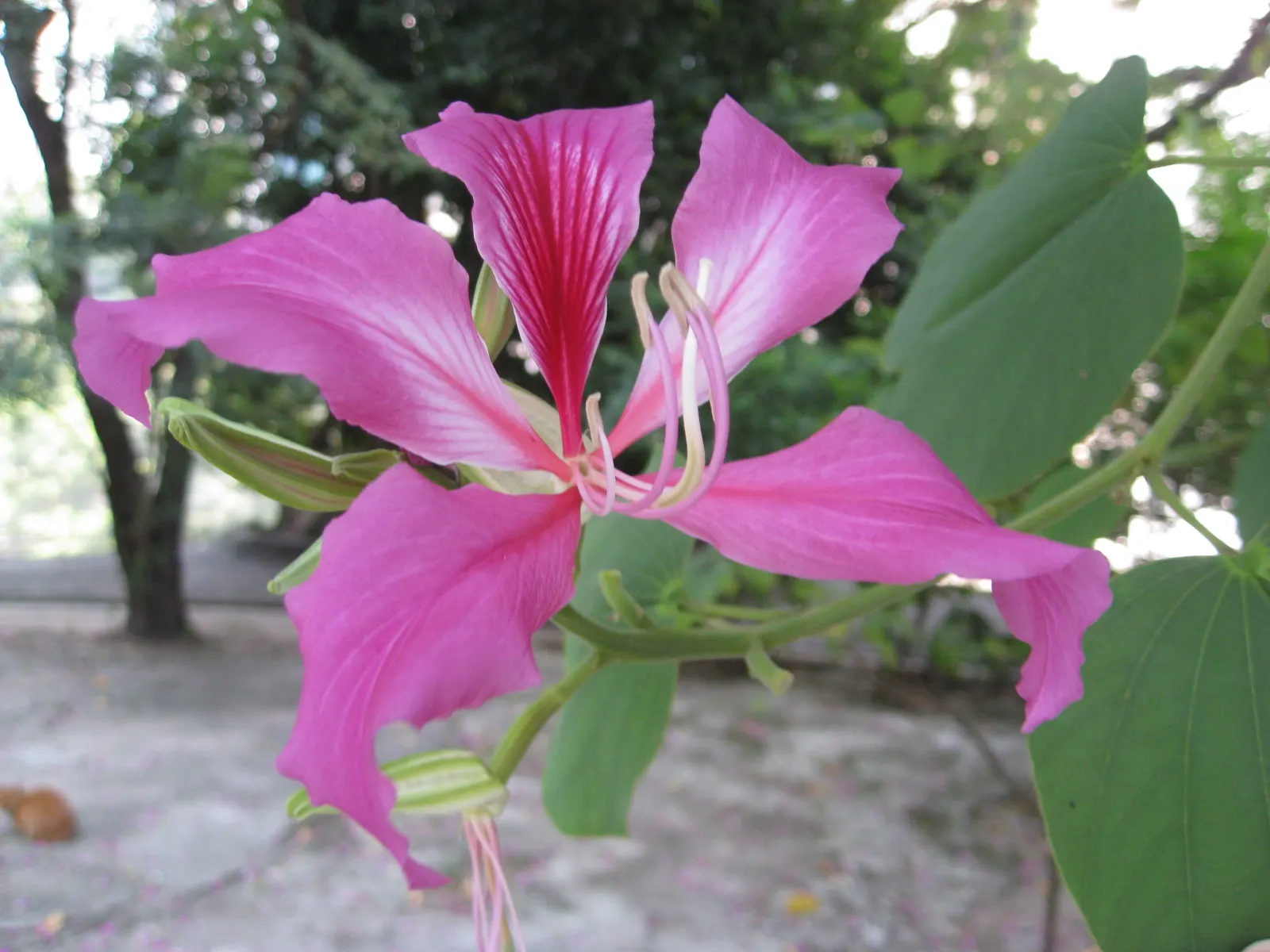
The bauhinia flower on Hong Kong's flag blooms from November to March.
Why visit Hong Kong
- One of the world's great skylines, best seen from the Peak, the Star Ferry and the Victoria Harbour promenades.
- Food: Cantonese cooking at every price, from Michelin-starred dining rooms to dim sum, cha chaan teng and street food.
- Nature next door: hiking trails, beaches, outlying islands and the UNESCO Global Geopark in Sai Kung.
- Living culture: temples, festivals all year round (events), Cantonese opera and a film history from Bruce Lee to Wong Kar-wai.
- World-class museums: M+ and the Palace Museum in West Kowloon, and free government museums (museums).
- Easy to get around: the MTR, trams, ferries and an Octopus card – see transportation.
- A gateway: Macau, Shenzhen and the rest of the Greater Bay Area are an hour or less away (day trips).
Start planning with our first-timer FAQ, itineraries and where to stay.
Frequently asked questions
How many islands does Hong Kong have?
Besides Hong Kong Island and Lantau, Hong Kong has 261 islands of at least 500 m², according to the HKSAR Government – most of them small and uninhabited. Lantau is the largest.
What are the main parts of Hong Kong?
Hong Kong Island, the Kowloon Peninsula, the New Territories (which include Lantau and the outlying islands). Hong Kong is divided into 18 districts for local government.
What language is spoken in Hong Kong?
Cantonese is the everyday language of about 88% of residents. Chinese and English are both official, and English is used on all public transport and road signs. Mandarin is widely understood.
What is the population of Hong Kong?
7,518,300 at mid-2026, according to the Census and Statistics Department's provisional estimate.
Is Hong Kong part of China?
Yes. Since 1 July 1997 Hong Kong has been a Special Administrative Region of the People's Republic of China, with its own currency, legal system, immigration and customs under 'one country, two systems'.
What currency does Hong Kong use?
The Hong Kong dollar (HKD, HK$), linked to the US dollar at HK$7.75–7.85. There is no sales tax.
How big is Hong Kong?
The land area is 1,114.57 km², about two-thirds the size of Greater London; around 40% is protected country park.
Sources and official information
Facts were checked against these official sources in November 2026. Opening hours, fares and timetables change, so confirm before you go.
HongKongTravel.com is an independent guide, not the official site of the Hong Kong Tourism Board, the HKSAR Government or any operator. Some links are affiliate links: tours go to {tours} and hotels go to {hotels}, and we may earn a commission at no extra cost to you.