In short
- Hong Kong's temples are working places of worship – mostly Taoist and folk temples to gods like Tin Hau, Kwan Tai and Wong Tai Sin, plus Buddhist monasteries. Entry is free almost everywhere.
- Top five for a first visit: Man Mo Temple (Sheung Wan), Wong Tai Sin Temple (Kowloon), Chi Lin Nunnery with Nan Lian Garden (Diamond Hill), the Ten Thousand Buddhas Monastery (Sha Tin) and Po Lin Monastery with the Big Buddha (Lantau).
- Temples are quietest on weekday mornings and busiest at Lunar New Year and on each god's birthday.
- Etiquette: step over (not on) door thresholds, don't point at or photograph altars with flash, don't touch offerings, and make a small donation if you light incense.
- Tin Hau, the sea goddess, has about a hundred temples around the coast – a reminder that Hong Kong began as a fishing community.
Hong Kong's temples at a glance
| Temple | Area | Dedicated to | Why go | Getting there |
|---|---|---|---|---|
| Man Mo Temple 文武廟 | Sheung Wan, Hong Kong Island | Man Cheong (literature) and Kwan Tai (war) | Giant incense coils, 1840s building, Hollywood Road antiques | MTR Sheung Wan Exit A2, 10 min uphill; or Mid-Levels escalator |
| Wong Tai Sin Temple 黃大仙祠 | Wong Tai Sin, Kowloon | Wong Tai Sin (Taoism, Buddhism, Confucianism) | Fortune sticks, Good Wish Garden, New Year's first incense | MTR Wong Tai Sin Exit B2 |
| Chi Lin Nunnery 志蓮淨苑 + Nan Lian Garden | Diamond Hill, Kowloon | Buddhist | Tang-style timber halls built without nails; classical garden | MTR Diamond Hill Exit C2 |
| Ten Thousand Buddhas Monastery 萬佛寺 | Sha Tin, New Territories | Buddhist (no resident monks) | Path of 500 golden arhats; thousands of small Buddhas | MTR Sha Tin Exit B, then signposted path |
| Po Lin Monastery 寶蓮禪寺 + Big Buddha | Ngong Ping, Lantau | Buddhist | 34 m bronze Tian Tan Buddha, vegetarian lunch | Ngong Ping 360 cable car or bus 23 from Tung Chung |
| Che Kung Temple 車公廟 | Tai Wai, Sha Tin | General Che Kung (Song dynasty) | Lucky windmill; packed on Lunar New Year day 3 | MTR Che Kung Temple |
| Tin Hau Temple, Yau Ma Tei 油麻地天后廟 | Yau Ma Tei, Kowloon | Tin Hau, goddess of the sea | Temple complex that gave Temple Street its name | MTR Yau Ma Tei Exit C |
| Tin Hau Temple, Joss House Bay 大廟 | Sai Kung | Tin Hau | Oldest Tin Hau temple (1266); centre of Tin Hau Festival | Ferry or bus to Tseung Kwan O area; very busy on the festival |
| Pak Tai Temple 北帝廟 | Cheung Chau | Pak Tai, god of the north and the sea | Heart of the Bun Festival; built 1783 | Ferry from Central Pier 5, 10 min walk |
Who's who in a Hong Kong temple
Most Hong Kong temples are not 'Buddhist' or 'Taoist' in a strict sense but belong to Chinese folk religion, which mixes Taoist gods, Buddhist bodhisattvas, Confucian values and local heroes. Worshippers pray for health, exams, business and good marriages, consult fortune sticks and burn paper offerings for ancestors. A few names will help you read the altars:
- Tin Hau (天后), 'Empress of Heaven', the deified Fujianese girl Lin Mo who protects seafarers – the most popular deity in Hong Kong, with about a hundred temples, nearly all of them close to the original shoreline.
- Kwan Tai (關帝, Guan Yu), a general of the Three Kingdoms period, god of war, loyalty and righteousness – honoured by police officers and, the films like to say, by triads alike.
- Man Cheong (文昌), god of literature, popular with students before exams.
- Kwun Yam (觀音, Guanyin), the bodhisattva of compassion; her 'treasury opening' day in the first lunar month draws crowds to the Kwun Yam temple in Hung Hom.
- Wong Tai Sin (黃大仙), a 4th-century hermit said to have become an immortal; his temple's motto is 'every wish will be granted'.
- Pak Tai (北帝), 'Emperor of the North', a Taoist god who controls water; Hung Shing (洪聖), a Tang dynasty official turned sea god; and Che Kung (車公), a Song general who stopped a plague.
Man Mo Temple, Hollywood Road
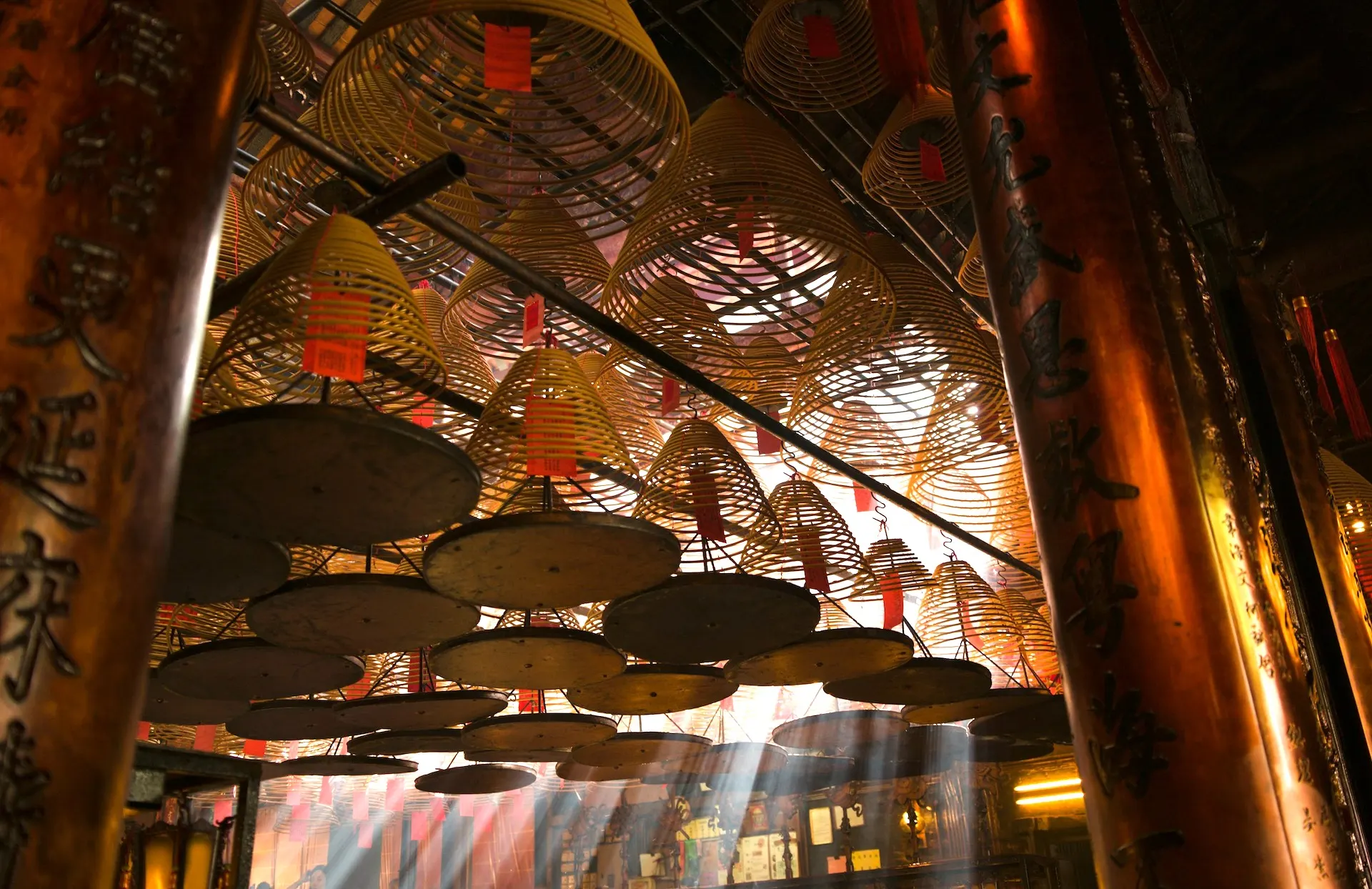
Step off Hollywood Road at Ladder Street and the city's noise falls away into a haze of sandalwood. Man Mo Temple (文武廟), at 124–126 Hollywood Road, Sheung Wan, was built in the late 1840s by wealthy Chinese merchants and is dedicated to Man Cheong and Kwan Tai. Huge incense coils hang from the ceiling, each burning for days or weeks with a prayer tag attached; two sedan chairs once used to carry the gods in procession sit in the main hall. In the colonial era, the temple and its neighbouring Kung Sor (public hall) also acted as a court where Chinese residents settled disputes by swearing oaths.
The complex – Man Mo Temple, Lit Shing Kung and the Kung Sor – was declared a monument in 2010 and is managed by the Tung Wah Group of Hospitals. It is usually open from 8 am to 6 pm; entry is free. Combine it with the antique and curio shops of Hollywood Road and Upper Lascar Row ('Cat Street'), Tai Kwun and PMQ, all within ten minutes' walk; our Central hub has a walking route.
Wong Tai Sin Temple and Chi Lin Nunnery
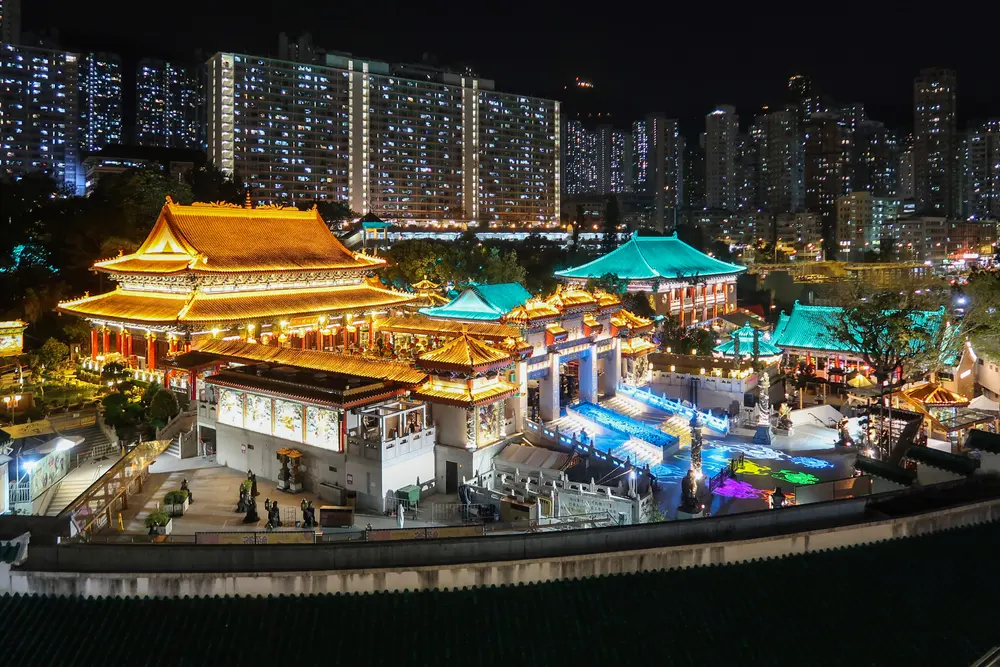
Wong Tai Sin Temple (嗇色園黃大仙祠, run by the Sik Sik Yuen) is Hong Kong's busiest temple and one of the few that feels like a festival every day. It moved to its present hillside in 1921 and honours all three Chinese teachings: Taoism, Buddhism and Confucianism. Watch worshippers kneel and shake bamboo cylinders of fortune sticks (求籤 kau cim) until one falls out; its number corresponds to a verse, which fortune-tellers in the arcade at the side of the complex will interpret for a fee (agree the price first). Look for the Nine Dragon Wall, the Confucian Hall and the Good Wish Garden. Usual hours are about 7 am to 5.30 pm, longer at New Year. Take MTR to Wong Tai Sin, Exit B2.
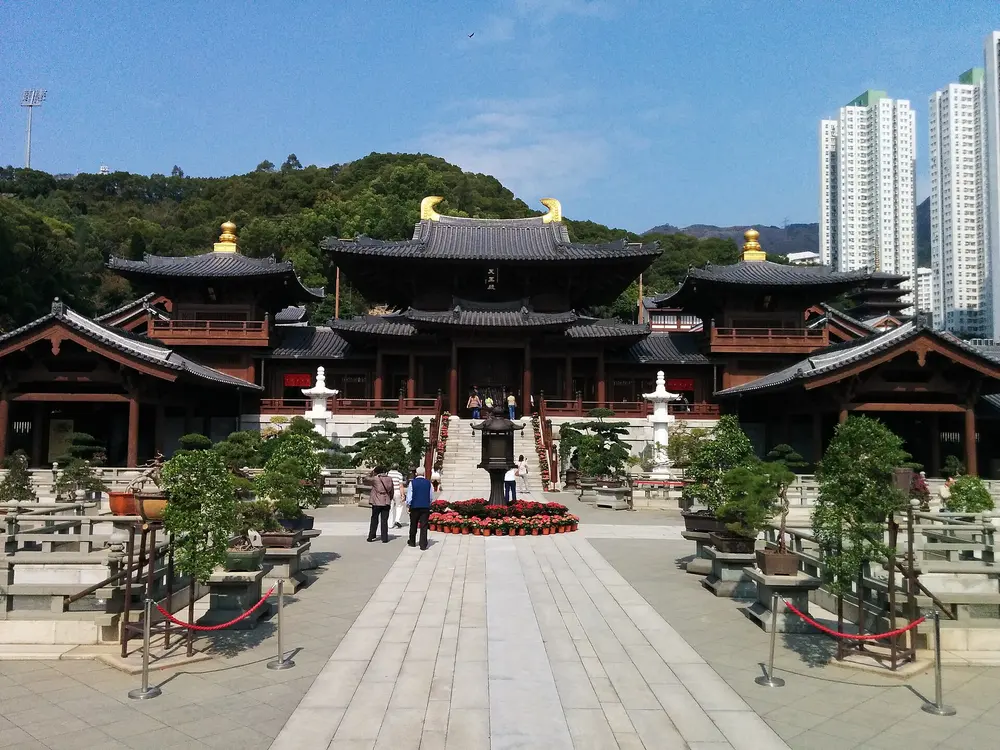
One MTR stop east, Chi Lin Nunnery (志蓮淨苑) was founded in 1934 and rebuilt in the 1990s in the style of the Tang dynasty: its cedar halls are assembled with traditional joinery and no nails, set around lotus ponds and bonsai. Across the road, the Nan Lian Garden (南蓮園池) is a free classical Chinese garden with a golden pavilion, a waterfall and a vegetarian restaurant behind a waterfall. Go early on a weekday for the quiet; both are next to Diamond Hill MTR (Exit C2). The Wong Tai Sin hub covers the area, and the Kowloon Walled City Park is 15 minutes away by bus or taxi.
Ten Thousand Buddhas Monastery, Sha Tin
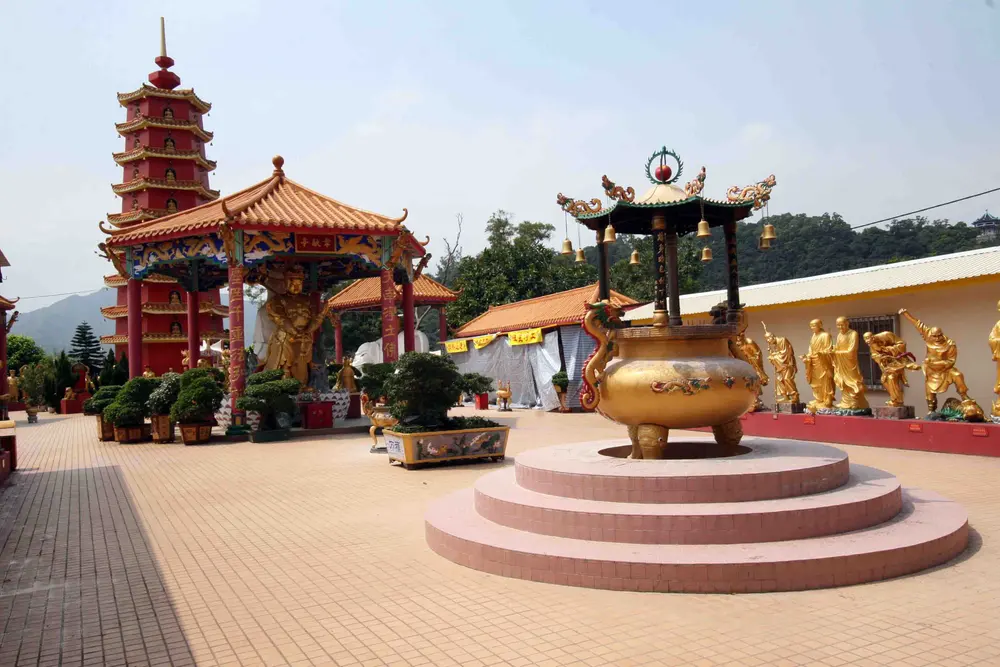
The Ten Thousand Buddhas Monastery (萬佛寺, Man Fat Zi) is not a monastery in the usual sense – there are no resident monks – but a hillside complex built from 1951 to 1957 by the Buddhist teacher Yuet Kai. The climb of more than 400 steps is lined by about 500 life-sized golden arhat statues, each with a different face and pose, some riding tigers and elephants. The main hall's walls hold close to 13,000 small Buddha figures, more than the name promises. A nine-storey pagoda and an upper terrace with Kwun Yam statues complete the site.
From Sha Tin MTR station (Exit B), follow the signs past Pai Tau Village; the path begins at the bottom of Pai Tau Street. Allow 1.5–2 hours with the climb. Usual hours are about 9 am to 5 pm. Wear proper shoes; the steps are steep and slippery after rain. Pair it with the free Hong Kong Heritage Museum and Che Kung Temple, both in Sha Tin – see our Sha Tin and Tai Po hub.
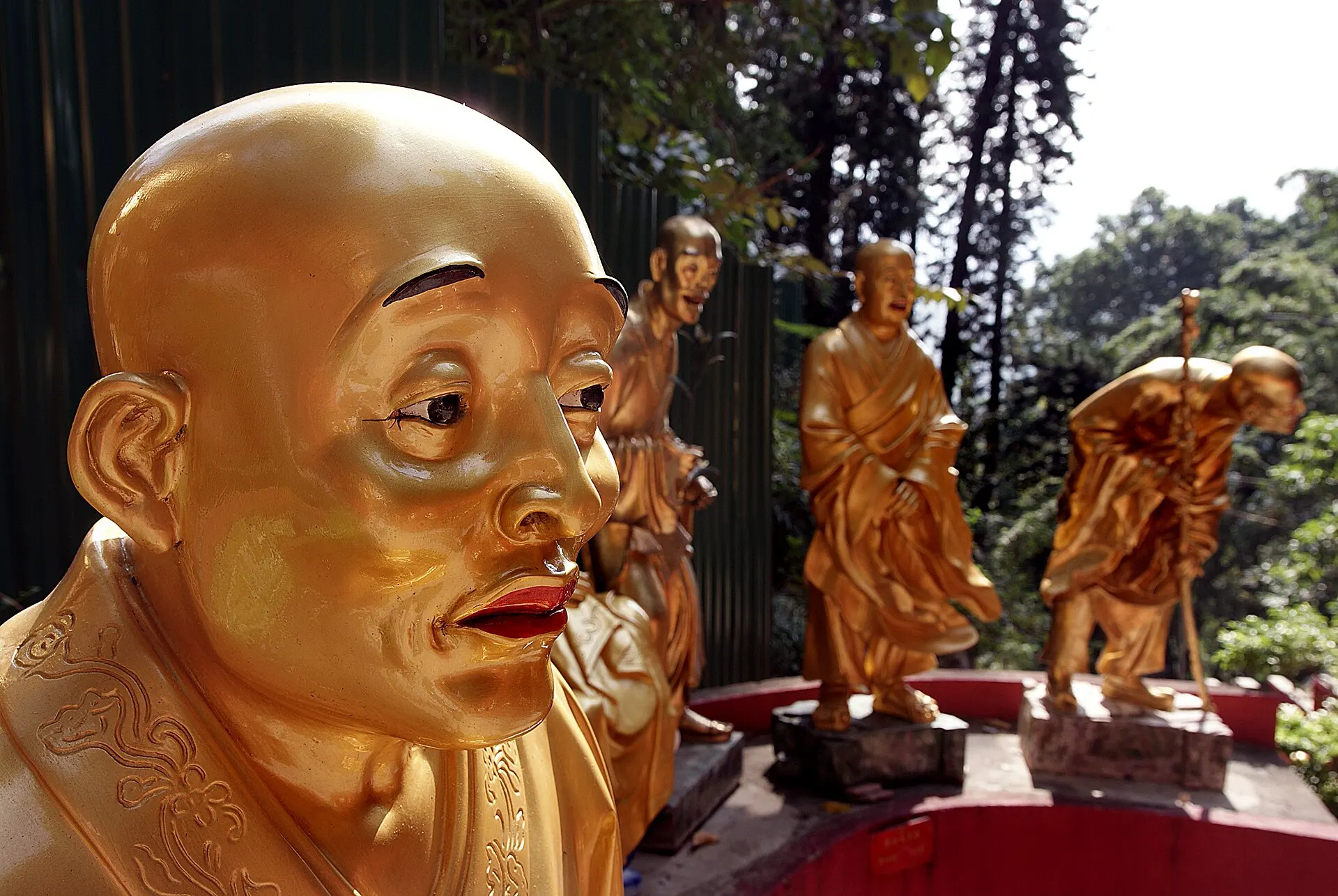
Golden arhat statues line the path up to the Ten Thousand Buddhas Monastery.
Tin Hau temples and the sea
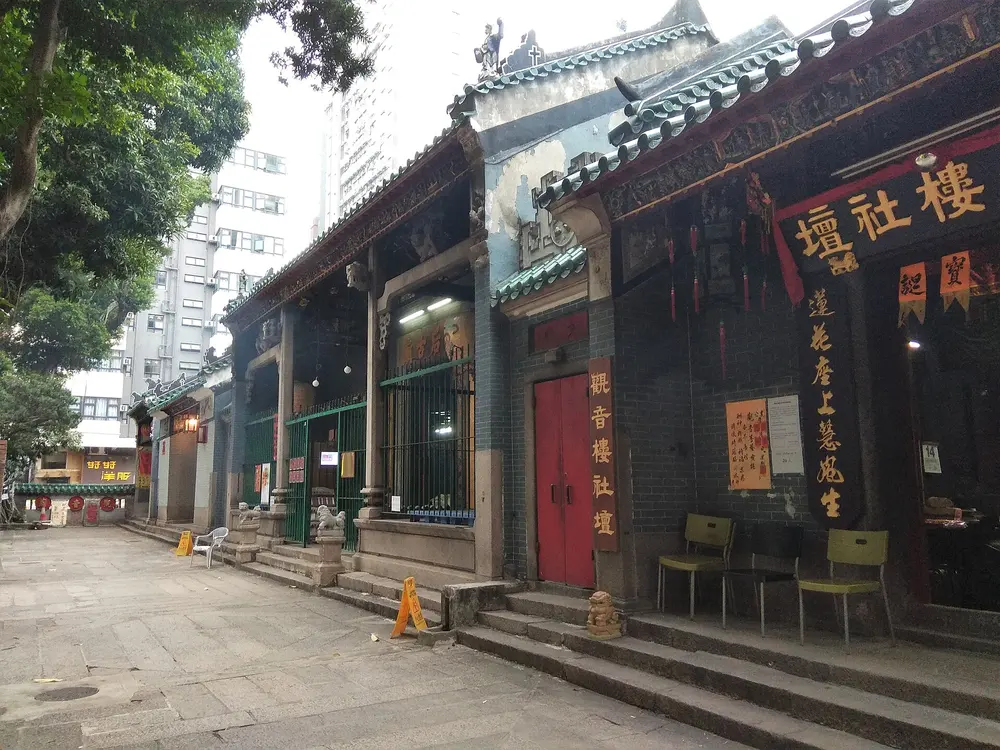
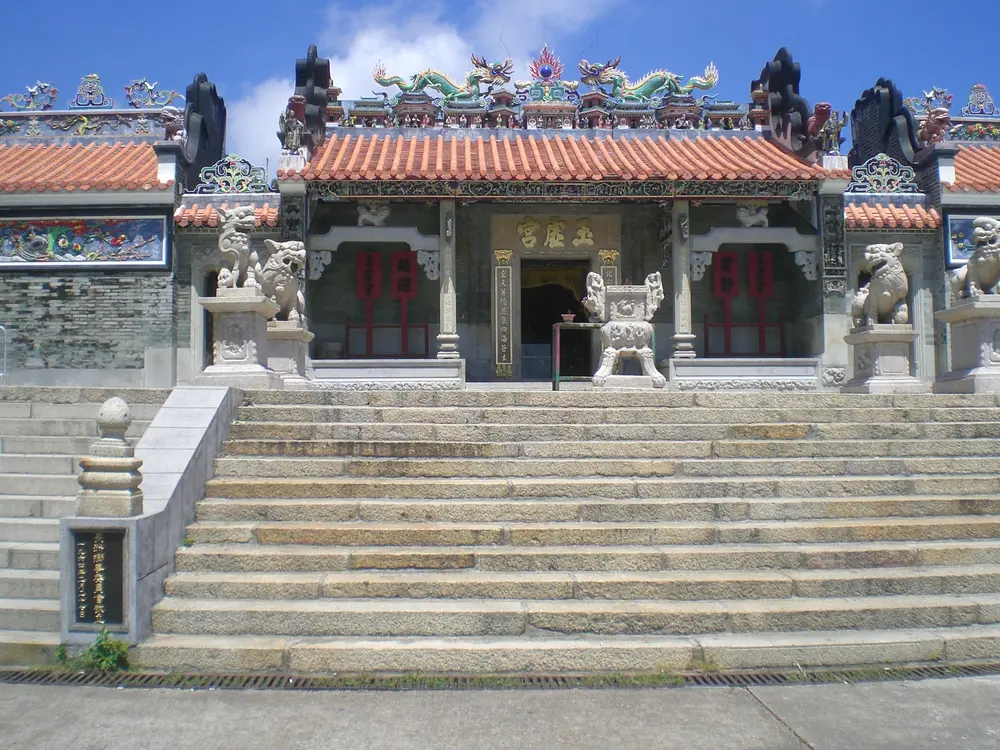
Hong Kong's oldest temples belong to the sea goddess Tin Hau. The Tin Hau Temple at Joss House Bay (佛堂門天后古廟, 'Tai Miu', the great temple) in Sai Kung is the oldest, founded in 1266 according to a rock inscription nearby; on Tin Hau's birthday (29 April 2027) fishing families arrive in boats decorated with flags. The Tin Hau Temple in Causeway Bay, which gave the MTR station its name, dates from the 18th century and is a declared monument; the Yau Ma Tei Tin Hau Temple complex stands at the head of Temple Street, its five halls including temples to Tin Hau, the earth god and the city god.
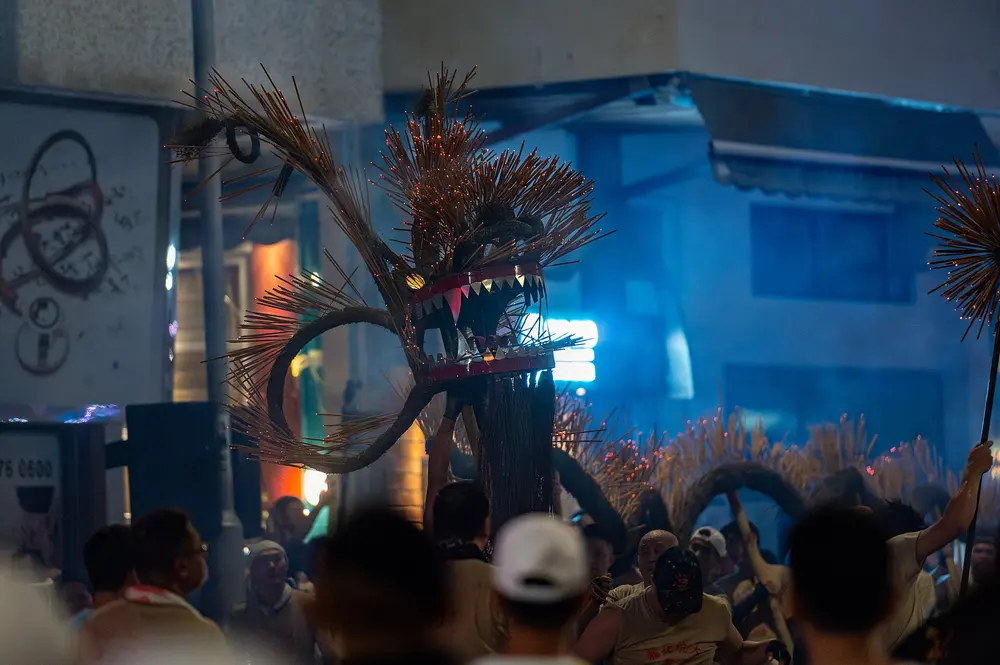
Others worth a detour sit by former fishing harbours: Stanley, Tai O, Sai Kung, Aberdeen and Shek O. On the islands, Cheung Chau's Pak Tai Temple (1783) is the centre of the Bun Festival, and Tai Hang's Lin Fa Temple (1863), shaped like a lotus, is where the Fire Dragon dance ends at Mid-Autumn. See the events calendar for festival dates.
Po Lin Monastery and the Big Buddha
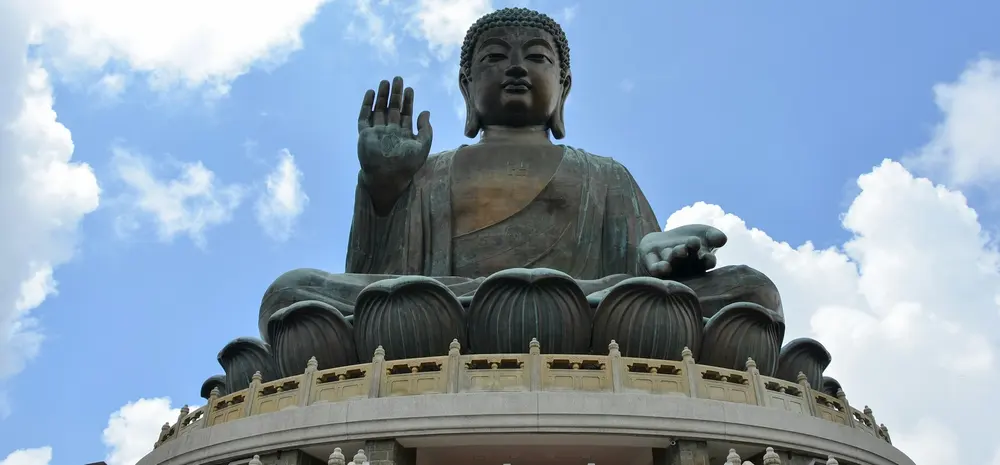
On the Ngong Ping plateau of Lantau, Po Lin Monastery (寶蓮禪寺), founded in 1906, is Hong Kong's best-known Buddhist monastery. Its seated bronze Tian Tan Buddha – about 34 metres tall including the lotus base – was completed in 1993 and is reached by 268 steps; the halls below are richly decorated and the monastery's vegetarian kitchen serves set lunches. Buddha's Birthday (13 May 2027) is the big day. Getting there by the Ngong Ping 360 cable car is half the experience; full details are in our Lantau Island guide.
Other faiths: churches, mosques and temples
Hong Kong's religious life is broader than its Chinese temples. St John's Cathedral (1849) in Central is the oldest Western church building in Hong Kong still in use; the Catholic Cathedral of the Immaculate Conception is in Mid-Levels. Kowloon Mosque and Islamic Centre on Nathan Road, Tsim Sha Tsui, beside Kowloon Park, is the city's largest mosque, and the Jamia Mosque on Shelley Street (Mid-Levels) is the oldest. The Khalsa Diwan Sikh Temple in Wan Chai offers free vegetarian langar meals to all visitors, and there is a Hindu Temple in Happy Valley. Visitors are welcome at all of them outside services; dress modestly and follow posted rules. Halal food near the mosques is covered in our dining guide.
Temple etiquette: how to visit respectfully
- Dress neatly; shoulders covered is appreciated at Buddhist sites. You do not usually remove shoes in Chinese temples.
- Step over the raised wooden threshold at the door – standing on it is considered disrespectful.
- Keep your voice down and phones silent; worshippers are praying around you.
- Photography is generally fine in courtyards; inside halls, avoid photographing worshippers' faces and altars at close range, never use flash, and obey 'no photography' signs.
- Don't touch statues, offerings or the fortune-stick cylinders unless you are using them. Never point at a deity with one finger.
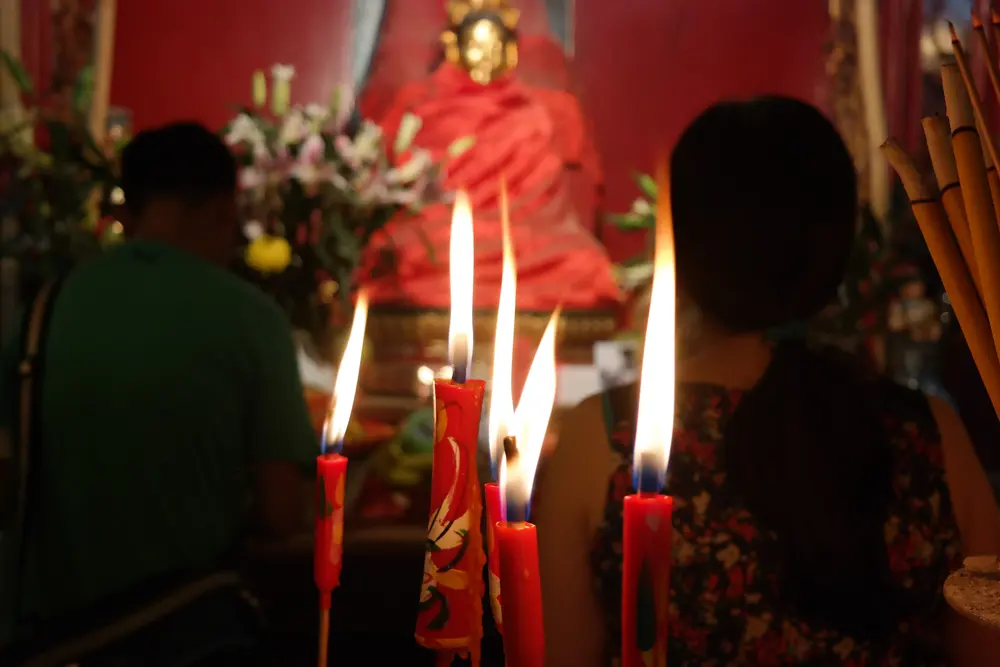
- If you want to light incense, buy it at the temple stall, light it from the burners provided and place it in the large urn; three sticks is the usual number.
- Agree the price before having fortune sticks interpreted, and consider a small donation in the boxes provided.
- Don't step on paper offerings burning by the roadside during the Hungry Ghost month.
Temple tours and guided visits
Temples are free and easy to visit alone, but a guide can explain the rituals, the gods and the history in a way the signs (often only in Chinese) do not. These tours are run by independent operators and described from their listing titles.
Star Ferry, open-top bus and Man Mo Temple tour
A guided tour combining a Star Ferry crossing, an open-top bus ride and Man Mo Temple.
Check availabilityBook via GetYourGuide
Kowloon Walled City, Wong Tai Sin and Chi Lin tour
Kowloon Walled City Park, Wong Tai Sin Temple and Chi Lin Nunnery in one guided outing.
Check availabilityBook via GetYourGuide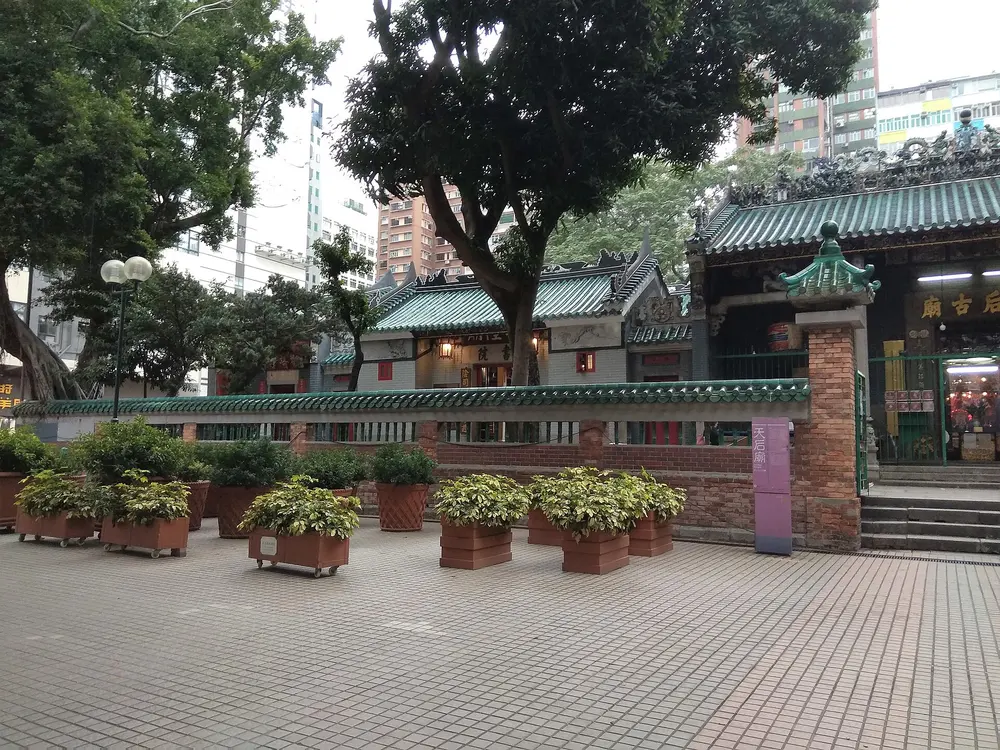
Kowloon temples and markets small-group tour
A small-group walk through Kowloon temples and street markets with a local guide.
Check availabilityBook via GetYourGuide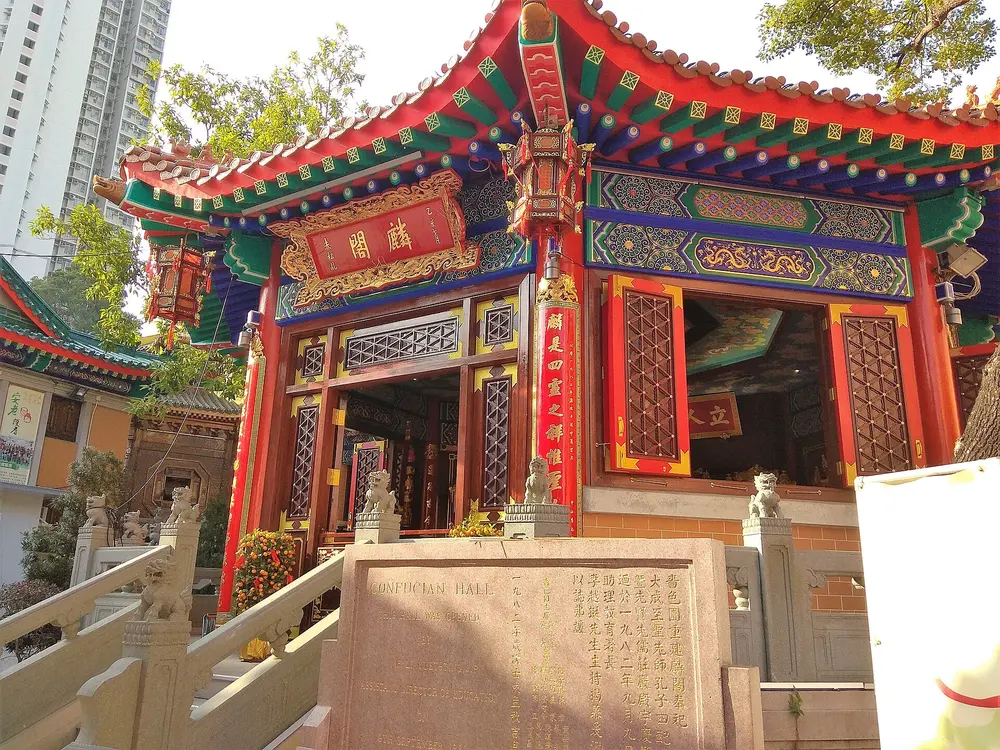
Ultimate praying temple tour
A guided tour of Hong Kong temples where locals pray for luck, love and health.
Check availabilityBook via KlookTour listings are on GetYourGuide. Prices, times and cancellation terms are shown live on each listing and can change; HongKongTravel.com may earn a commission at no extra cost to you.
Frequently asked questions
What is the most famous temple in Hong Kong?
Wong Tai Sin Temple in Kowloon is the busiest and most famous, known for its fortune sticks and the 'first incense' at Lunar New Year. Man Mo Temple on Hollywood Road is the most atmospheric, and Po Lin Monastery's Big Buddha the most photographed.
Do you have to pay to enter temples in Hong Kong?
No. Temples in Hong Kong are free to enter; donation boxes are provided, and fortune-telling is a paid service from independent interpreters.
Can you take photos in Hong Kong temples?
Usually yes in courtyards and of the architecture, but not with flash, and some halls ban photography. Avoid photographing people praying at close range.
What should I wear to a temple in Hong Kong?
Neat everyday clothes are fine; avoid very revealing outfits, especially at Buddhist monasteries such as Po Lin and Chi Lin. You don't usually need to remove your shoes.
How many Tin Hau temples are there in Hong Kong?
About a hundred, more than for any other deity. The oldest, at Joss House Bay in Sai Kung, dates from 1266.
Is the Ten Thousand Buddhas Monastery worth the climb?
Yes, if you are reasonably fit: the 400-plus steps are lined with about 500 golden arhat statues, and the main hall holds nearly 13,000 small Buddhas. Allow 1.5–2 hours from Sha Tin MTR.
Sources and official information
Facts were checked against these official sources in November 2026. Opening hours, fares and timetables change, so confirm before you go.
- rho.tungwah.org.hk
- www1.siksikyuen.org.hk
- chilin.org
- nanliangarden.org
- plm.org.hk
- amo.gov.hk
- discoverhongkong.com
- timeout.com
HongKongTravel.com is an independent guide, not the official site of the Hong Kong Tourism Board, the HKSAR Government or any operator. Some links are affiliate links: tours go to {tours} and hotels go to {hotels}, and we may earn a commission at no extra cost to you.