In short
- Yum cha (飲茶, 'drink tea') is the meal; dim sum (點心) are the small dishes – steamed dumplings, buns, rice rolls, fried snacks and sweets – eaten from morning to mid-afternoon.
- Start with the classics: har gow (shrimp dumplings), siu mai, char siu bao, cheung fun rice rolls, chicken feet, lo mai gai and baked egg tarts.
- How it works: choose a tea, tick an order sheet (點心紙) or use a QR code, share everything, and leave the teapot lid open for a refill. Expect a per-person tea charge and often a 10% service charge.
- Where (checked 2026): cheap and famous – Tim Ho Wan in Sham Shui Po; trolleys and tradition – Lin Heung Lau (moved to Sheung Wan in 2026) and Maxim's Palace in City Hall; old-world – Luk Yu Tea House; luxury – Tin Lung Heen (two Michelin stars) and Man Wah.
- Go before 11 am or after 2 pm on weekdays to avoid queues; weekends are busiest.
Yum cha, dim sum and how the meal works
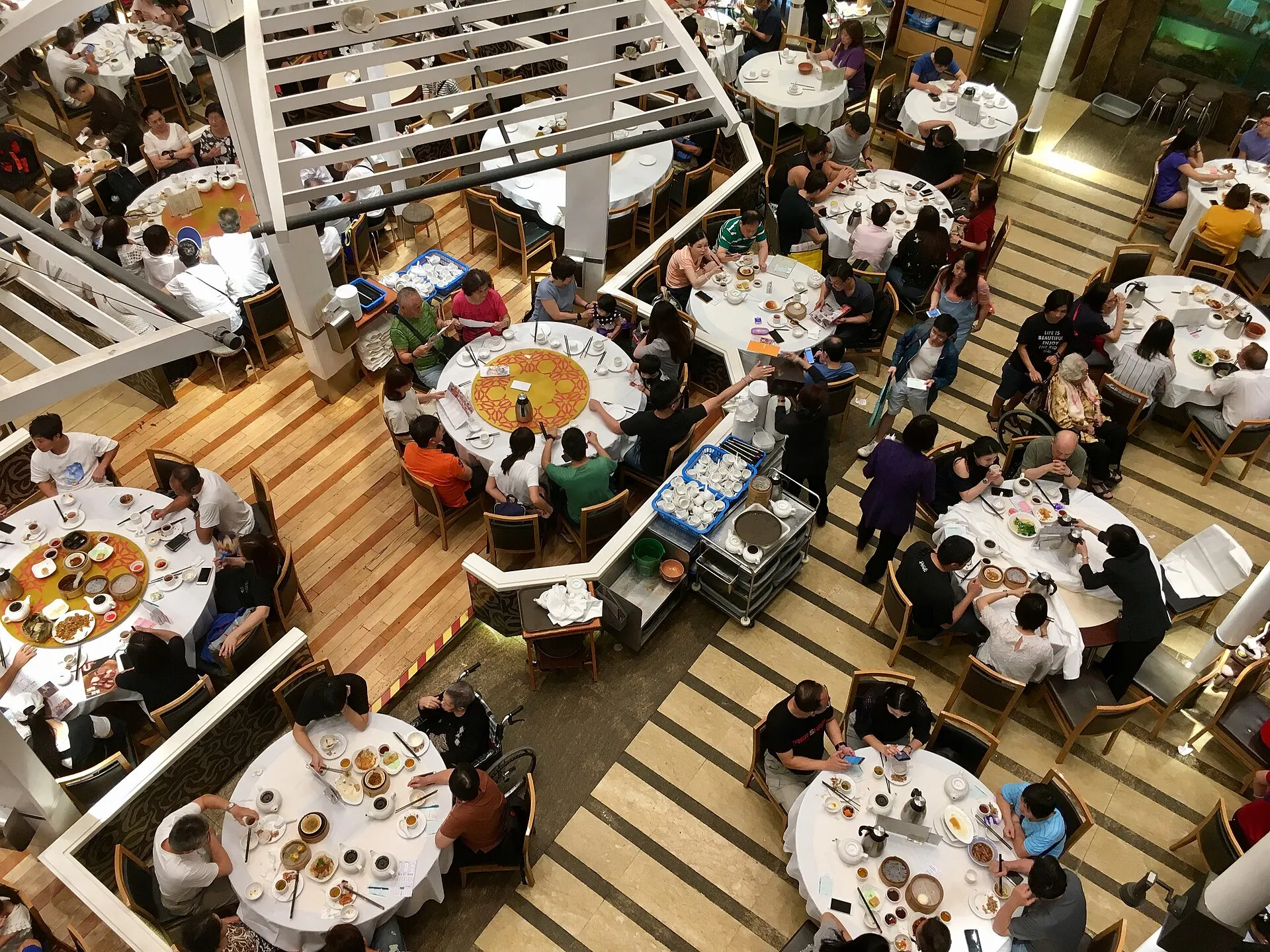
In Hong Kong nobody says 'let's go for dim sum'. They say 'let's yum cha' (飲茶, jam2 caa4) – drink tea – and the tea really comes first. Dim sum (點心, dim2 sam1, roughly 'touch the heart') are the dishes that go with it: bite-sized dumplings and buns, steamed in bamboo baskets or fried, plus rice rolls, congee and sweets. The custom came from the teahouses of 19th-century Guangzhou, where workers stopped for tea and a snack; in Hong Kong it became the family meal of weekend mornings, the setting for business breakfasts and the default reunion of three generations around a round table.
A typical yum cha runs from early morning (some places open at 7 am) to around 3 pm, with the lunch rush from noon to 2 pm. Many Cantonese restaurants switch to a full à la carte or banquet menu at dinner, though a growing number of dim sum specialists serve all day. Plan on three or four baskets per person; each basket usually holds three or four pieces, so a group of four can taste a dozen dishes. Dim sum is also listed on Hong Kong's Intangible Cultural Heritage Inventory.
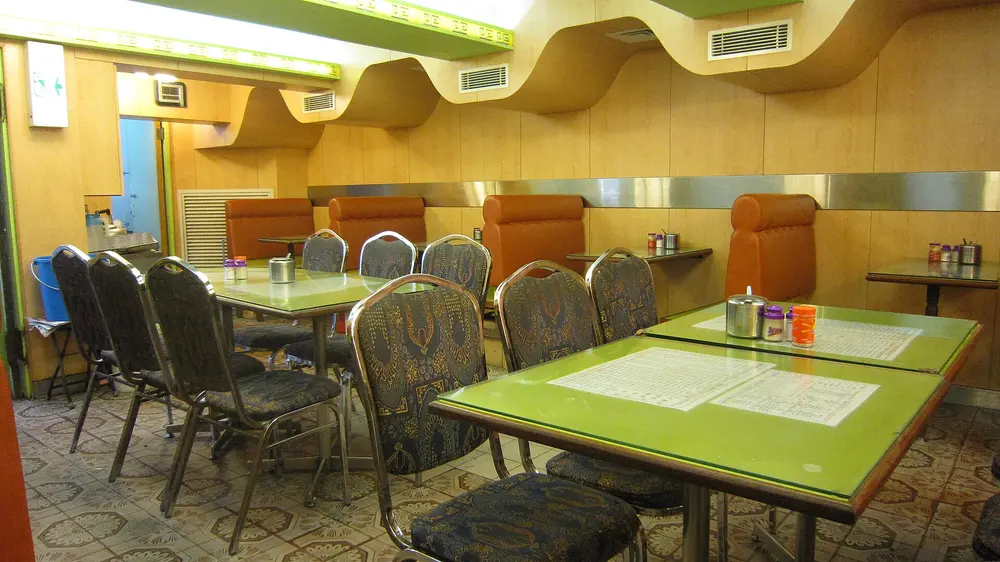
Today you will meet three kinds of dim sum restaurant: the big Cantonese restaurant (酒樓, zau2 lau4) – noisy halls with round tables, wedding-banquet stages and, in a few, roving trolleys; the dim sum specialist – smaller, cheaper, order-sheet only, with queues; and the hotel or fine-dining Chinese restaurant with refined, made-to-order dim sum at lunch.
A short history of yum cha in Hong Kong
Yum cha travelled to Hong Kong from Guangzhou, where 19th-century teahouses served workers 'one cup, two pieces' (一盅兩件, jat1 zung1 loeng5 gin6) – a pot of tea and two dim sum. Hong Kong's first teahouses opened in Central and Sheung Wan, often on several floors, with birdcages hung by regulars who brought their songbirds to breakfast. Luk Yu Tea House, opened in 1933 and on Stanley Street since the 1970s, is the best-preserved of that generation, with its ceiling fans, stained glass and wooden booths.
After the war, huge Cantonese restaurants seating hundreds became the city's living rooms, and servers pushed trolleys or carried trays of baskets through the hall, calling out the names of the dishes. From the 1990s most restaurants switched to order sheets, which keep food hotter and reduce waste, and trolleys became a rarity worth seeking out. In 2009 a former hotel dim sum chef, Mak Kwai-pui, opened Tim Ho Wan in a tiny Mong Kok shop; it received a Michelin star the next year and became famous as one of the cheapest starred restaurants in the world, before growing into an international chain. Today young Hong Kongers are as likely to yum cha in a chain or a modern dim sum bar as in a banquet hall – and in 2026 one historic teahouse even staged late-night 'dim sum raves' to attract a new generation.
Essential dim sum dishes, with Chinese names
Order sheets in traditional restaurants are often only in Chinese; this list follows the order of a typical sheet. Show the characters to staff, or match them to the sheet. The Jyutping gives the Cantonese pronunciation (see our Cantonese phrases).
| Dish | Chinese | Jyutping | What it is |
|---|---|---|---|
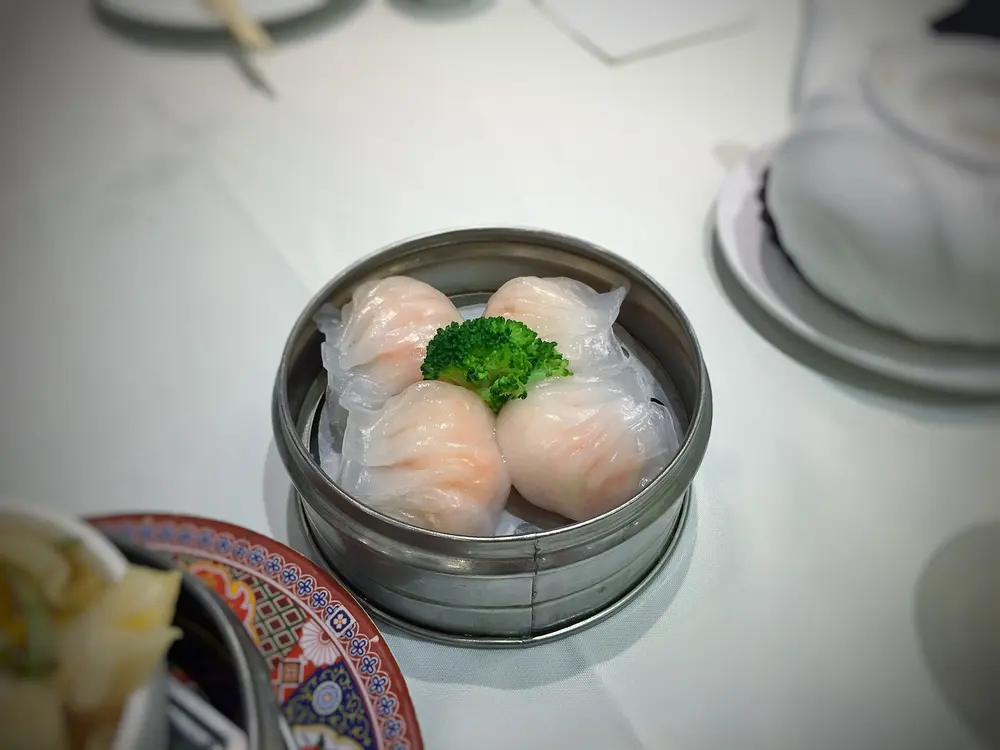
| Har gow | 蝦餃 | haa1 gaau2 | Shrimp dumpling in a translucent wheat-starch wrapper – the test of any dim sum kitchen |
| Siu mai | 燒賣 | siu1 maai2 | Open-topped pork and shrimp dumpling, often topped with crab roe or carrot |
| Char siu bao (steamed) | 叉燒包 | caa1 siu1 baau1 | Fluffy bun filled with sweet barbecued pork, split open at the top |
| Baked char siu bun | 叉燒餐包 | caa1 siu1 caan1 baau1 | Glazed baked bun; Tim Ho Wan's sugar-crusted version is famous |
| Rice noodle roll | 腸粉 | coeng2 fan2 | Silky steamed rice sheets rolled around shrimp, beef or char siu, with sweet soy |
| Rice roll with dough stick | 炸兩 | zaa3 loeng2 | Rice sheet wrapped around a fried dough stick – soft outside, crunchy inside |
| Chicken feet | 鳳爪 | fung6 zaau2 | 'Phoenix claws', fried then steamed in black bean sauce |
| Spare ribs | 排骨 | paai4 gwat1 | Small pieces of pork rib steamed with black beans and garlic |
| Sticky rice in lotus leaf | 糯米雞 | lo6 mai5 gai1 | Glutinous rice with chicken, mushroom and pork, steamed in a lotus leaf |
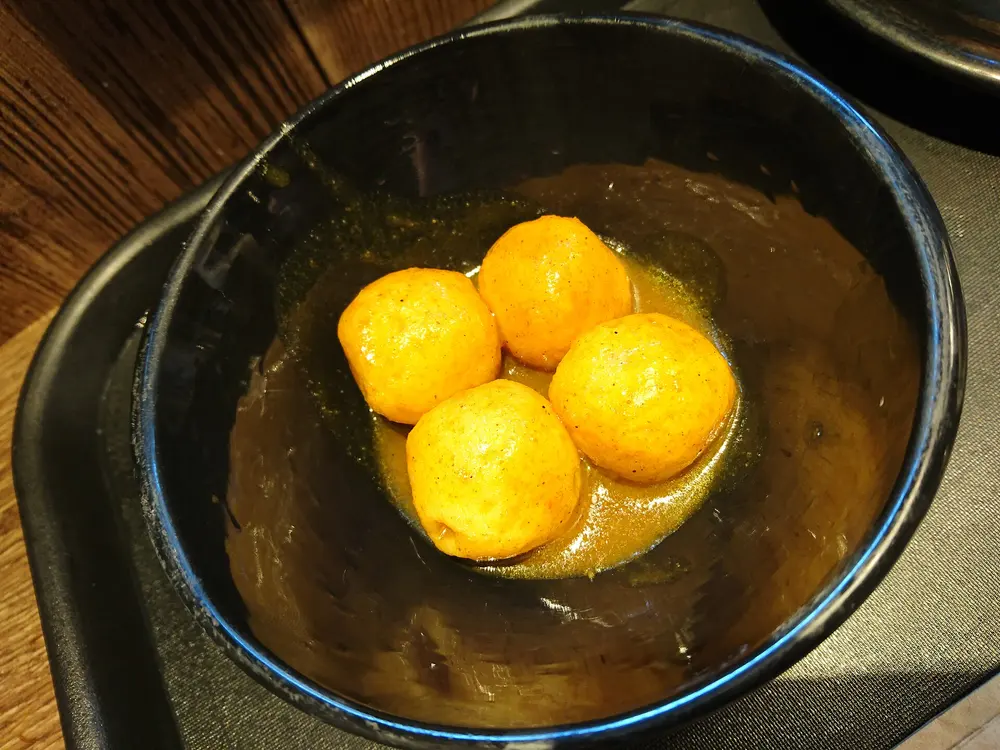
| Beef balls | 山竹牛肉球 | saan1 zuk1 ngau4 juk6 kau4 | Light minced-beef balls on beancurd skin, with Worcestershire sauce |
| Beancurd skin rolls | 腐皮卷 | fu6 pei4 gyun2 | Rolls of tofu skin around pork and shrimp, steamed in broth |
| Chiu Chow dumpling | 潮州粉粿 | ciu4 zau1 fan2 gwo2 | Chewy dumpling with peanuts, pork and dried radish |
| Turnip cake | 蘿蔔糕 | lo4 baak6 gou1 | Pan-fried radish cake with dried shrimp and sausage |
| Taro puff | 芋角 | wu6 gok3 | Lacy deep-fried taro croquette with a savoury pork filling |
| Fried glutinous dumpling | 咸水角 | haam4 seoi2 gok3 | Crisp, chewy, slightly sweet shell with pork inside |
| Spring roll | 春卷 | ceon1 gyun2 | Fried roll with shrimp or pork and vegetables |
| Shrimp and chive dumpling | 韭菜餃 | gau2 coi3 gaau2 | Pan-fried or steamed, bright green with chives |
| Congee | 粥 | zuk1 | Rice porridge – try century egg and pork (皮蛋瘦肉粥) |
| Egg tart | 蛋撻 | daan6 taat1 | Baked custard tart, flaky or shortcrust pastry |
| Custard bun | 奶皇包 | naai5 wong4 baau1 | Steamed bun with sweet egg custard |
| Molten salted-egg custard bun | 流沙包 | lau4 saa1 baau1 | Its 'flowing sand' filling runs when you bite – mind your shirt |
| Malay sponge cake | 馬拉糕 | maa5 laai1 gou1 | Tall, airy steamed brown-sugar cake |
| Sesame ball | 煎堆 | zin1 deoi1 | Fried glutinous ball with sesame seeds and lotus or red bean paste |
| Mango pudding | 芒果布甸 | mong1 gwo2 bou3 din1 | Cold dessert, often served with evaporated milk |
| Steamed rice with toppings | 蒸飯 / 煲仔飯 | zing1 faan6 / bou1 zai2 faan6 | Small claypot of rice with chicken, ribs or sausage |
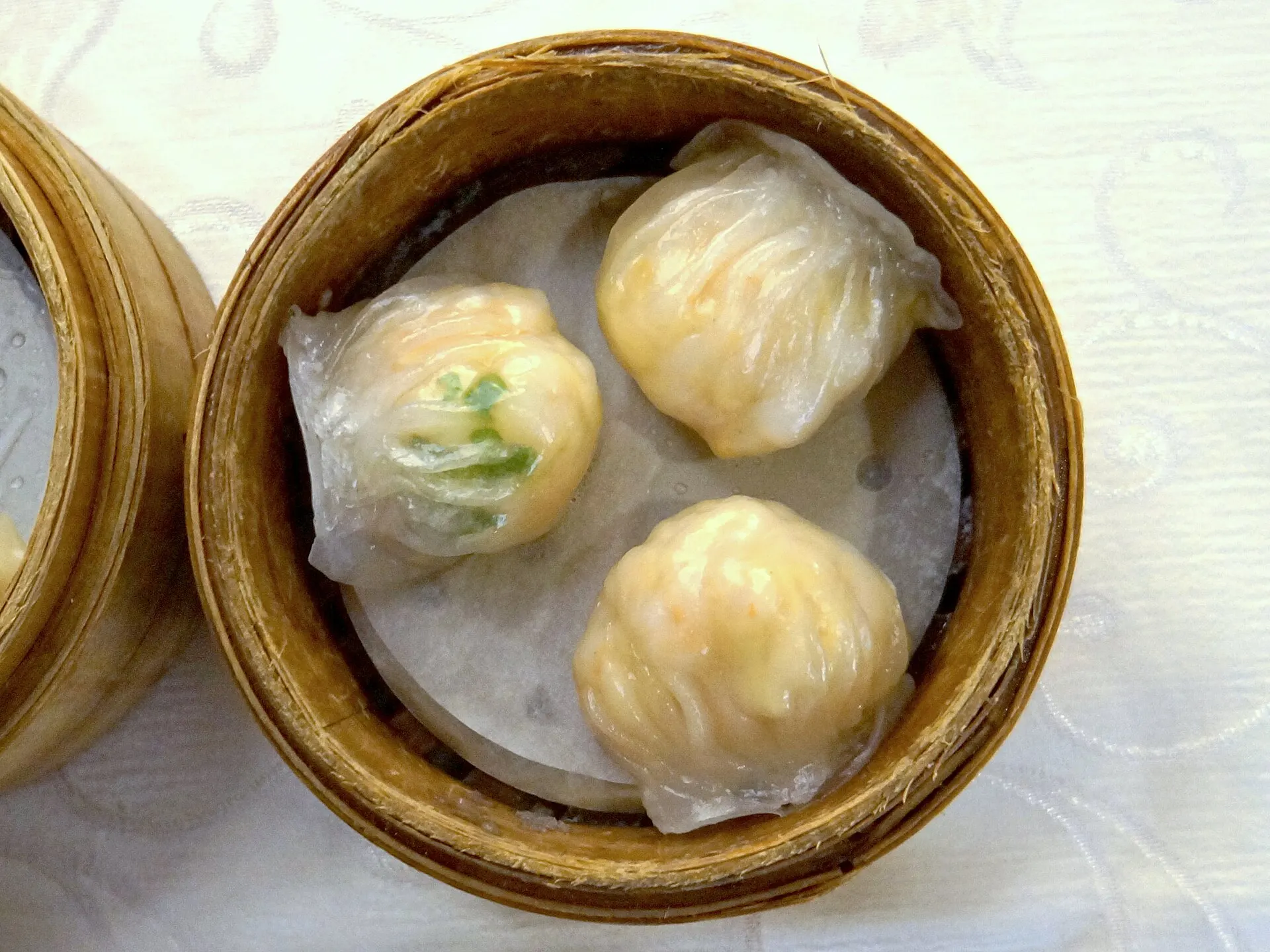
Har gow: the translucent shrimp dumplings by which locals judge a dim sum kitchen.
How to order: the dim sum sheet, trolleys and QR codes
- Get a table. At busy places, take a number from the reception or a machine and wait; tell staff how many people ('sei go jan' is four). You may be seated with strangers at a shared table (搭枱 daap3 toi2) – normal in Hong Kong.
- Choose a tea when asked (see below). The pot arrives with cups and bowls; a tea charge per person (茶芥 caa4 gaai3) is added to the bill.
- Fill in the order sheet (點心紙 dim2 sam1 zi2): write the number of baskets next to each dish. Prices are grouped in bands (small, medium, large, special) printed at the top. Many restaurants now use a QR code on the table instead, often with English and pictures.
- Hand the sheet to a waiter; dishes come as they are ready, not in courses. Staff stamp or tick your sheet as baskets arrive – keep it on the table.
- In a trolley restaurant, servers push carts of baskets around the room; lift the lids, point at what you want and hand over your card to be stamped. Go early, when trolleys are full.
- To add dishes, wave the sheet or tell a server. To pay, say m goi maai daan or take the sheet or bill to the cashier.
How much to order
As a rule, order about three or four baskets per person, then add more once you've tasted. Sweet dishes come last.
| Group | Steamed | Fried / baked | Rice or noodles | Dessert |
|---|---|---|---|---|
| 2 people | 4 baskets (har gow, siu mai, char siu bao, ribs) | 1–2 (turnip cake, spring rolls) | 1 rice roll | 1 (egg tarts or custard buns) |
| 4 people | 6–8 baskets, doubling the classics | 2–3 | 1 rice roll + 1 lo mai gai or congee | 2 |
| 6–8 people | 10–12 baskets | 3–4 | 2–3 (rice rolls, fried noodles, claypot rice) | 2–3 |
Yum cha etiquette
- Pour for others before yourself, starting with elders. When someone pours for you, tap two or three fingers on the table to say thank you – the custom, called kau sau lai (叩手禮), is said to date from an emperor travelling incognito whose companions could not bow.
- Need more tea? Leave the teapot lid ajar or flipped over; staff will refill it with hot water.
- Rinsing bowls: you will see locals rinse their bowls and chopsticks with the first pour of tea and tip it into a bowl. It is a habit, not a requirement.
- Sharing: everything is shared. Use the serving spoon or the back of your chopsticks, never stand chopsticks upright in rice (it recalls incense at funerals), and don't tap them on the bowl.
- Dumplings: eat har gow and siu mai in one or two bites; lift soup-filled dumplings onto a spoon first.
- Bill and tipping: many restaurants add a 10% service charge; there is no expectation to tip on top, though people often leave the coins. Cash, cards, Octopus and mobile wallets are widely accepted in larger restaurants; small specialists may be cash or Octopus only.
- Noise is fine. A good yum cha is loud – no need to whisper.
Which tea to choose
Tea is not an afterthought. Pu'er is the default because it cuts through grease; ask for guk pou if you want it lighter. Most restaurants charge the same per person whichever tea you pick, though premium teas may cost more.
| Tea | Chinese | Jyutping | Taste |
|---|---|---|---|
| Pu'er (Bo lei) | 普洱 | pou2 nei2 (said bou2 lei2) | Dark, earthy, aged; the classic yum cha tea |
| Chrysanthemum and pu'er | 菊普 | guk1 pou2 | Pu'er with dried chrysanthemum flowers – softer and floral |
| Tieguanyin | 鐵觀音 | tit3 gun1 jam1 | Oolong with a roasted, floral depth |
| Jasmine | 香片 | hoeng1 pin2 | Green tea scented with jasmine; light |
| Shou mei | 壽眉 | sau6 mei4 | White tea, mellow and slightly sweet |
| Longjing | 龍井 | lung4 zeng2 | Green tea, fresh and grassy |
| Chrysanthemum | 菊花 | guk1 faa1 | Caffeine-free flower tea |
Where to have dim sum in Hong Kong (checked 2026)
Hong Kong has thousands of places serving dim sum, and the best one is often the busy one near your hotel. These are reliable choices across budgets, each checked against the Michelin Guide's Hong Kong dim sum selection (updated August 2026) or recent news reports. Opening hours change and some take bookings only by phone – check before going, and expect queues at weekends.
Which style should you choose? For a first yum cha, a big Cantonese hall gives you the noise, the round tables and, at City Hall or Lin Heung Lau, the trolleys. For value and speed, a specialist like Tim Ho Wan is hard to beat, though the space is cramped and you won't linger. For a special occasion or a business lunch, a hotel Chinese restaurant serves dim sum made to order with harbour views and polished service – book a week or more ahead for weekends.
| Restaurant | Area | Style | Notes |
|---|---|---|---|
| Tim Ho Wan 添好運 (Sham Shui Po) | 9–11 Fuk Wing Street, Sham Shui Po | Specialist, budget | The original branch of the chain famous for baked char siu buns; in the Michelin Guide's dim sum selection (2026) |
| Lin Heung Lau 蓮香樓 | Tung Ning Building, Des Voeux Road Central, Sheung Wan (next to MTR Exit B) | Old-style teahouse with trolleys | Moved from Wellington Street in spring 2026; original tables, trolleys and gaiwan cups |
| City Hall Maxim's Palace 美心皇宮 | 2/F, Low Block, City Hall, Central | Big Cantonese hall with trolleys | Harbour views; trolley dim sum at lunch; queue for a ticket |
| Luk Yu Tea House 陸羽茶室 | 24–26 Stanley Street, Central | 1930s teahouse | Art deco interior, old-school service, pricier than it looks |
| Tai Wai Dining Room | 98 Chik Fuk Street, Tai Wai | Neighbourhood restaurant | Michelin dim sum selection 2026; near Che Kung Temple |
| Hau Tak | 454–456 Lockhart Road, Causeway Bay | Cantonese restaurant | Michelin dim sum selection 2026 |
| Sun Tung Lok 新同樂 | L4, Mira Place One, Tsim Sha Tsui | Fine dining | One Michelin star (Michelin dim sum selection 2026) |
| Man Wah 文華廳 | 25/F, Mandarin Oriental, Central | Hotel Cantonese | One Michelin star; lunchtime dim sum with a view |
| One Harbour Road 港灣壹號 | Grand Hyatt, Wan Chai | Hotel Cantonese | 1930s-mansion-style dining room; Michelin dim sum selection 2026 |
| Tin Lung Heen 天龍軒 | 102/F, The Ritz-Carlton, ICC, West Kowloon | Hotel Cantonese | Two Michelin stars (2026 Guide); dim sum 400 m above the harbour |
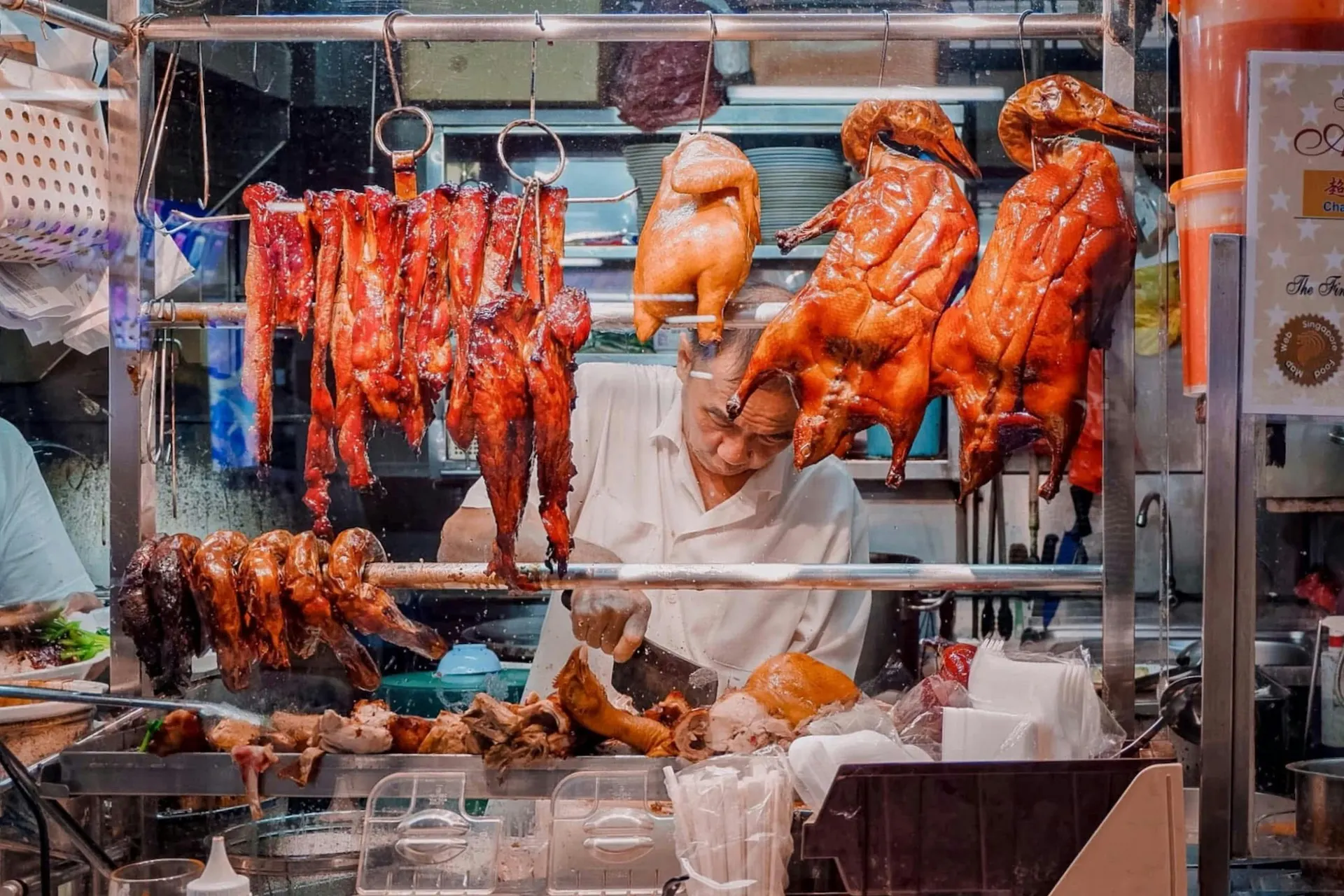
A yum cha table: chicken feet, rice rolls, siu mai and buns, shared by everyone.
Dim sum for every diet: halal, vegetarian and allergies
Dim sum is built on pork and shrimp, but you can still join in. Halal: the Islamic Centre Canteen on the 5th floor of the Masjid Ammar and Osman Ramju Sadick Islamic Centre (40 Oi Kwan Road, Wan Chai), listed by HKTB as halal-certified, serves Cantonese dim sum with beef and chicken in place of pork, dim sum at lunchtime. Vegetarian: Buddhist vegetarian restaurants – such as the one in Nan Lian Garden beside Chi Lin Nunnery, and Po Lin Monastery's kitchen on Lantau – make dim sum from mushrooms, tofu and vegetables; in ordinary restaurants, try veggie dumplings (素餃), turnip cake (check for sausage), cheung fun with plain filling, and sweets. Say ngo sik sou (我食素, 'I'm vegetarian').
Shellfish and peanut allergies: shrimp turns up in many fillings and peanut oil is common; show a written note in Chinese (we give the phrase on our Cantonese page). Gluten-free is hard – wheat starch is in har gow wrappers and soy sauce contains wheat. Our dining guide has more on dietary needs.
Make your own: dim sum classes and food tours
If you want to understand what goes into a har gow pleat, a class is the best way in. Maxim's, the group behind City Hall Maxim's Palace, runs a dim sum academy; others teach Hong Kong egg tarts. Food tours take you to yum cha with a guide who orders for you. These are run by independent operators and described from their listing titles.
Maxim's Dim Sum Academy cooking class
A Cantonese dim sum cooking class run by the Maxim's group.
Check availabilityBook via Klook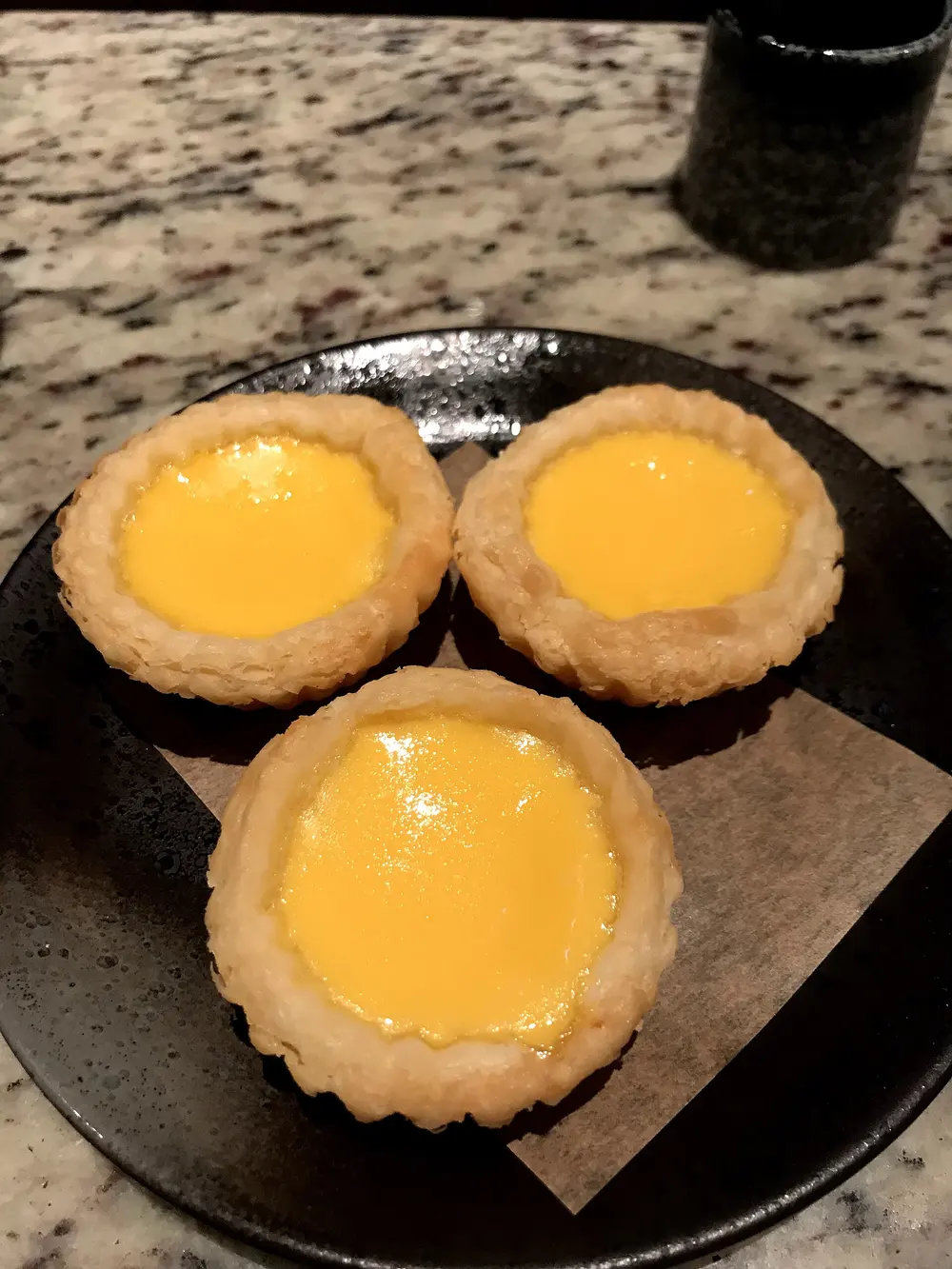
Hong Kong egg tart and custard mooncake class
Bake Hong Kong-style egg tarts and custard mooncakes in a hands-on class.
Check availabilityBook via GetYourGuide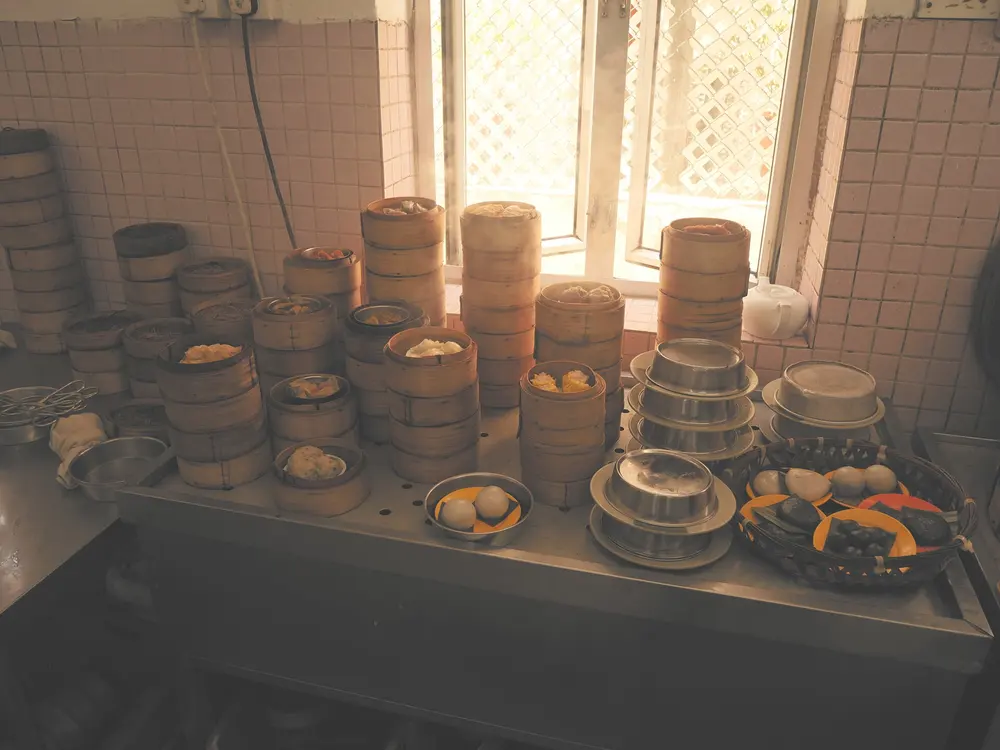
Small-group dim sum lunch with 30 items
A guided yum cha lunch for a small group, with a long list of dishes to taste.
Check availabilityBook via GetYourGuideTour listings are on Klook. Prices, times and cancellation terms are shown live on each listing and can change; HongKongTravel.com may earn a commission at no extra cost to you.
Timing, prices and practical tips
- Best time: weekdays before 11 am or after 2 pm. Weekend mornings are packed with families; queues of 30–60 minutes are normal at famous places.
- Early bird and afternoon discounts: many large restaurants offer cheaper dim sum before about 11 am or in the mid-afternoon ('下午茶' haa6 ng5 caa4).
- Budget: specialist dim sum shops are among the cheapest sit-down meals in Hong Kong; hotel dim sum costs several times more. Prices are always on the sheet or QR menu.
- Booking: hotel restaurants and Man Wah or Tin Lung Heen need reservations, especially at weekends; old-style teahouses and specialists usually don't take bookings.
- Takeaway: most places pack leftovers (daa2 baau1, 打包) or sell frozen dim sum and buns to go.
- Holidays: Lunar New Year morning is a peak yum cha time – book or go elsewhere (see Chinese New Year).
Frequently asked questions
What is the difference between dim sum and yum cha?
Yum cha (飲茶, 'drink tea') is the meal and the social occasion; dim sum (點心) are the small dishes eaten with the tea. Locals say they are going to yum cha.
What dim sum should I order first?
Start with har gow (shrimp dumplings), siu mai, char siu bao, a rice noodle roll (cheung fun) and chicken feet if you're adventurous; finish with egg tarts or custard buns.
What time do people eat dim sum in Hong Kong?
From early morning to mid-afternoon, with the peak between noon and 2 pm and on weekend mornings. Many big restaurants serve dim sum only until about 3–4 pm.
Where can I find dim sum trolleys in Hong Kong?
Trolleys are now rare. City Hall Maxim's Palace in Central and Lin Heung Lau (now in Sheung Wan, relocated in 2026) are the best-known places that still use them.
Do I need to tip at dim sum restaurants?
No. Many restaurants add a 10% service charge, and a per-person tea charge is normal. Leaving small change is optional.
Is there halal dim sum in Hong Kong?
Yes. The Islamic Centre Canteen in Wan Chai, listed as halal-certified by HKTB, serves dim sum at lunch with beef and chicken instead of pork.
What is the most famous dim sum restaurant in Hong Kong?
For visitors, Tim Ho Wan in Sham Shui Po (known for baked char siu buns) and City Hall Maxim's Palace (for its trolleys and harbour view). For fine dining, Tin Lung Heen holds two Michelin stars in the 2026 Guide.
Sources and official information
Facts were checked against these official sources in November 2026. Opening hours, fares and timetables change, so confirm before you go.
- guide.michelin.com
- guide.michelin.com
- timeout.com
- lcsd.gov.hk
- discoverhongkong.com
- discoverhongkong.com
- lcsd.gov.hk
HongKongTravel.com is an independent guide, not the official site of the Hong Kong Tourism Board, the HKSAR Government or any operator. Some links are affiliate links: tours go to {tours} and hotels go to {hotels}, and we may earn a commission at no extra cost to you.