In short
- Lunar New Year's Day 2027 is Saturday 6 February – the Year of the Goat begins. Public holidays: 6, 8 and 9 February (day 2 is a Sunday).
- Before: flower fairs in Victoria Park and other parks run for about a week and close in the early hours of New Year's Day; New Year's Eve (5 Feb) is the night for Wong Tai Sin's 'first incense'.
- During: HKTB's night parade in Tsim Sha Tsui is traditionally on day 1 and the harbour fireworks on day 2 (7 Feb 2027) – both confirmed by HKTB a few weeks ahead. Day 3 (8 Feb) is Che Kung's birthday and the Lunar New Year race day at Sha Tin.
- What closes: many family-run restaurants, shops and markets shut for 2–7 days; LCSD museums close on days 1 and 2; banks close on the public holidays. Malls, MTR, chain restaurants and big attractions stay open.
- Hotels and flights are at their most expensive; mainland visitors surge across the border. Book early and say gung hei fat choi.
Chinese New Year 2027 dates at a glance
| Date | Lunar day | What happens |
|---|---|---|
| ≈ 31 Jan – 6 Feb | Last week of the old year | Lunar New Year fairs (flower markets) in Victoria Park and parks in every district; spring cleaning, haircuts and shopping |
| Fri 5 Feb | New Year's Eve (除夕) | Family reunion dinner; Wong Tai Sin Temple opens late for the first incense; fairs at their busiest until early morning |
| Sat 6 Feb | Day 1 (年初一) | Public holiday. Visits to older relatives, lai see red packets; HKTB night parade usually in the evening |
| Sun 7 Feb | Day 2 (年初二) | 'Beginning of the year' (開年) feast; harbour fireworks traditionally tonight (HKTB to confirm) |
| Mon 8 Feb | Day 3 (年初三) | Public holiday. Che Kung's birthday – crowds at Che Kung Temple, Sha Tin; Lunar New Year race meeting at Sha Tin |
| Tue 9 Feb | Day 4 (年初四) | Public holiday (in lieu of day 2). Many shops reopen from today or day 5 |
| Fri 12 Feb | Day 7 (人日) | 'Everyone's birthday' (Yan Yat) |
| Sat 20 Feb | Day 15 (元宵) | Spring Lantern Festival – lantern displays end the season |
Lunar New Year fairs: Hong Kong's flower markets
For about a week before New Year, the Lunar New Year fairs (年宵市場, nin siu si coeng) take over sports grounds across the city. The biggest by far is in Victoria Park, Causeway Bay (MTR Causeway Bay or Tin Hau), with others in parks such as Fa Hui Park in Mong Kok and Cheung Sha Wan Playground. Half of every fair is flowers and plants chosen for their auspicious names or colours: peach blossom (桃花) for romance, kumquat trees (桔) whose name sounds like 'luck', orchids, narcissus and pussy willow. The other half is 'dry goods' stalls selling inflatables, plush toys of the coming zodiac animal, lucky decorations and topical novelties.
Go in the evening, when the fair is lit up; the last night (New Year's Eve, 5 February 2027) is the most crowded and runs until the early hours of New Year's Day, with flower sellers slashing prices towards the end. LCSD publishes the exact dates and locations in January; based on past years, expect the fairs to run from about 31 January to 6 February 2027. The Mong Kok Flower Market on Flower Market Road is a permanent alternative and especially lively in the same week.
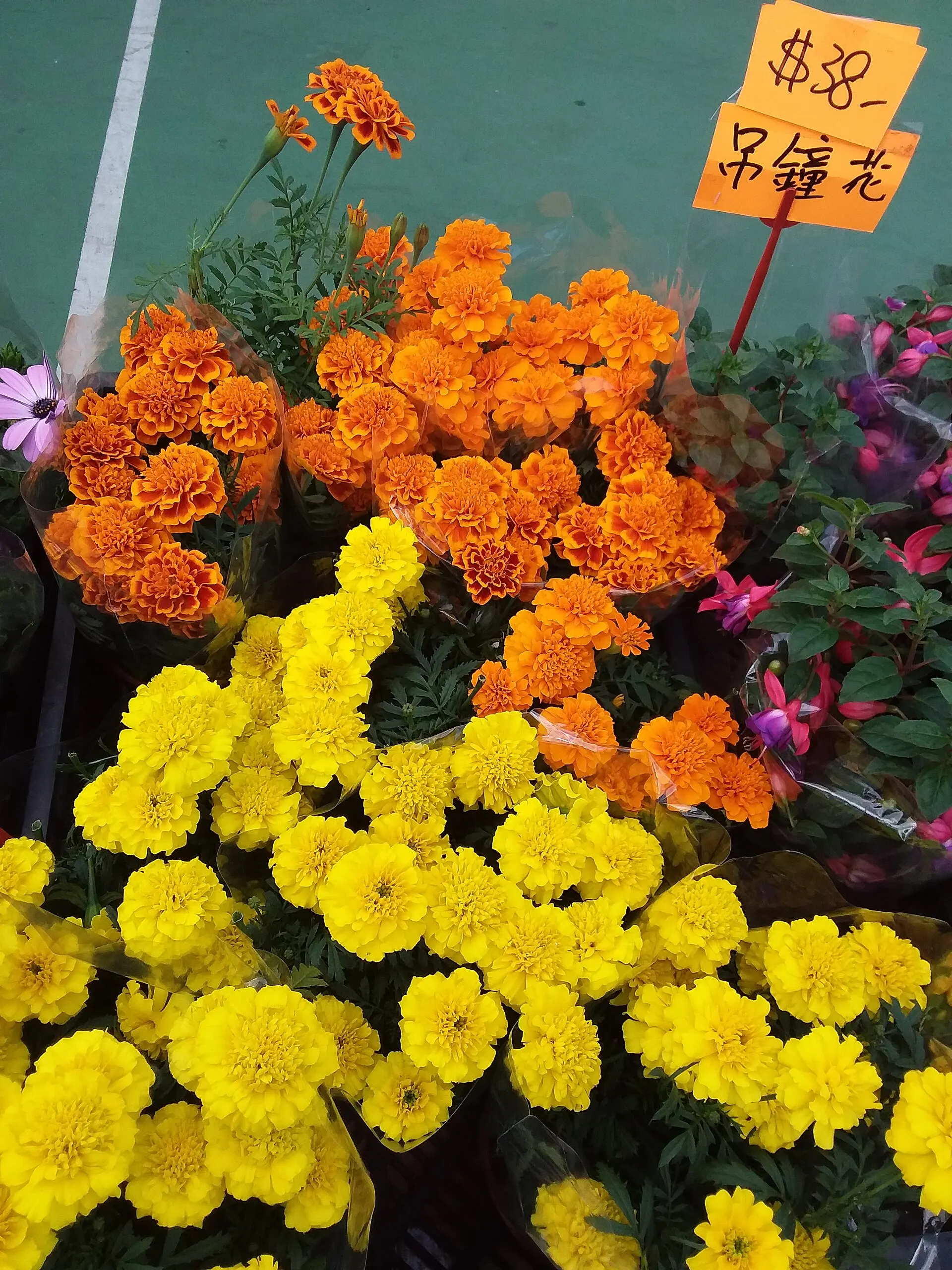
Flower stalls at the Lunar New Year fair in Victoria Park, Causeway Bay.
Temples at New Year: Wong Tai Sin and Che Kung
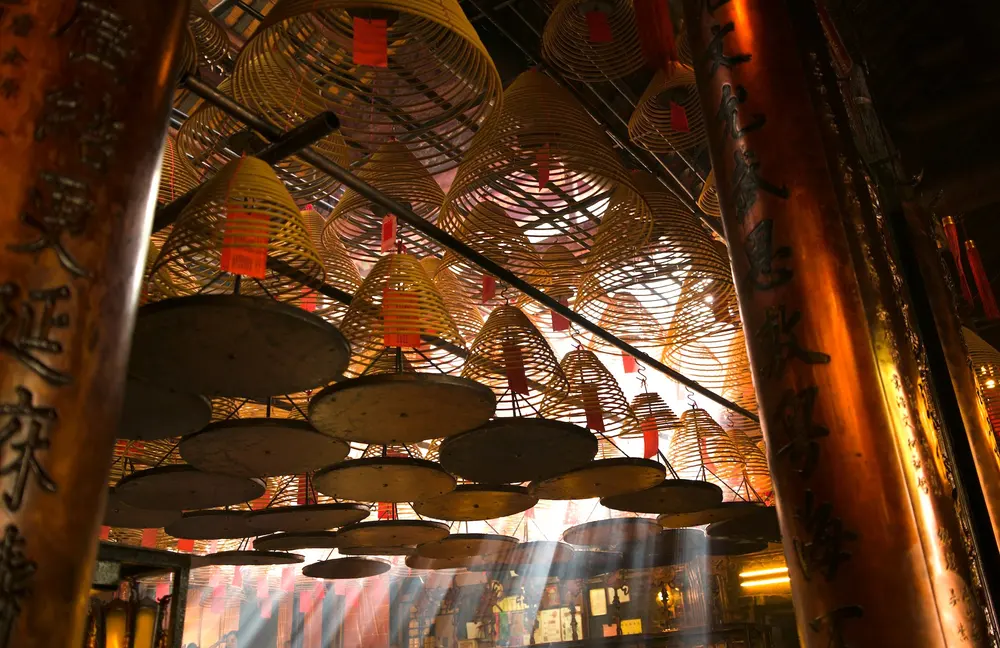
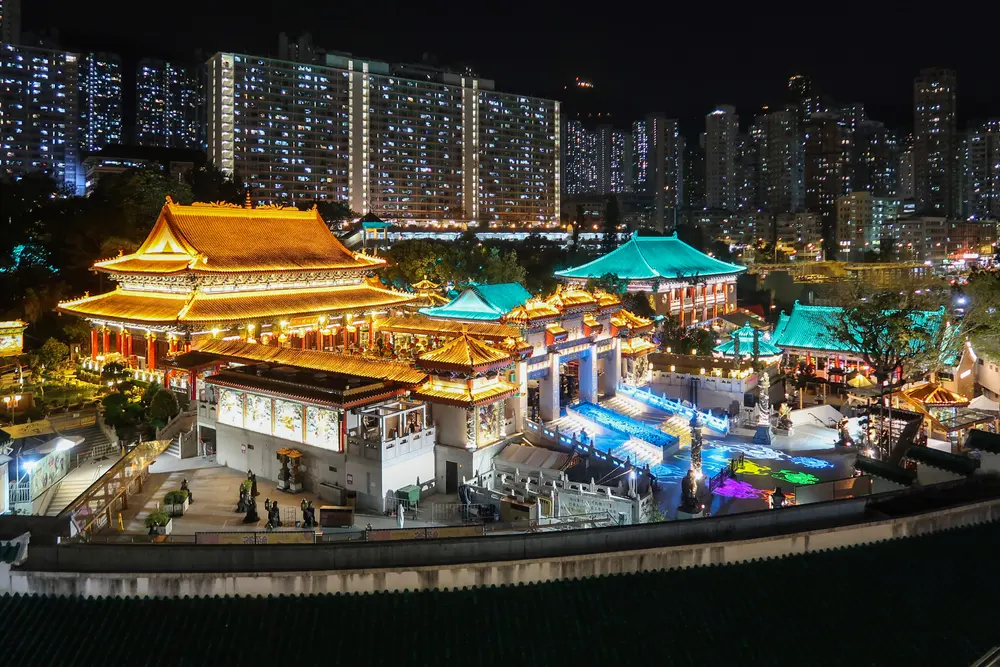
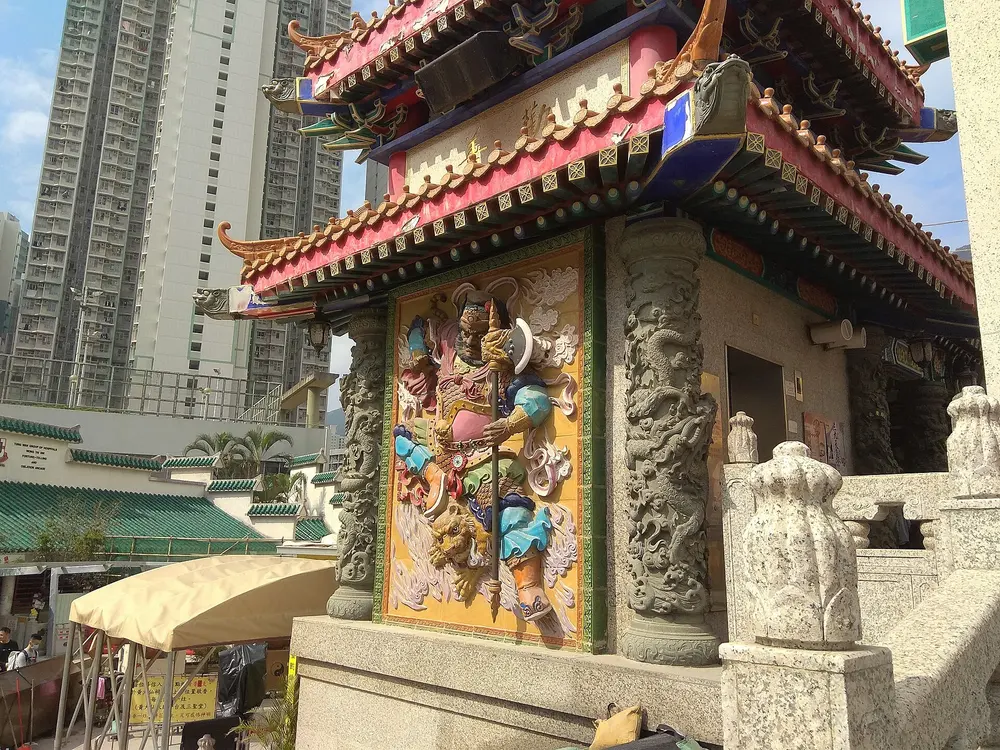
Wong Tai Sin Temple (黃大仙祠) in Kowloon is the place to be on New Year's Eve. Tens of thousands queue from the evening for the chance to place the first incense (頭炷香) of the year at midnight, believed to bring the best luck; the temple stays open through the night. In the days after, people come to shake fortune sticks (求籤, kau cim) from a bamboo cylinder and have the result read by interpreters in the arcade beside the temple. MTR Wong Tai Sin station, Exit B2, is next to the entrance. In normal times the temple opens about 7 am to 5.30 pm; New Year hours are extended and announced by the Sik Sik Yuen, which runs it.
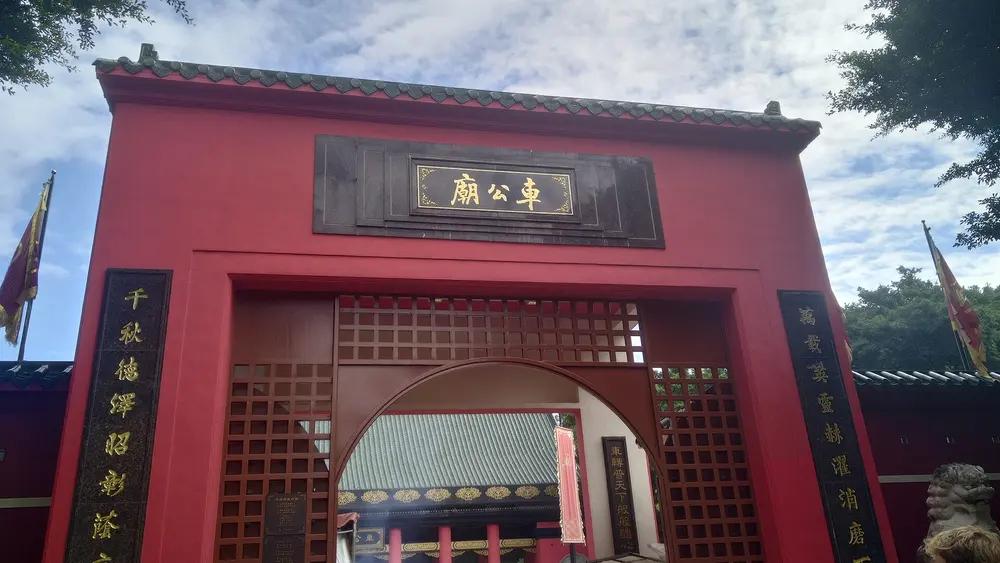
On the third day – 8 February 2027 – the focus shifts to Che Kung Temple (車公廟) in Tai Wai, Sha Tin, for the birthday of Che Kung, a Song dynasty general. Worshippers turn the large copper windmill (風車) inside the hall clockwise to turn their luck around and beat the drum for good fortune. Day 3 is called cek hau (赤口, 'red mouth'), a day when quarrels are said to be likely, so many people visit temples rather than relatives. The temple is a short walk from Che Kung Temple MTR station on the Tuen Ma line; on day 3 expect queues stretching outside.
In Tai Po, the Lam Tsuen Wishing Trees (林村許願樹) are the third New Year pilgrimage: visitors write wishes on 'bao die' paper and tie them to an artificial tree (throwing them onto the old banyan was stopped after a branch collapsed in 2005). The Lam Tsuen Well-wishing Festival runs over the New Year period; take bus 64K from Tai Po Market. See our temples guide for more.
The night parade and the harbour fireworks
HKTB's International Chinese New Year Night Parade brings floats, marching bands, lion and dragon dancers and overseas performance troupes through Tsim Sha Tsui on the evening of the first day. In 2026 it ran on 17 February from 8 pm to 9.45 pm, from the Hong Kong Cultural Centre Piazza along Canton Road, Haiphong Road and Nathan Road. Pavement spaces are free and fill an hour or more before the start; reserved grandstand seats are sold through HKTB's partners. The 2027 parade, expected on Saturday 6 February, will be announced by HKTB, usually in January.
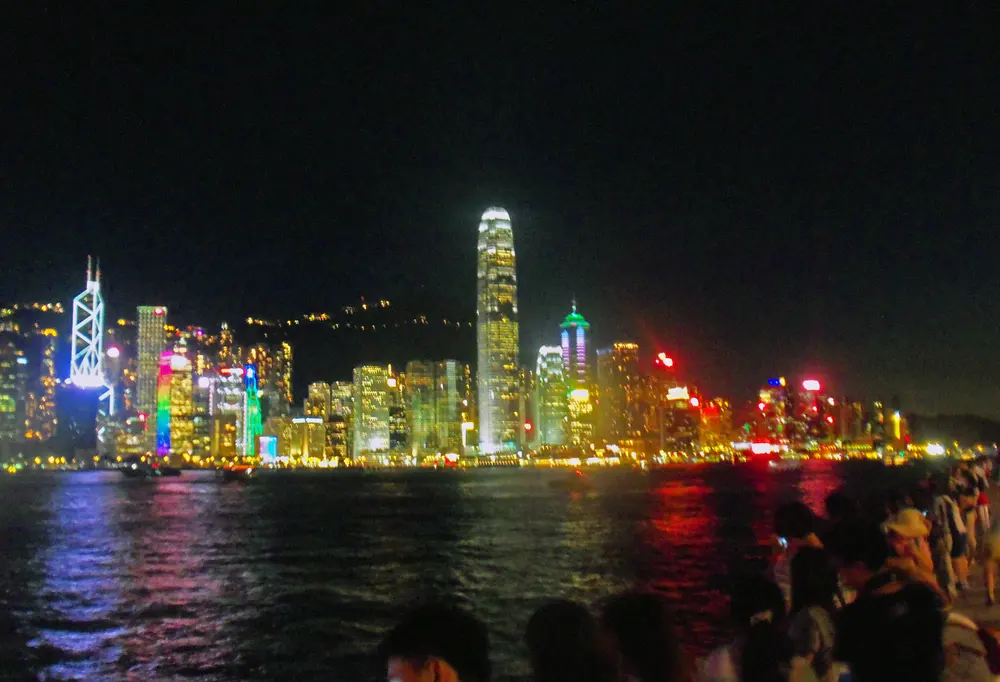
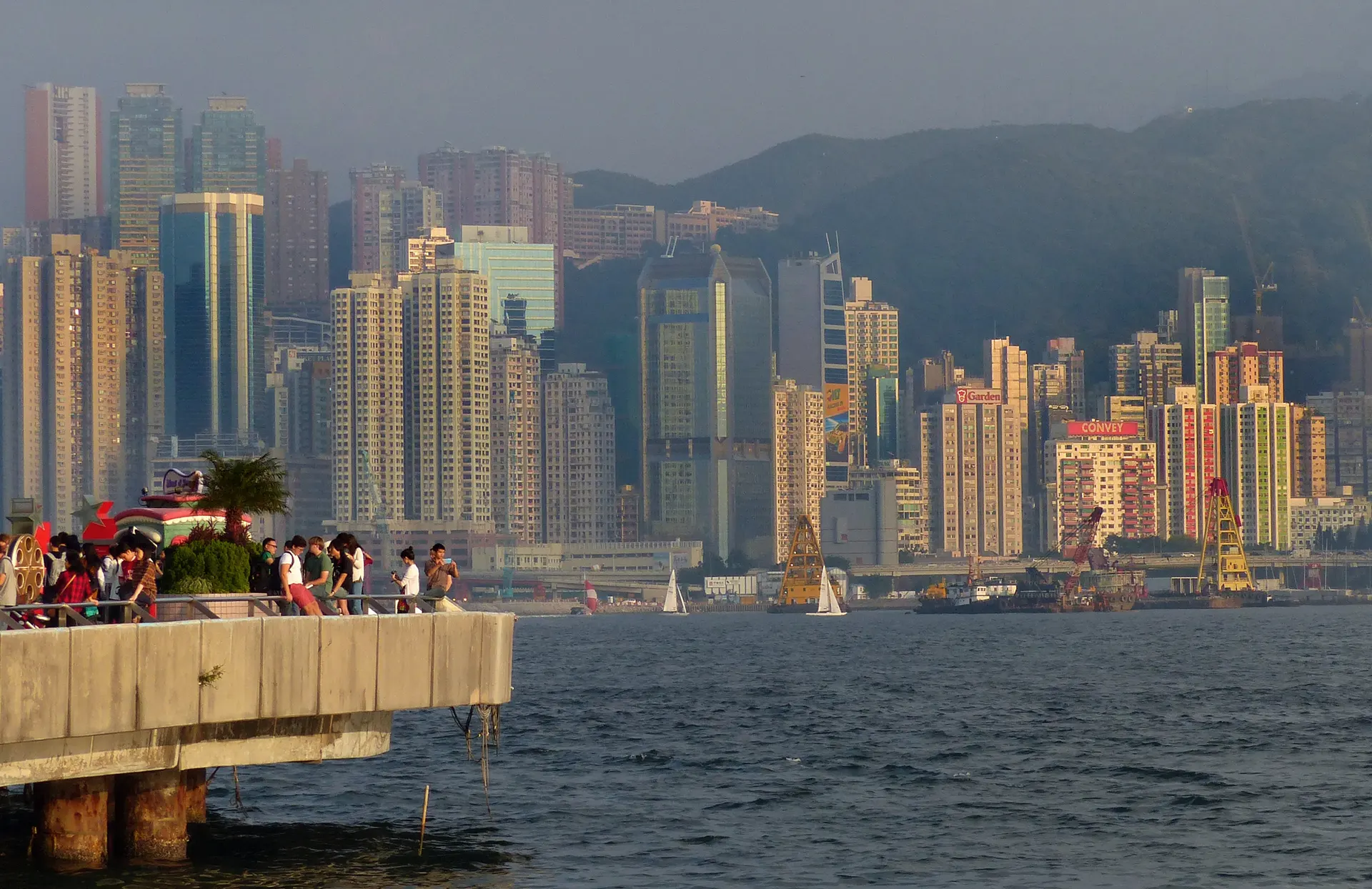
The Lunar New Year fireworks traditionally light up Victoria Harbour on the evening of the second day. In 2026 the 23-minute display started at 8 pm on 18 February. For 2027 that would be Sunday 7 February, subject to HKTB's announcement and the weather. Good free vantage points are the Tsim Sha Tsui promenade from the Avenue of Stars to the Cultural Centre, and the Wan Chai and Central harbourfronts; police manage crowds and close full areas, so arrive by 6 pm and use the MTR. Many harbour-view restaurants and cruise operators sell fireworks-night packages.
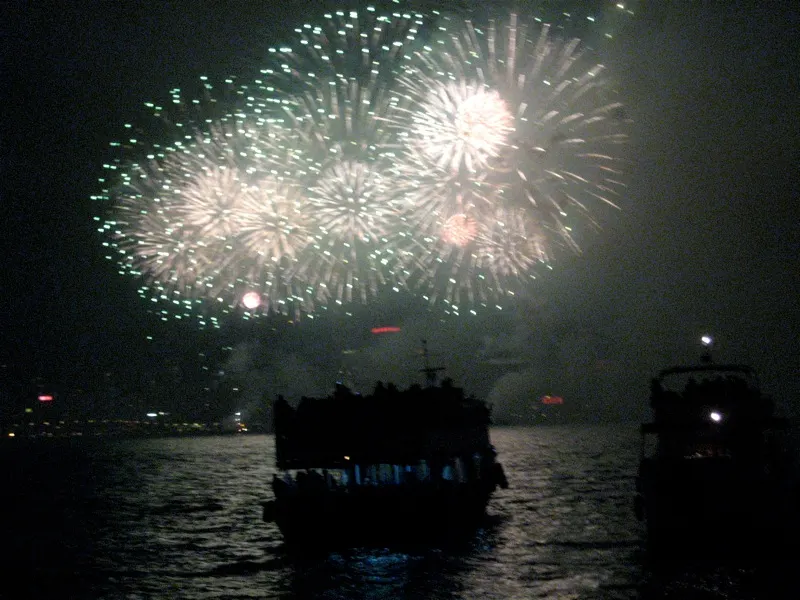
Lunar New Year fireworks over Victoria Harbour.
Customs worth knowing: lai see, greetings and food
Lai see (利是, red packets) are handed out by married people to children, unmarried relatives and, in Hong Kong, also to doormen, building staff and regular service workers – usually new banknotes in small amounts. The banks issue fresh notes in the weeks before, which is why you will see long queues at bank branches. Visitors are not expected to give lai see, but if you are staying in a serviced apartment or visiting friends, a small packet for the children is a kind gesture.
The standard greeting is 恭喜發財 gung hei faat coi ('wishing you prosperity'; Jyutping gung1 hei2 faat3 coi4), often answered with 利是逗來 lai si dau loi ('red packet, please') by cheeky children. 新年快樂 san nin faai lok means 'Happy New Year'. Our Cantonese phrases guide has the tones.
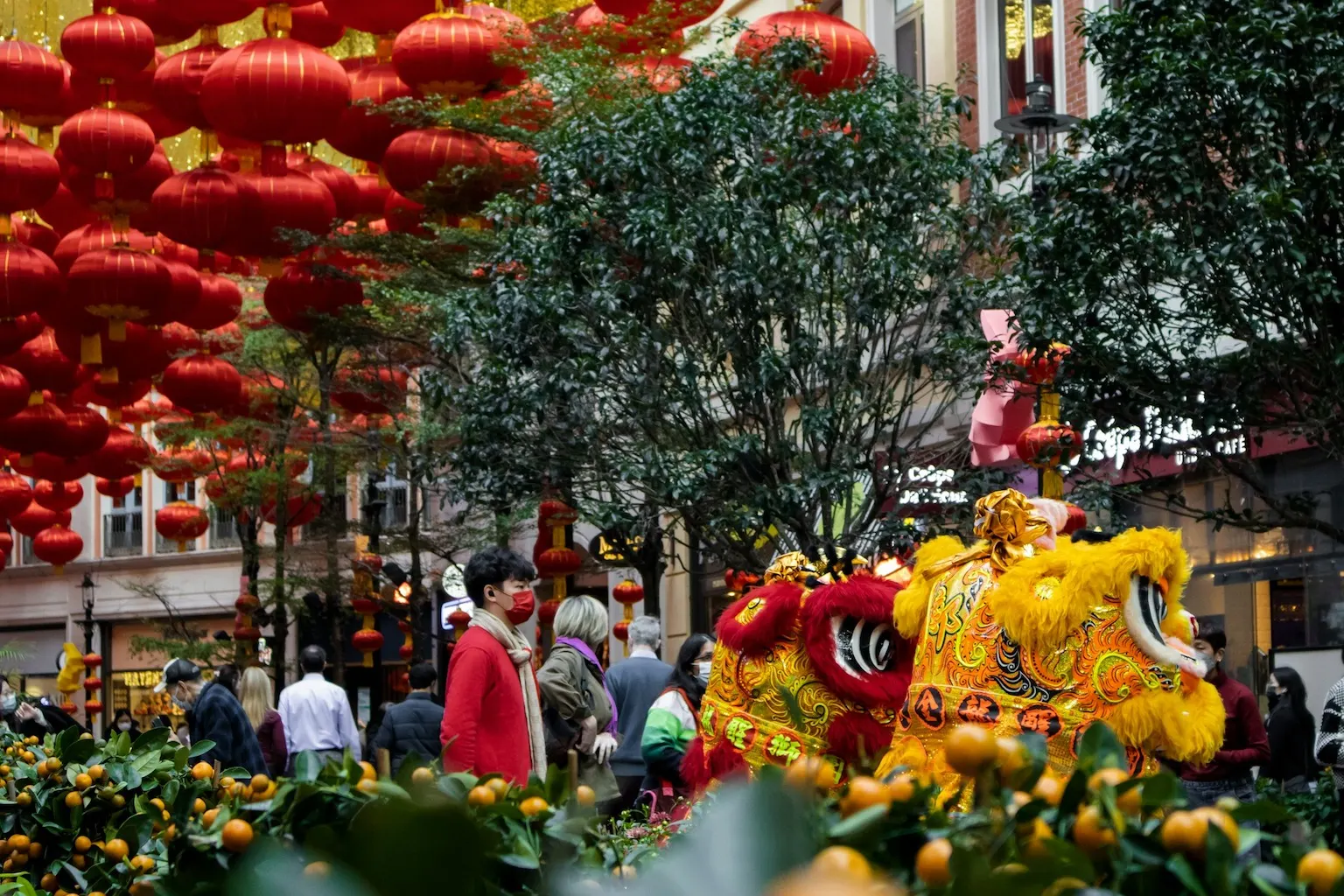
New Year food is full of puns: turnip cake (蘿蔔糕 lo baak gou, 'rising'), nin gou (年糕, a sweet glutinous cake for 'higher every year'), dumplings shaped like ingots, a tray of togetherness (全盒) of candied fruit and seeds for guests, and dishes of fish (魚 jyu, sounding like 'surplus'). Bakeries and hotel cake shops sell boxed turnip cake and nin gou from January. Lion dances visit shops and offices to bring luck in the first two weeks – listen for the drums.
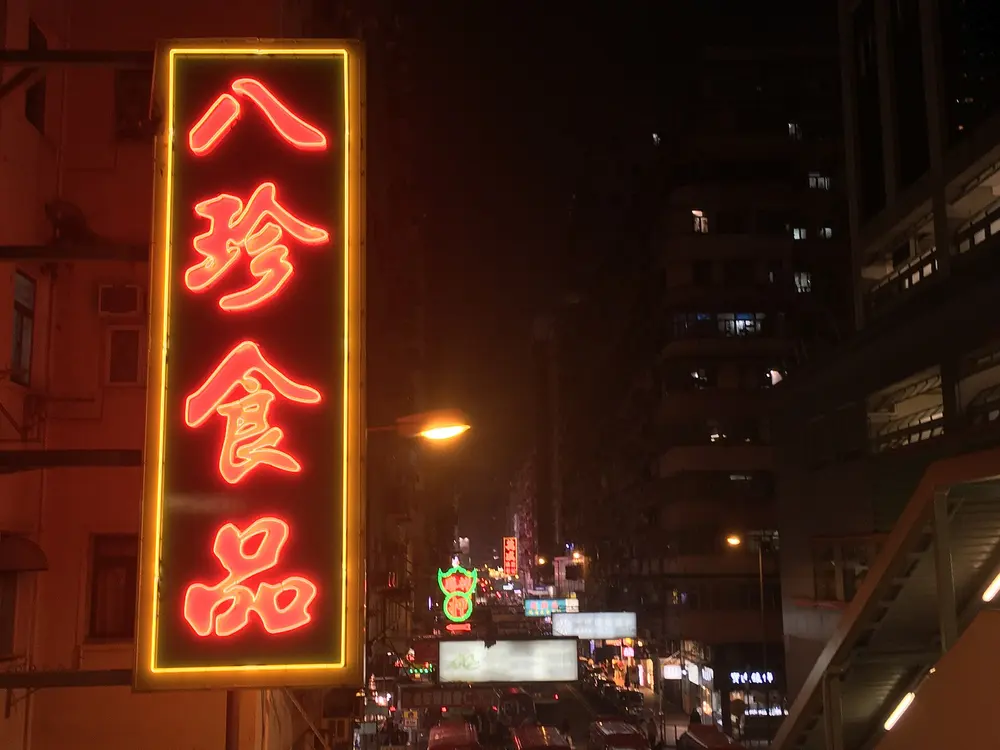
Superstitions you may notice: no sweeping or washing hair on day 1 (it 'sweeps away' luck), red clothes and new outfits, flowers and kumquats in every lobby, and decorations of the coming zodiac animal everywhere.
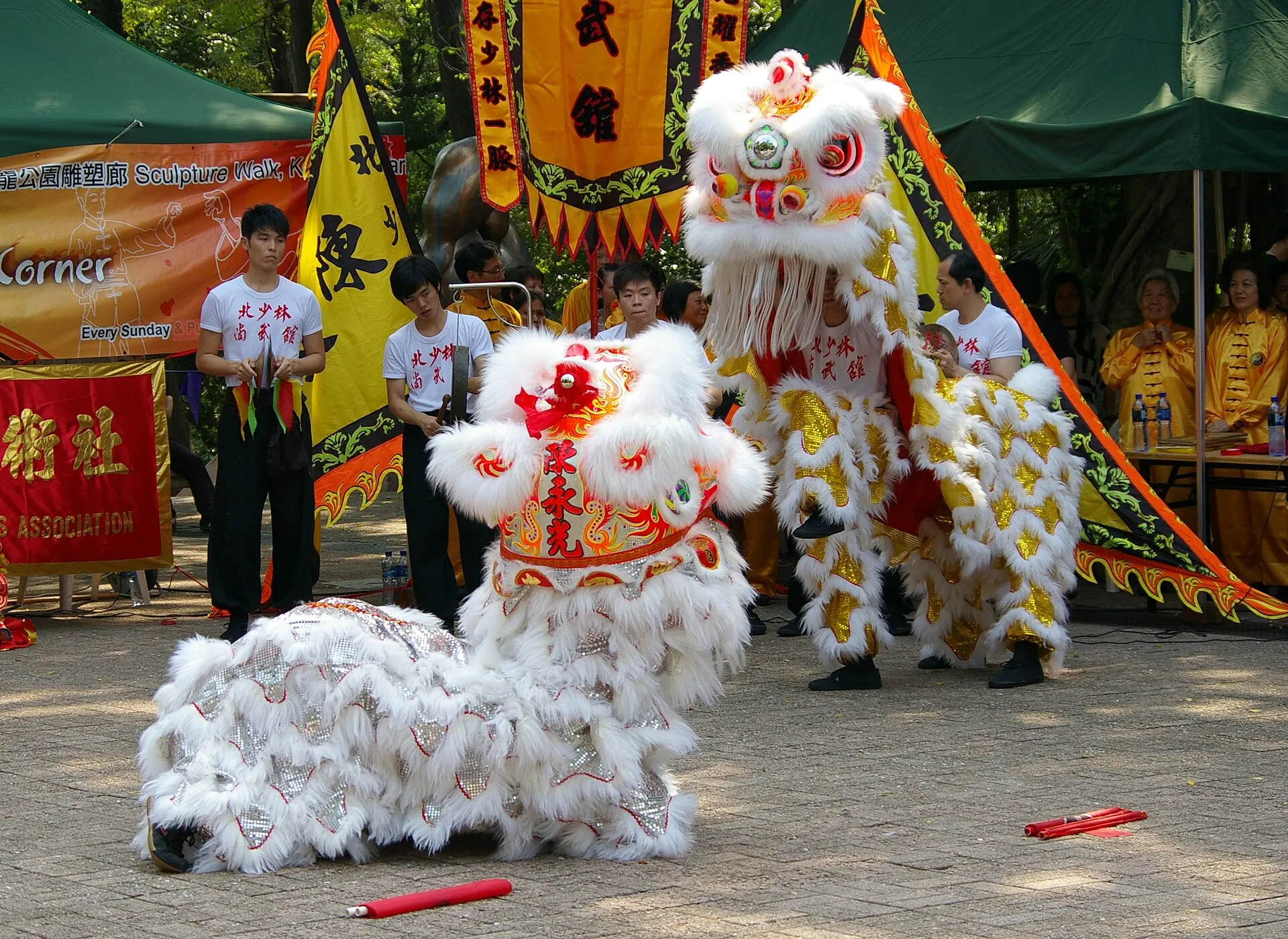
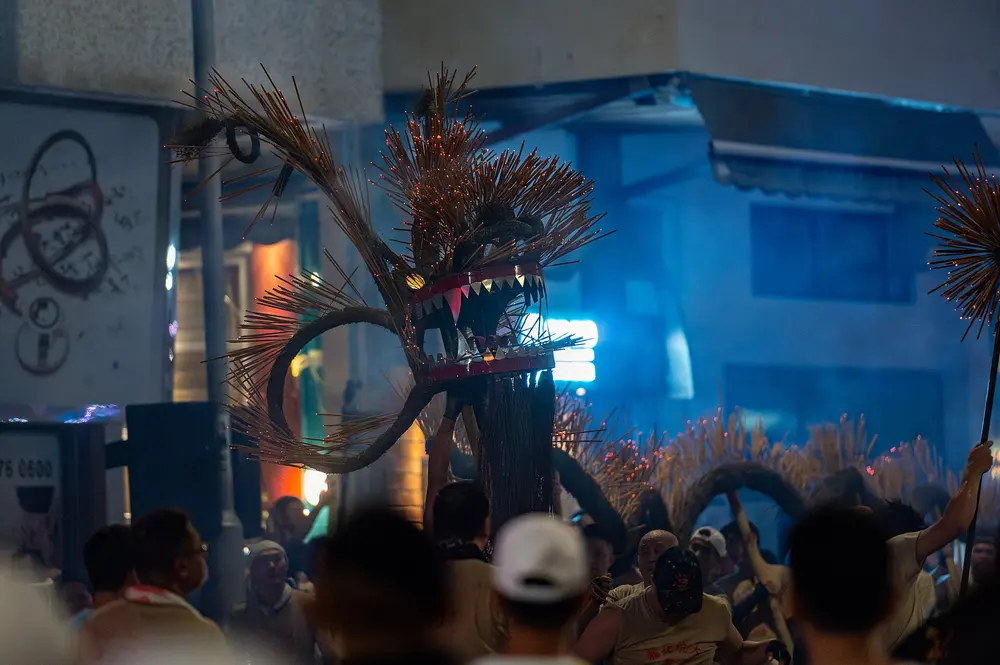
A lion dance troupe brings luck to a Kowloon street.
What's open and closed over Chinese New Year
Hong Kong does not shut down, but its rhythm changes. As a rule of thumb for 2027:
- Closed or partly closed: many family-run restaurants, cha chaan teng, street-food stalls, wet markets and small shops for 2–7 days (look for handwritten notices on the shutters); banks on 6, 8 and 9 February; government offices; LCSD museums on the first two days (6–7 February) and from 5 pm on New Year's Eve; some temples have special hours.
- Open: MTR, buses, trams and ferries (on holiday timetables; check MTR notices for any extended New Year's Eve service); malls and chain shops; hotel restaurants; Hong Kong Disneyland, Ocean Park, Ngong Ping 360 and the Peak Tram (with long queues); M+ and the Palace Museum check individually – M+ closed on Lunar New Year's Day in 2026.
- Busier and pricier: hotels (rates peak around the holiday), cross-border trains and checkpoints (mainland visitors arrive in large numbers), Macau ferries, restaurants offering festive set menus, and the theme parks.
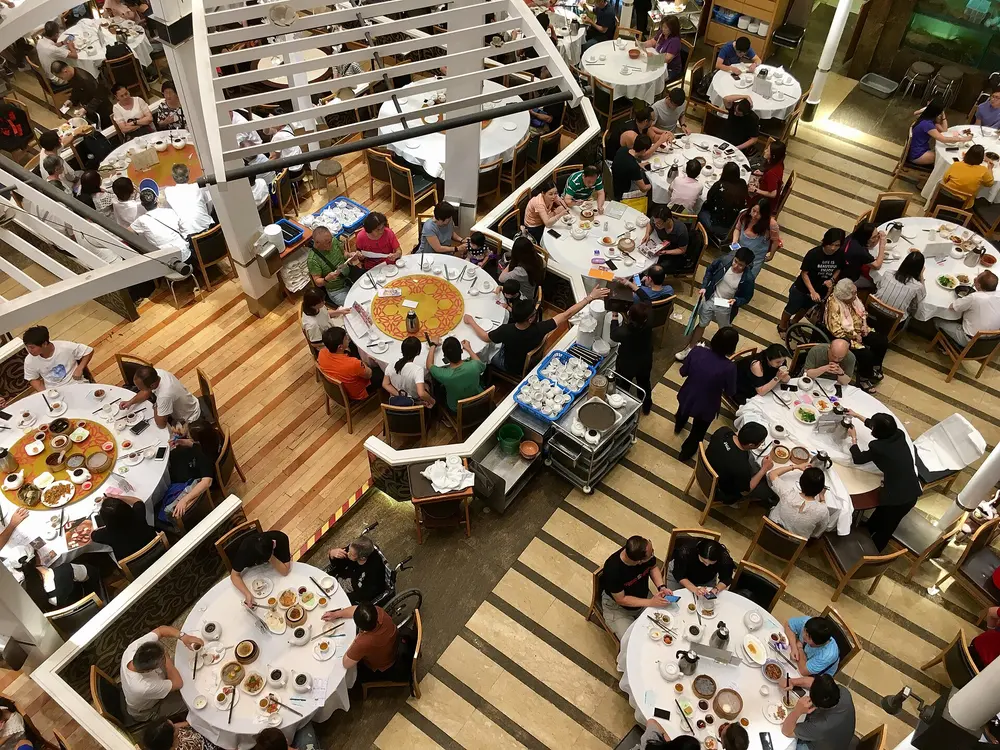
If you want to eat at a famous small restaurant, go before New Year's Eve or after the fifth day. Dim sum on New Year's Day morning at a large Chinese restaurant is a local tradition, so book. See our money guide for cash and payments and dining for alternatives.
Chinese New Year tours and seats
Most New Year experiences are free. If you would like a reserved seat at the night parade or a guide to explain the temple rituals, these products are run by independent operators and described from their listing titles; confirm that the 2027 date is on sale before you book.
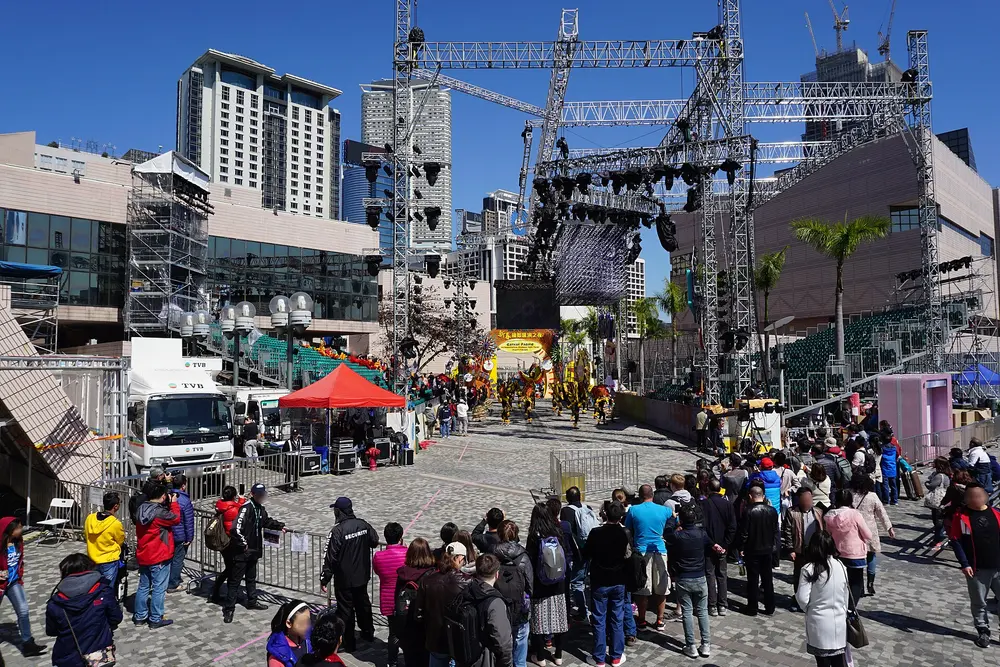
Chinese New Year tour with parade show and dinner
A Lunar New Year evening package with the parade and dinner; check the year offered.
Check availabilityBook via GetYourGuide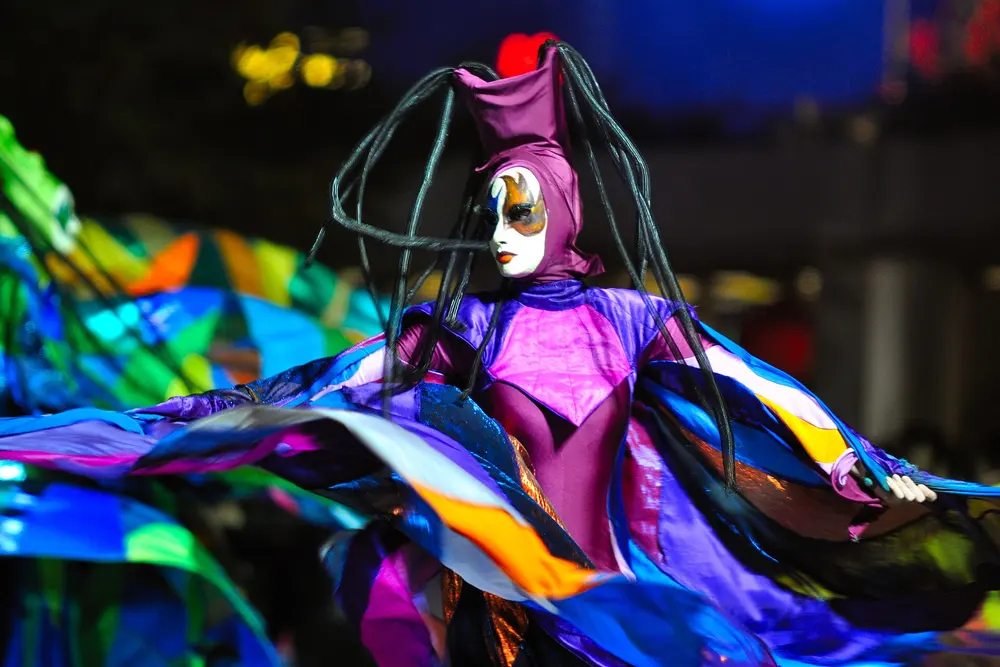
Chinese New Year parade seat, wishing tree and dim sum
A reserved seat at the Lunar New Year parade with a wishing-tree visit and dim sum; check the year offered.
Check availabilityBook via Klook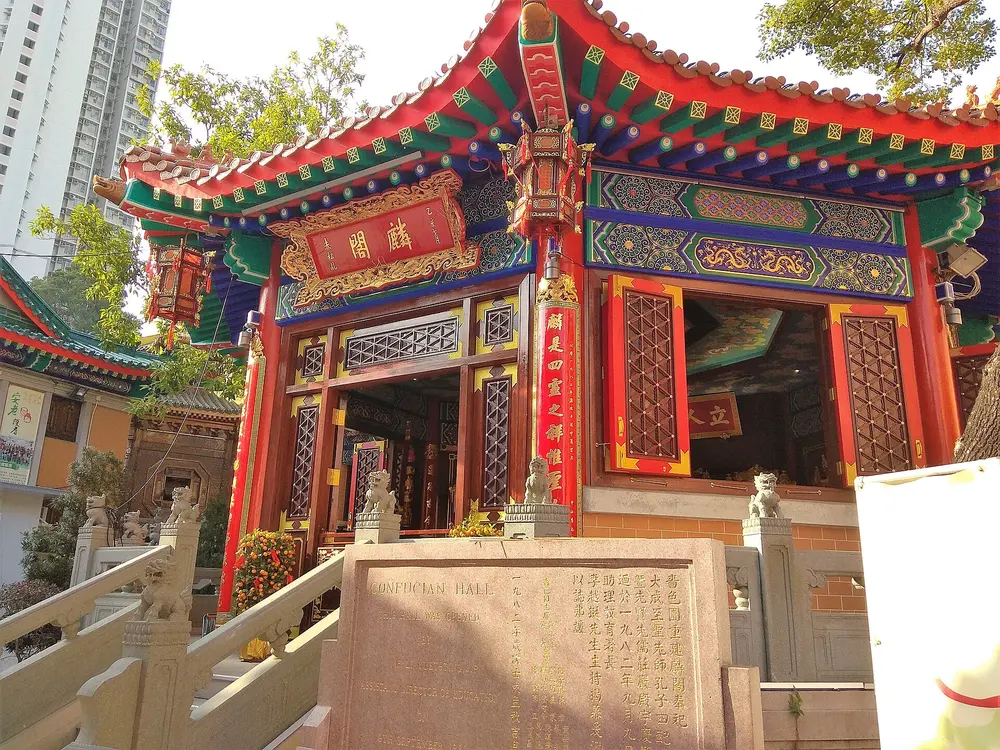
Ultimate praying temple tour
A guided tour of Hong Kong temples where locals pray for luck, love and health.
Check availabilityBook via Klook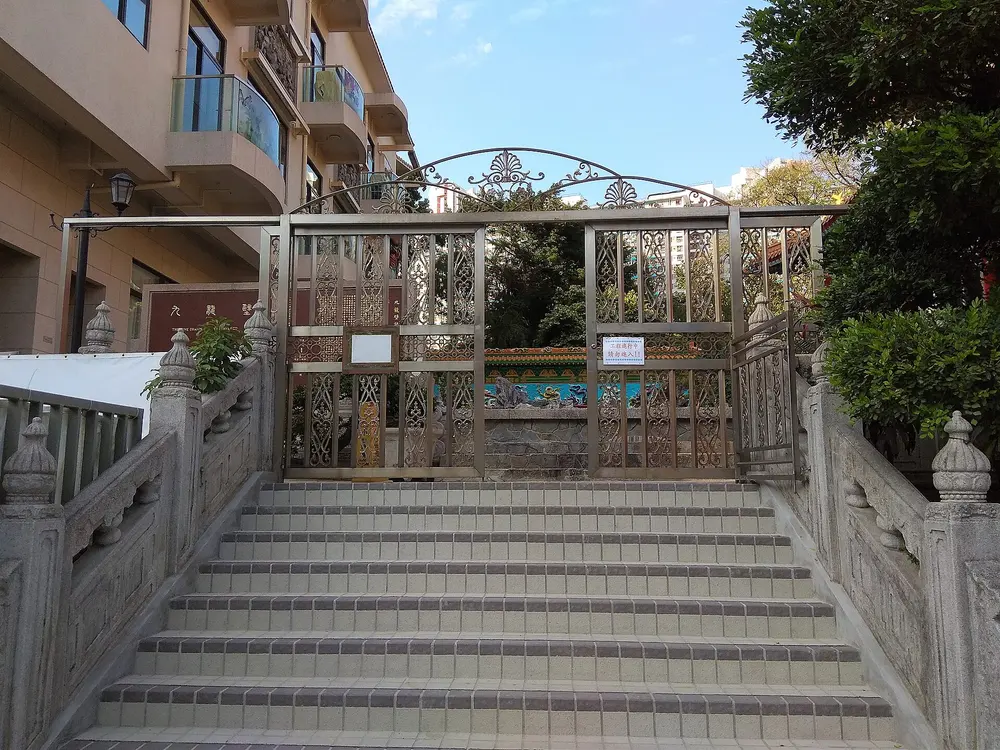
Kowloon Walled City, Wong Tai Sin and Chi Lin tour
Kowloon Walled City Park, Wong Tai Sin Temple and Chi Lin Nunnery in one guided outing.
Check availabilityBook via GetYourGuideTour listings are on GetYourGuide. Prices, times and cancellation terms are shown live on each listing and can change; HongKongTravel.com may earn a commission at no extra cost to you.
Frequently asked questions
When is Chinese New Year 2027 in Hong Kong?
Saturday 6 February 2027 is Lunar New Year's Day, the first day of the Year of the Goat. The public holidays are Saturday 6, Monday 8 and Tuesday 9 February 2027.
When are the Chinese New Year fireworks in Hong Kong in 2027?
Traditionally the fireworks are on the second day of the new year, which would be Sunday 7 February 2027. HKTB confirms the date and time a few weeks ahead; in 2026 the display began at 8 pm on the second day.
Is there a Chinese New Year parade in Hong Kong?
Yes. HKTB's International Chinese New Year Night Parade usually runs through Tsim Sha Tsui on the evening of the first day. In 2026 it ran from 8 pm to 9.45 pm on Canton Road, Haiphong Road and Nathan Road.
Are shops closed during Chinese New Year in Hong Kong?
Malls, chain stores and big attractions stay open, but many small family businesses close for several days, as do banks and government offices on the public holidays. Museums run by LCSD close on the first two days.
Where is the biggest Lunar New Year flower market in Hong Kong?
Victoria Park in Causeway Bay. It runs for about a week until the early hours of New Year's Day; the last night is the busiest.
Is Chinese New Year a good time to visit Hong Kong?
It is the most festive time of year, with cool, dry weather – but also the most expensive for hotels, and some favourite small restaurants close. Arrive a few days before New Year's Day to see the fairs and stay until the fifth day for shops to reopen.
What should I say at Chinese New Year in Hong Kong?
Gung hei faat coi (恭喜發財), 'wishing you prosperity', is the classic Cantonese greeting; san nin faai lok (新年快樂) means 'Happy New Year'.
Sources and official information
Facts were checked against these official sources in November 2026. Opening hours, fares and timetables change, so confirm before you go.
- 1823.gov.hk
- hko.gov.hk
- discoverhongkong.com
- info.gov.hk
- news.gov.hk
- lcsd.gov.hk
- www1.siksikyuen.org.hk
- hk.art.museum
- mplus.org.hk
HongKongTravel.com is an independent guide, not the official site of the Hong Kong Tourism Board, the HKSAR Government or any operator. Some links are affiliate links: tours go to {tours} and hotels go to {hotels}, and we may earn a commission at no extra cost to you.