In short
- Cantonese cuisine prizes freshness and 'wok hei' (the breath of the wok): steamed fish, roast meats, clear soups and light sauces. In Hong Kong it ranges from HK$50 noodle shops to the city's three-Michelin-star dining rooms.
- Ten things to eat: roast goose, char siu, wonton noodles, beef brisket noodles, congee, steamed fish, typhoon-shelter crab, claypot rice, dim sum and a sweet dessert soup.
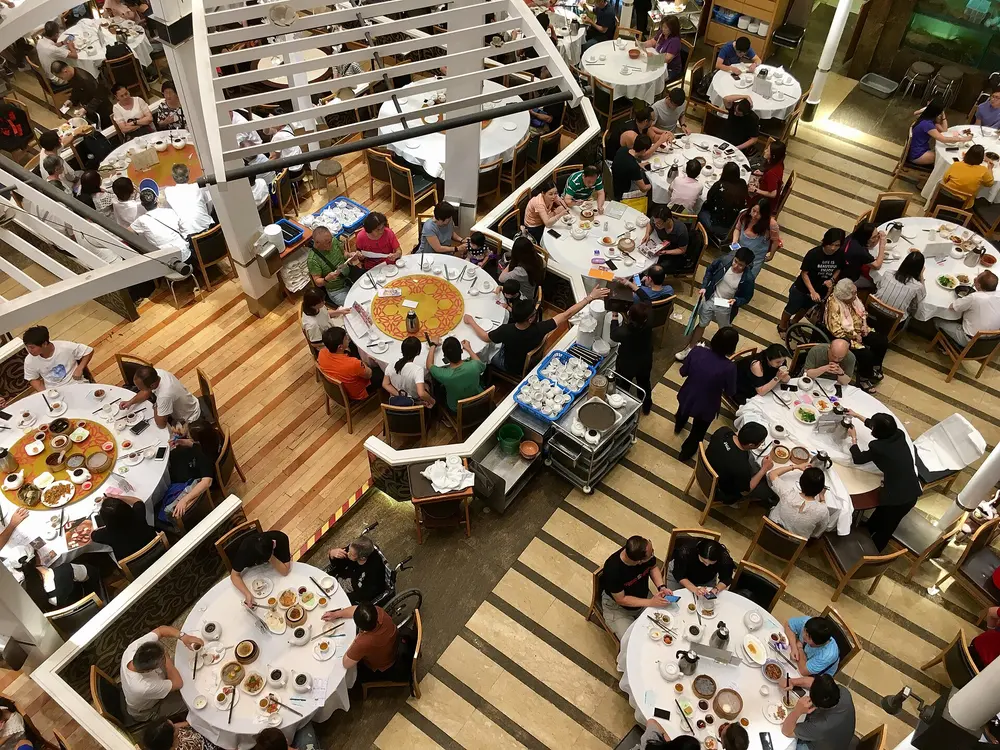
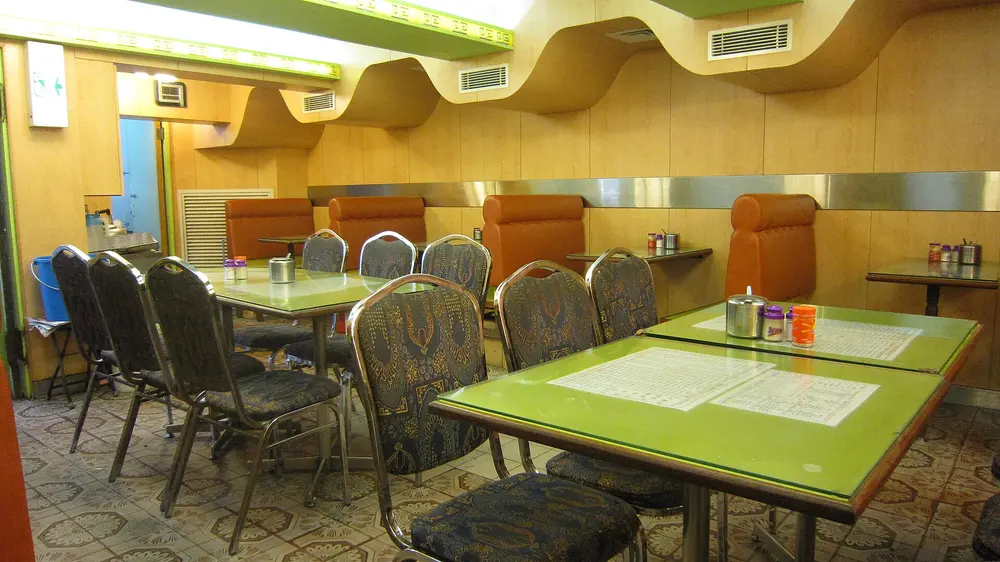
- Where locals eat: roast-meat shops (燒味), noodle shops, cha chaan teng, dai pai dong street stalls, seafood villages such as Lei Yue Mun and Sai Kung, and big Cantonese restaurants for yum cha and banquets.
- Etiquette: share dishes, pour tea for others, expect a 10% service charge in sit-down restaurants and no need to tip more.
- Dietary needs: halal-certified Cantonese food exists (HKTB lists the Islamic Centre Canteen), Buddhist vegetarian restaurants are everywhere, and the 2026 Michelin Guide counts 77 starred restaurants in Hong Kong.
What makes Cantonese food different
Cantonese (粵菜, jyut6 coi3) is the cooking of Guangdong province, and Hong Kong is one of its two capitals with Guangzhou. Its rule is simple: the ingredient should taste of itself. Fish is steamed whole with ginger, spring onion and hot oil; chicken is poached until just set; greens are blanched and dressed with oyster sauce; soups are double-boiled for hours. Where other Chinese cuisines reach for chilli and spice, Cantonese cooks rely on wok hei (鑊氣, wok6 hei3) – the smoky aroma of a scorching wok – and on careful technique.
Hong Kong added layers of its own: the colonial cafés that became cha chaan teng, the street culture of the dai pai dong, refugee kitchens from Chiu Chow, Shanghai and Hakka villages, and a fine-dining scene in hotel Chinese restaurants. The Hong Kong 2026 Michelin Guide counts 77 starred restaurants in the city, including seven with three stars; among the Cantonese ones, T'ang Court (The Langham, Tsim Sha Tsui) and Forum (Causeway Bay) hold three stars and Tin Lung Heen (Ritz-Carlton, ICC) two.
Cantonese dishes to try in Hong Kong
| Dish | Chinese | Where to find it | Notes |
|---|---|---|---|
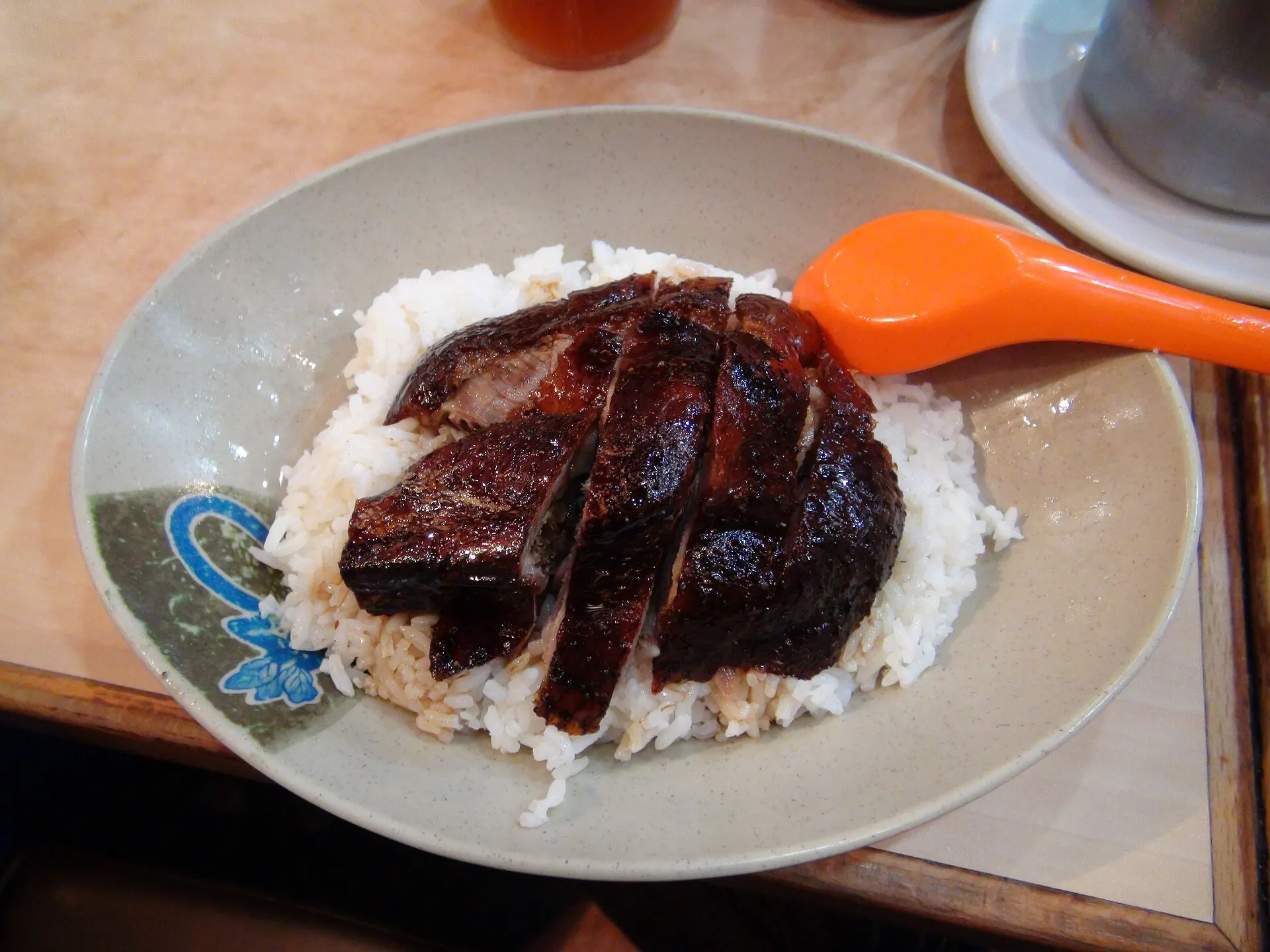
| Roast goose | 燒鵝 siu1 ngo2 | Roast-meat shops, Cantonese restaurants | Crisp skin, rich meat, plum sauce; Hong Kong's favourite roast |
| Char siu | 叉燒 caa1 siu1 | Roast-meat shops | Honey-glazed barbecued pork; ask for 'bun fei sau' (半肥瘦, half-fat) |
| Crispy roast pork | 燒肉 siu1 juk6 | Roast-meat shops | Crackling-topped pork belly |
| Soy sauce chicken / white cut chicken | 豉油雞 / 白切雞 | Roast-meat shops | Poached chicken with ginger and spring-onion oil |
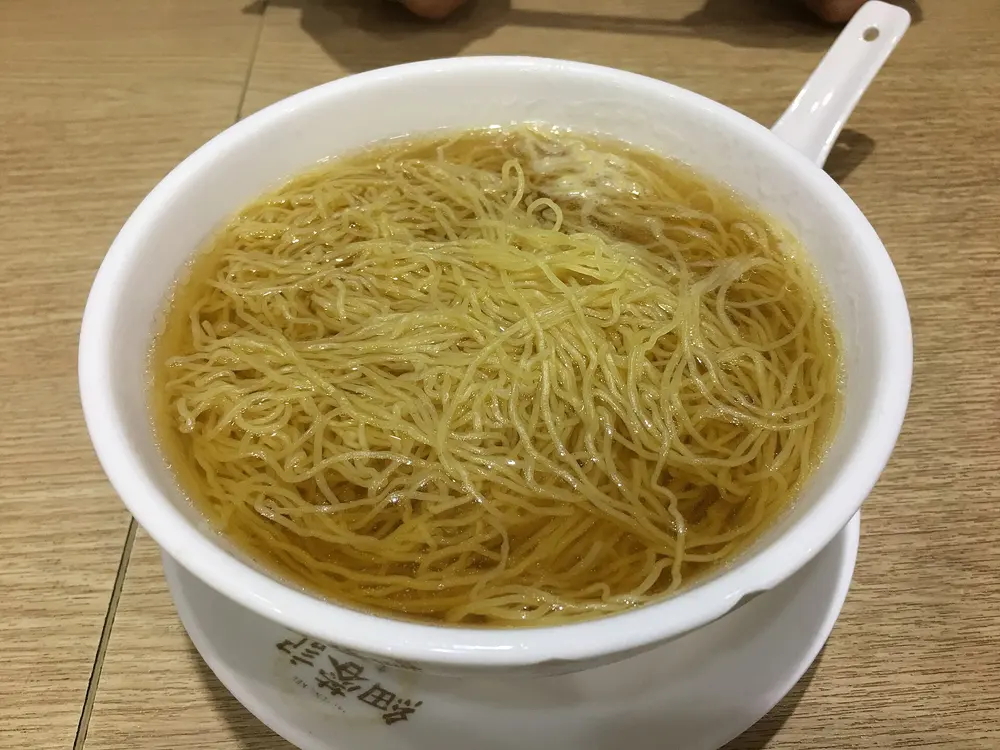
| Wonton noodles | 雲吞麵 wan4 tan1 min6 | Noodle shops | Springy egg noodles, shrimp wontons, shrimp-roe broth; small bowls |
| Beef brisket noodles | 牛腩麵 ngau4 naam5 min6 | Noodle shops | Slow-braised brisket in clear or curry broth |
| Congee | 粥 zuk1 | Congee shops, yum cha | Silky rice porridge; with fried dough stick (油炸鬼) |
| Steamed fish | 清蒸魚 cing1 zing1 jyu2 | Seafood restaurants | Whole fish with ginger, spring onion and soy |
| Typhoon-shelter crab | 避風塘炒蟹 | Seafood and Causeway Bay restaurants | Fried with mountains of garlic and chilli |
| Claypot rice | 煲仔飯 bou1 zai2 faan6 | Dai pai dong, winter specials | Rice cooked in clay with sausage or chicken; scrape the crust |
| Sweet and sour pork | 咕嚕肉 gu1 lou1 juk6 | Cantonese restaurants | The original, with hawthorn or vinegar rather than ketchup |
| Double-boiled soup | 燉湯 dan6 tong1 | Cantonese restaurants | Clear, slow-cooked soup – often the first dish |
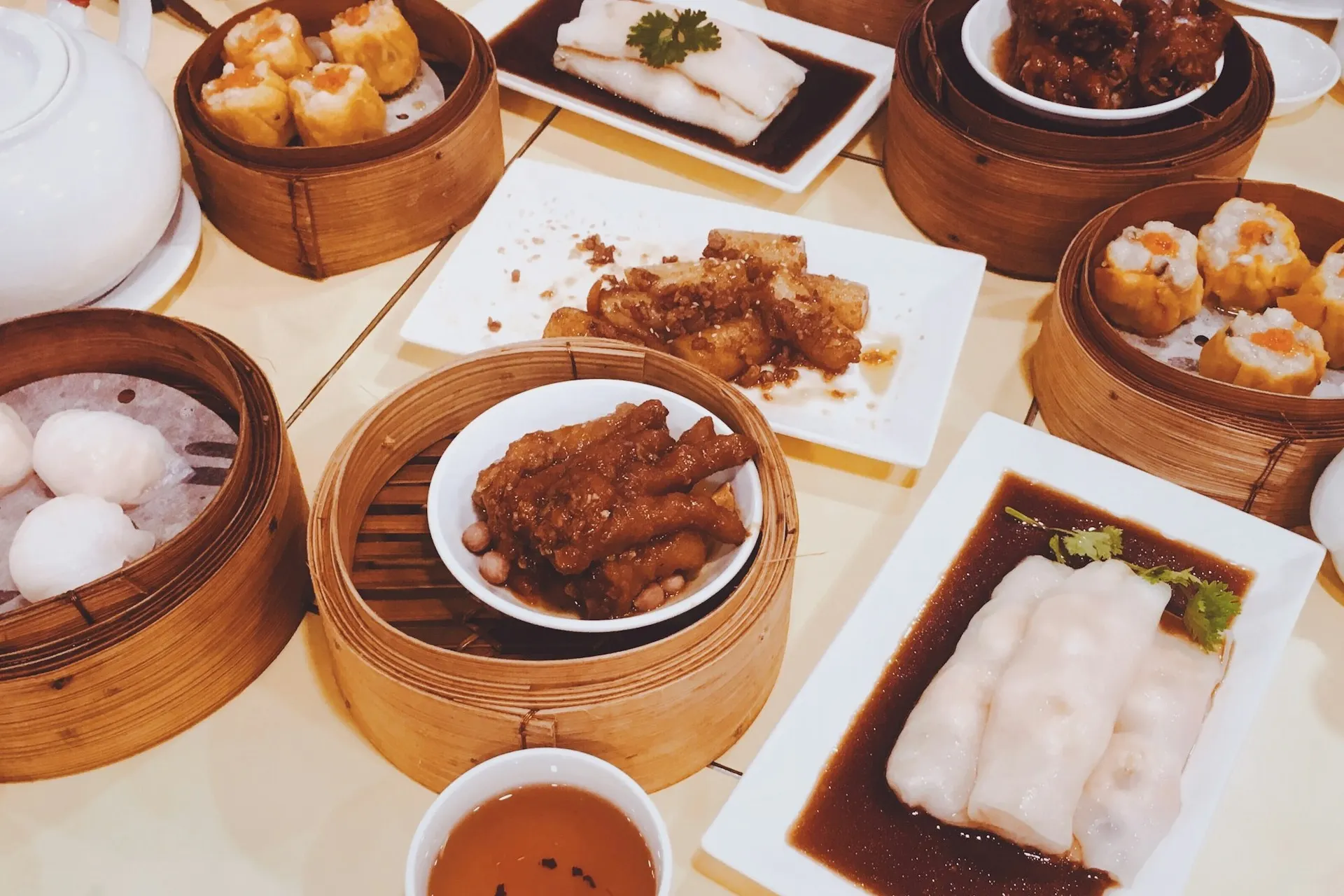
| Dim sum | 點心 dim2 sam1 | Yum cha restaurants | See our dim sum guide |
| Dessert soup | 糖水 tong4 seoi2 | Dessert shops | Mango sago, red bean, black sesame, papaya with snow fungus |
| Snake soup (winter) | 蛇羹 se4 gang1 | Specialist shops | A cold-weather tradition, thick with shredded meat |
Roast meats: Hong Kong's siu mei shops
Look for windows hung with lacquered ducks, geese and strips of char siu: this is a siu mei (燒味) shop. Order at the counter, point at what you want, and choose 'on rice' (飯 faan6), 'on noodles' or by weight to take away. A plate of roast goose leg on rice or two-meat rice (雙拼飯, e.g. char siu and roast pork) is the classic quick lunch. The best-known shops on Hong Kong Island cluster in Central, Sheung Wan and Wan Chai; queues form at noon.
For a sit-down roast-goose feast, Cantonese restaurants serve half or whole birds; in the New Territories, Sham Tseng near Tsuen Wan has a long-standing roast-goose tradition. Ask for gai1 bei2 (雞髀, chicken leg) or ngo4 bei2 (鵝髀, goose leg) if you want the best cut.
A siu mei shop window with roast ducks, geese and char siu.
Noodles and congee
Wonton noodles are a Hong Kong obsession: the bowl is small, the noodles thin and springy (traditionally made with duck eggs and kneaded with a bamboo pole), the wontons stuffed with whole shrimp, and the broth flavoured with dried flounder and shrimp roe. Gough Street and Wellington Street in Central, and Sham Shui Po, are full of competing noodle shops. Beef brisket noodles, fish-ball noodles and cart noodles (車仔麵, choose your own toppings) are the other everyday bowls.
Congee shops open early and run late: try pei daan sau juk juk (皮蛋瘦肉粥, century egg and lean pork) or teng zai zuk (艇仔粥, 'sampan congee' with fish, peanuts and squid), with a fried dough stick and a plate of rice-noodle roll.
Dai pai dong: open-air street kitchens
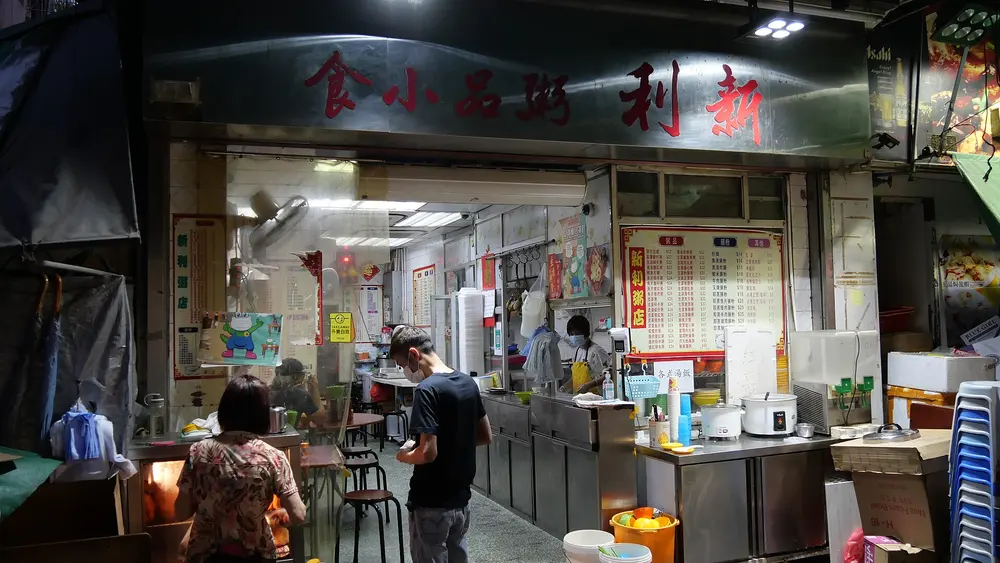
A dai pai dong (大牌檔, 'big licence stall') is an open-air food stall with folding tables on the pavement, named after the large licences that used to hang at each stall. Thousands lined the streets in the 1950s and 60s; the government stopped issuing new licences in the 1970s and only a few dozen licensed stalls remain, in Central (Stanley Street, Gutzlaff Street), Sham Shui Po and Tai Hang, plus cooked-food centres that keep the style indoors. Expect wok-fried dishes, milk tea and toast, and a lot of noise; they are cheap, fast and very local.
Seafood is a separate institution: in Lei Yue Mun, Sai Kung, Lamma and Lau Fau Shan, you pick live seafood from a fishmonger's tanks and a restaurant cooks it for a fee. Always ask the price per catty (斤 gan1, about 600 g) and the cooking charge before agreeing. Our street food guide covers snacks.
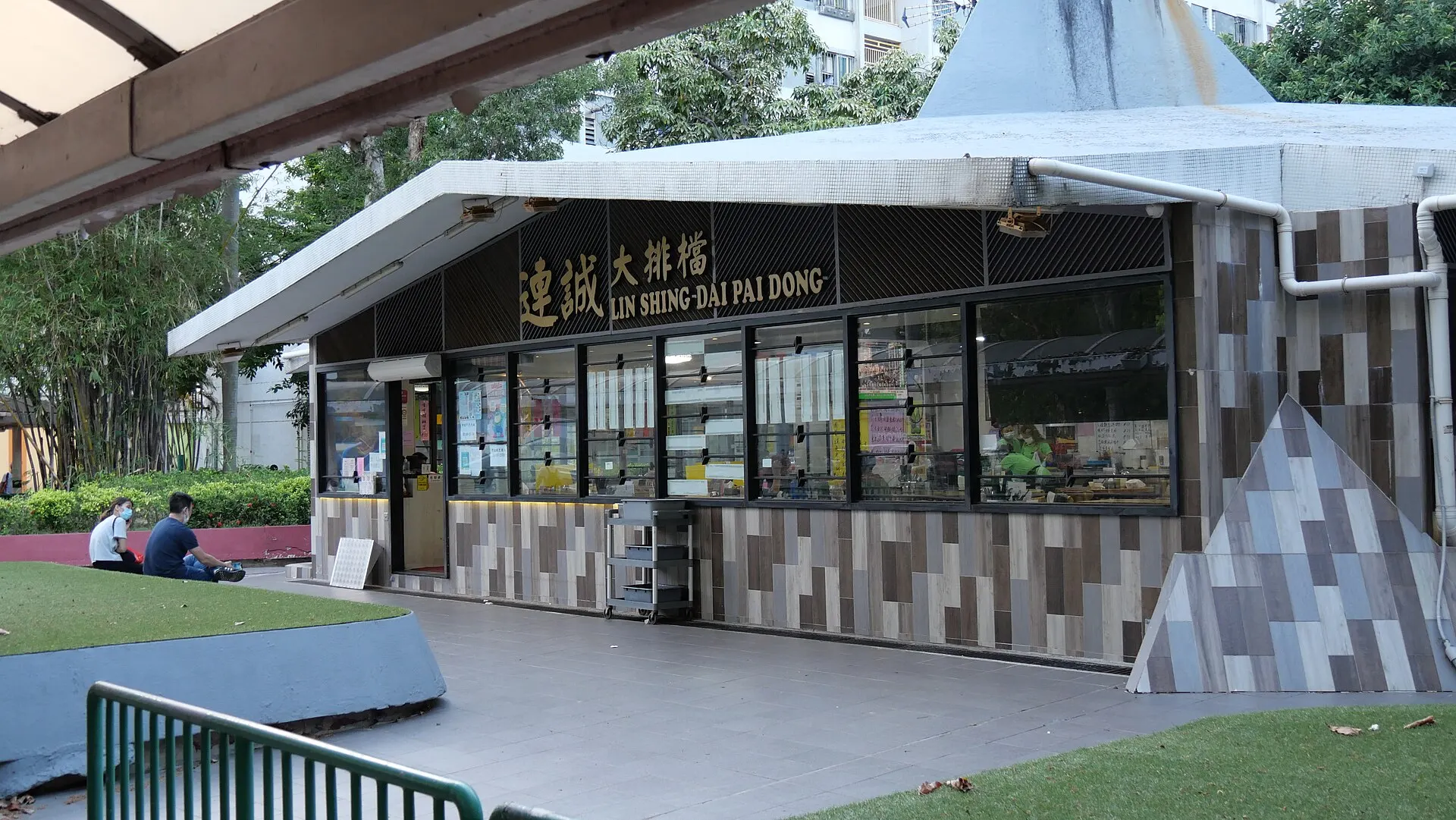
A licensed dai pai dong in Tuen Mun; only a few dozen remain in Hong Kong.
Beyond Cantonese: other Chinese and world cuisines
Hong Kong's Chinese restaurants represent every region: Chiu Chow (Teochew) braised goose, cold crab and kung fu tea, especially in Sheung Wan and Kowloon City; Shanghainese xiaolongbao and hairy-crab season in October–November; Sichuan and Hunan heat; Peking duck at hotel restaurants; and Hakka salt-baked chicken in the New Territories.
International food is just as strong. Lan Kwai Fong and SoHo in Central are the western and fusion strips; Kowloon City is 'Little Thailand'; Kimberley Street in Tsim Sha Tsui is lined with Korean restaurants; and Chungking Mansions has Indian, Pakistani and African eateries upstairs. Japanese food is everywhere, from conveyor-belt sushi to omakase.
Restaurant etiquette, tipping and service charge
- Dishes are shared. Order one dish per person plus rice or noodles for the table, and serve yourself from the shared plates.
- Tea is poured on arrival in Chinese restaurants and charged per person; pour for others first and tap two fingers to say thanks when someone pours for you.
- Service charge: most sit-down restaurants add 10% to the bill. Tipping on top is not expected; rounding up or leaving coins is common. Cha chaan teng, noodle shops and fast food add no service charge.
- Paying: large restaurants take cards, Octopus and mobile wallets; small shops may take cash or Octopus only. You usually pay at the cashier near the door, taking your bill with you.
- Sharing tables with strangers (搭枱) is normal at busy, cheap places.
- Smoking is banned indoors in restaurants and in many outdoor seating areas.
- Reservations: essential for Michelin-starred and hotel restaurants and for popular places on Friday and Saturday nights; most cheap restaurants work on queues and ticket numbers.
Halal, vegetarian and other dietary needs
Halal. The Incorporated Trustees of the Islamic Community Fund of Hong Kong certify halal restaurants; HKTB's halal food guide lists places including the Islamic Centre Canteen (5/F, Masjid Ammar and Osman Ramju Sadick Islamic Centre, 40 Oi Kwan Road, Wan Chai), which serves halal Cantonese dishes and dim sum, a halal roast-duck stall at the Bowrington Road Cooked Food Centre in Wan Chai, and South Asian restaurants in Causeway Bay and Tsim Sha Tsui. The Kowloon Mosque on Nathan Road is surrounded by halal Indian and Pakistani eateries, many in Chungking Mansions. Ask to see the certificate if in doubt.
Vegetarian and vegan. Buddhist vegetarian (齋, zaai1) food has a long tradition – look for restaurants with 素 or 齋 in the name, and the vegetarian kitchens at Po Lin Monastery and Nan Lian Garden. Many Buddhists eat vegetarian on the 1st and 15th of each lunar month, so options are wide. Indian vegetarian thalis and dosa are easy to find in Tsim Sha Tsui. In ordinary restaurants, say ngo sik sou (我食素) and check for oyster sauce, fish sauce and lard.
Allergies and gluten. Shellfish and peanuts are common, and soy sauce contains wheat. Carry a written note in Chinese (see Cantonese phrases); staff in chain and hotel restaurants usually understand English allergy requests.
Where to eat by neighbourhood
- Central and Sheung Wan: roast meats, wonton noodles on Gough and Wellington Streets, dai pai dong on Stanley Street, old teahouses, and Lan Kwai Fong and SoHo – see Central food.
- Wan Chai and Causeway Bay: cha chaan teng, dessert shops, typhoon-shelter crab and late-night eats – see Wan Chai and Causeway Bay food.
- Tsim Sha Tsui: hotel Cantonese dining rooms with harbour views, Korean food on Kimberley Street and South Asian food in Chungking Mansions – see Tsim Sha Tsui food.
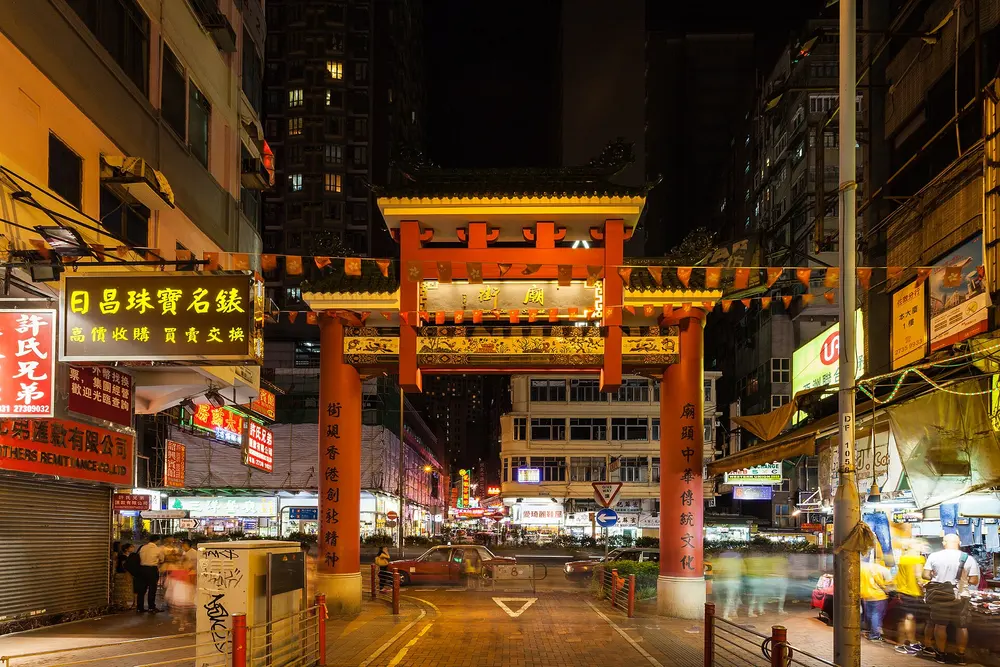
- Mong Kok and Yau Ma Tei: street snacks, Temple Street's claypot rice and seafood stalls – see Mong Kok food.
- Sham Shui Po: cheap and famous dim sum, rice rolls, tofu puddings – see Sham Shui Po food.
- Kowloon City: Thai and Chiu Chow – see Kowloon City food.
- Sai Kung and the islands: seafood by the water – see Sai Kung food and Lamma.
Food tours and cooking classes
A food tour is a fast way to eat in places you'd walk past, with someone to order. These are run by independent operators and described from their listing titles; dim sum classes are on our dim sum page.
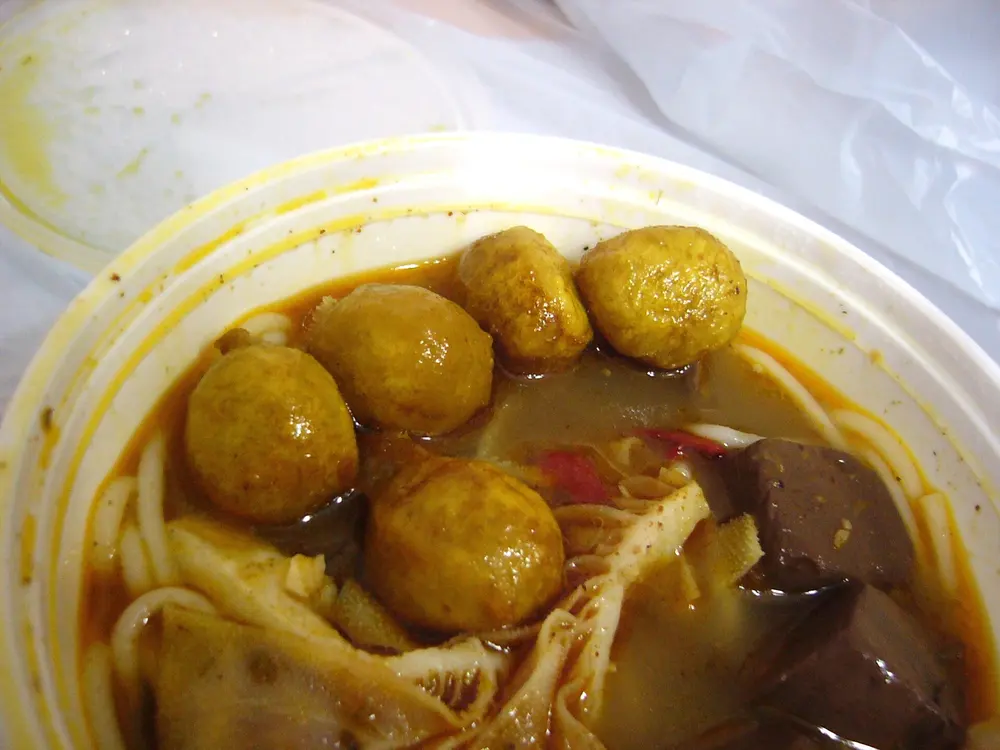
Best street food tour with a local guide
A guided street-food walk with tastings chosen by a local.
Check availabilityBook via GetYourGuide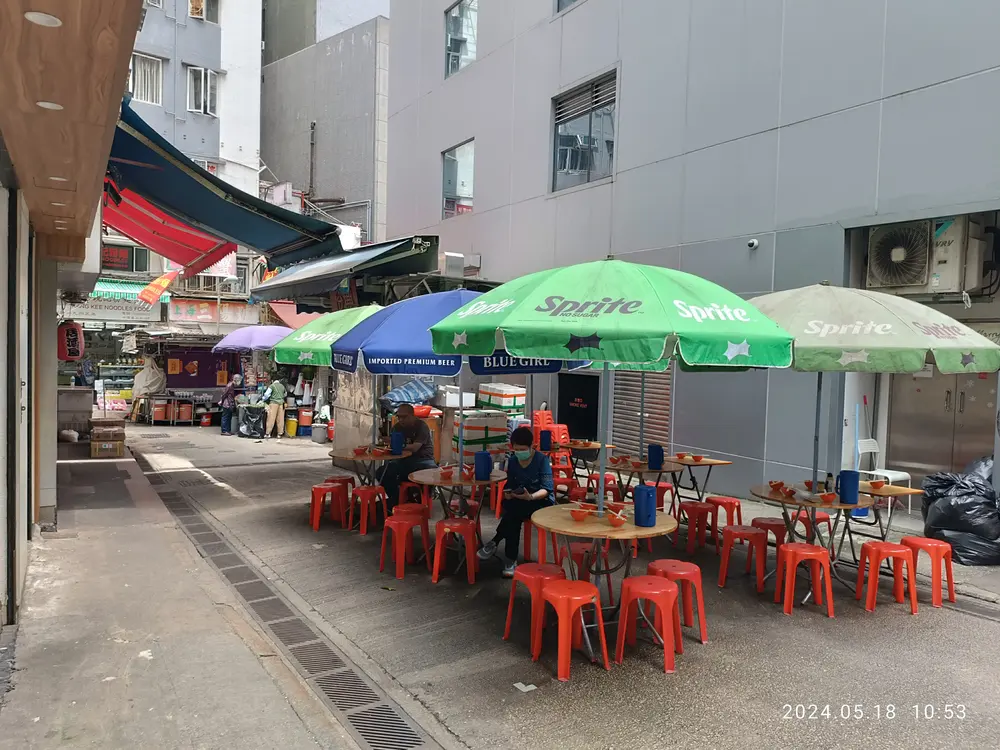
Central street food tour (small group)
Two and a half hours tasting local food in Central's lanes with a guide, in a small group.
Check availabilityBook via Klook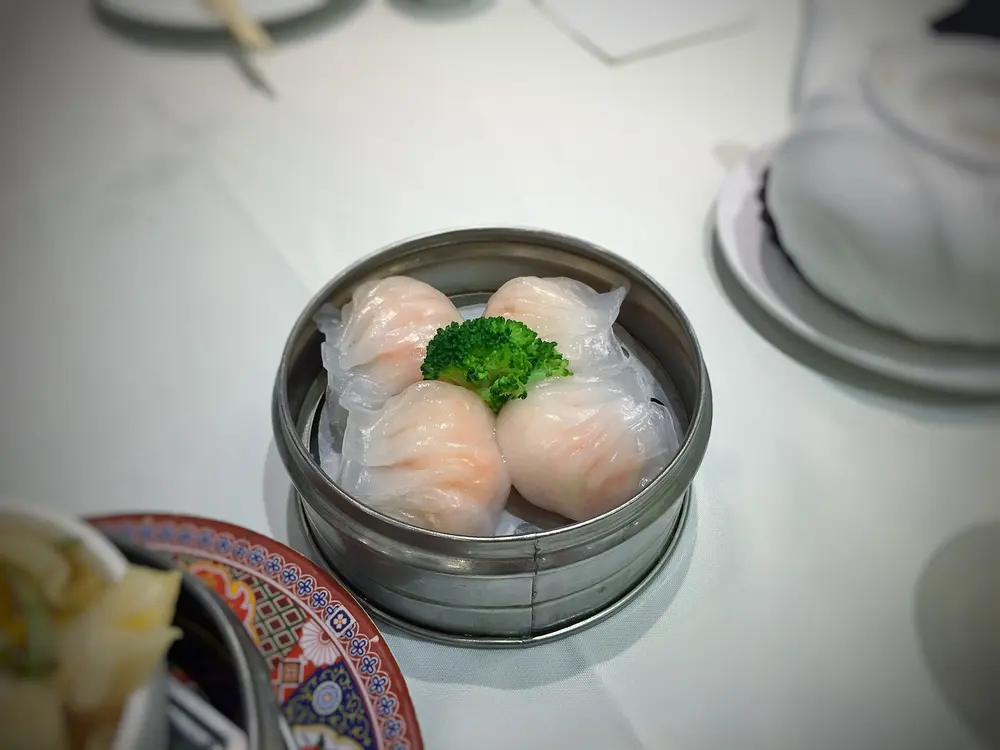
Maxim's Dim Sum Academy cooking class
A Cantonese dim sum cooking class run by the Maxim's group.
Check availabilityBook via Klook
Taste of Kowloon: Michelin street food and culture walk
A Kowloon walk combining street food described by the operator as Michelin-listed with neighbourhood culture.
Check availabilityBook via GetYourGuideTour listings are on GetYourGuide. Prices, times and cancellation terms are shown live on each listing and can change; HongKongTravel.com may earn a commission at no extra cost to you.
Frequently asked questions
What is Hong Kong's most famous food?
Dim sum, roast goose and char siu, wonton noodles, egg tarts, pineapple buns and Hong Kong-style milk tea. Cantonese cuisine is the base of most of them.
What is the difference between Cantonese and Chinese food?
Cantonese is one regional Chinese cuisine, from Guangdong and Hong Kong. It favours fresh ingredients, steaming and quick stir-frying with light sauces, unlike the spicier cooking of Sichuan or Hunan.
Do you tip in Hong Kong restaurants?
Not usually. Most sit-down restaurants add a 10% service charge; locals often leave small change. Cha chaan teng and noodle shops don't charge service and don't expect tips.
Where can I find halal food in Hong Kong?
The Islamic Centre Canteen in Wan Chai (halal Cantonese and dim sum), restaurants around Kowloon Mosque and Chungking Mansions in Tsim Sha Tsui, and other venues listed in HKTB's halal food guide, certified by the Islamic Community Fund of Hong Kong.
Is Hong Kong good for vegetarians?
Yes. Buddhist vegetarian restaurants are common, monastery kitchens serve vegetarian set meals, and Indian vegetarian restaurants cluster in Tsim Sha Tsui. In ordinary Chinese restaurants, check for oyster or fish sauce.
How many Michelin-starred restaurants are in Hong Kong?
77 in the MICHELIN Guide Hong Kong Macau 2026, including seven with three stars, among them the Cantonese restaurants T'ang Court and Forum.
What is a dai pai dong?
A licensed open-air street food stall with folding tables. Only a few dozen remain, mainly in Central, Sham Shui Po and Tai Hang.
Sources and official information
Facts were checked against these official sources in November 2026. Opening hours, fares and timetables change, so confirm before you go.
- guide.michelin.com
- thestandard.com.hk
- discoverhongkong.com
- cathaypacific.com
- discoverhongkong.com
- fehd.gov.hk
- islamictrust.org.hk
HongKongTravel.com is an independent guide, not the official site of the Hong Kong Tourism Board, the HKSAR Government or any operator. Some links are affiliate links: tours go to {tours} and hotels go to {hotels}, and we may earn a commission at no extra cost to you.