In short
- No sales tax or VAT: the price on the tag is what you pay. Hong Kong only levies duty on alcohol over 30%, tobacco, fuel and methyl alcohol.
- Best districts: Central and Admiralty (luxury malls), Causeway Bay (department stores, fashion, cosmetics), Tsim Sha Tsui (Harbour City, K11 MUSEA, Canton Road), Mong Kok (street markets, sneakers, gadgets) and Sham Shui Po (electronics parts, fabrics, bargains).
- What to buy: electronics from authorised dealers, gold and jewellery (priced daily by weight), cosmetics and pharmacy goods, tea, Chinese medicine, design gifts and local snacks.
- Shop safely: use shops with the HKTB Quality Tourism Services (QTS) sign, get an itemised receipt, check warranty and model, and know there is no legal right to return goods you simply change your mind about.
- Problems? Contact the Consumer Council (2929 2222) or Customs and Excise for unfair trade practices.
Is Hong Kong still a shopping paradise?
Hong Kong's reputation was built on two things that still hold: no sales tax on almost everything, and enormous choice packed into a small area. Prices for international brands are no longer always lower than in Europe, Japan or the mainland, and online shopping has changed habits, but the city remains one of the easiest places in the world to shop – malls connect to MTR stations, shops open late (typically 10–11 am to 9–10 pm, later in Mong Kok and Causeway Bay), and you can pay with cards, Octopus, Apple Pay and mainland and Asian wallets almost everywhere.
The best buys for visitors today are things Hong Kong does especially well: gold and jewellery, cosmetics and pharmacy brands, electronics from authorised retailers, tea, Chinese medicine and dried seafood, local design and edible gifts. Markets add atmosphere and bargains (see night markets).
Where to shop: district by district
| District | Best for | Key places | MTR |
|---|---|---|---|
| Central and Admiralty | Luxury, flagships, design | The Landmark, IFC Mall, Pacific Place, Lane Crawford, PMQ (local designers) | Central, Admiralty, Hong Kong |
| Causeway Bay | Department stores, fashion, cosmetics, crowds | Times Square, Hysan Place, Lee Gardens, SOGO, Fashion Walk, Jardine's Crescent | Causeway Bay |
| Tsim Sha Tsui | Malls, luxury on Canton Road, everything | Harbour City, K11 MUSEA, iSQUARE, The ONE, 1881 Heritage | Tsim Sha Tsui, East Tsim Sha Tsui |
| Mong Kok | Street markets, sneakers, gadgets, youth fashion | Ladies' Market, Fa Yuen Street, Sai Yeung Choi Street South, Langham Place, Sino Centre | Mong Kok, Prince Edward |
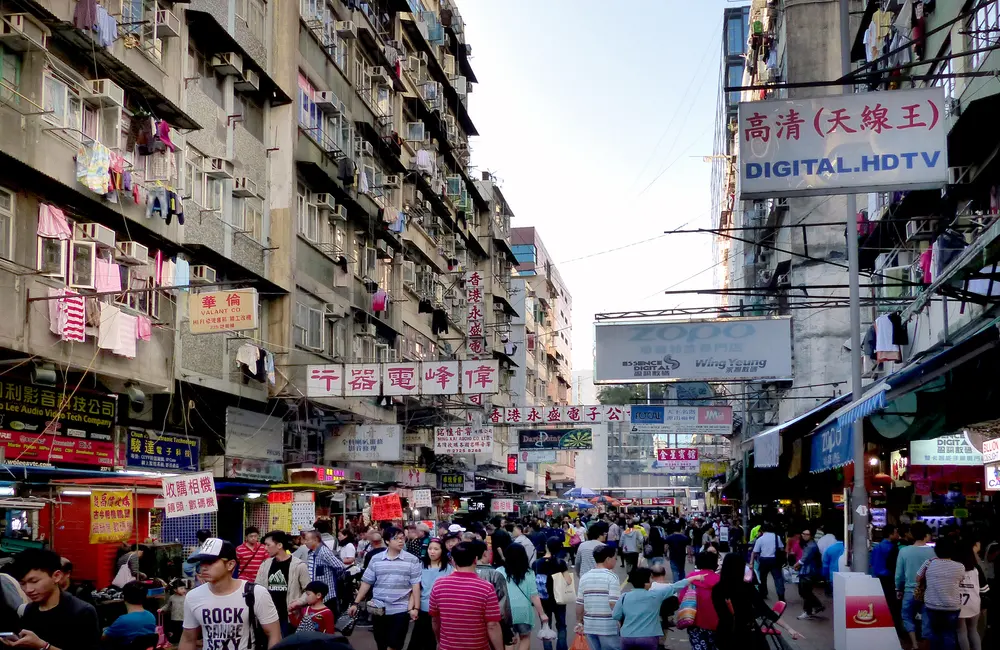
| Sham Shui Po | Electronics parts, fabrics, cheap clothes | Apliu Street, Golden Computer Arcade, Ki Lung Street fabrics | Sham Shui Po |
| Sheung Wan | Dried seafood, Chinese medicine, antiques | Des Voeux Road West, Ko Shing Street, Hollywood Road, Cat Street | Sheung Wan |
| West Kowloon | One-stop mall near the airport train | Elements (above Kowloon station) | Kowloon |
| Kowloon Tong and Sha Tin | Family malls | Festival Walk, New Town Plaza | Kowloon Tong, Sha Tin |
| Tung Chung | Outlet shopping on the way to the airport | Citygate Outlets | Tung Chung |
| Ap Lei Chau | Outlet warehouses and furniture | Horizon Plaza | South Horizons, then walk or taxi |
Malls and department stores
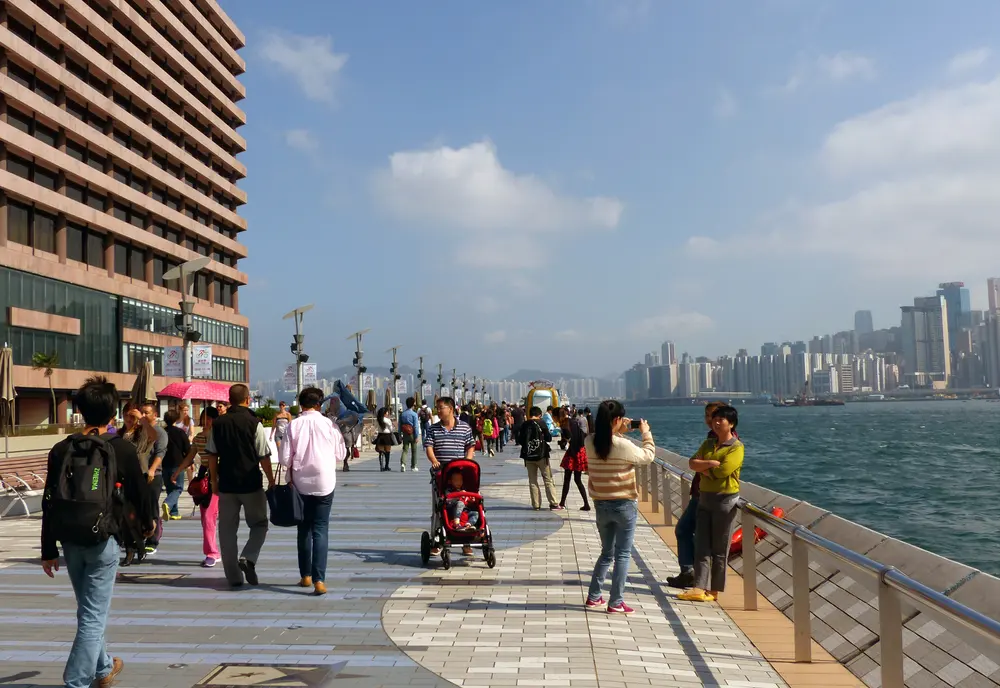
Hong Kong malls are destinations in themselves, air-conditioned, joined to the MTR and full of restaurants. Harbour City on Canton Road, Tsim Sha Tsui, is one of the largest, stretching along the waterfront from the Star Ferry; K11 MUSEA on the Victoria Dockside waterfront mixes art, design and shops; IFC Mall in Central sits above Hong Kong station (Airport Express in-town check-in); Pacific Place in Admiralty and The Landmark in Central are the most upmarket; and Times Square and Hysan Place anchor Causeway Bay. Japanese department store SOGO in Causeway Bay and Hong Kong's own Lane Crawford are the traditional department stores.
Sales: the biggest discounts come in the summer sales (June–August), around Christmas and before Lunar New Year. Mall loyalty programmes sometimes offer visitor rewards – ask at customer service with your passport.
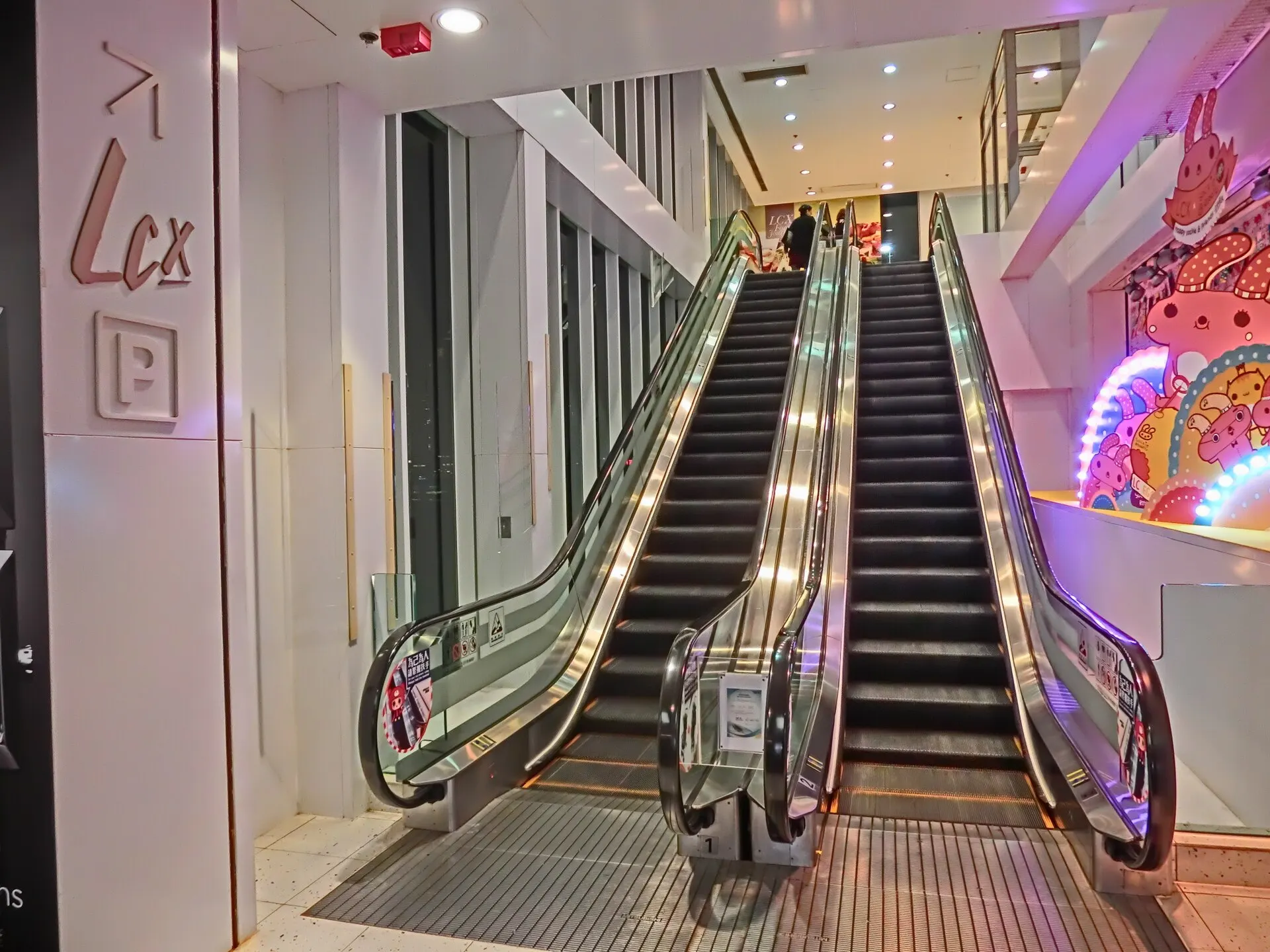
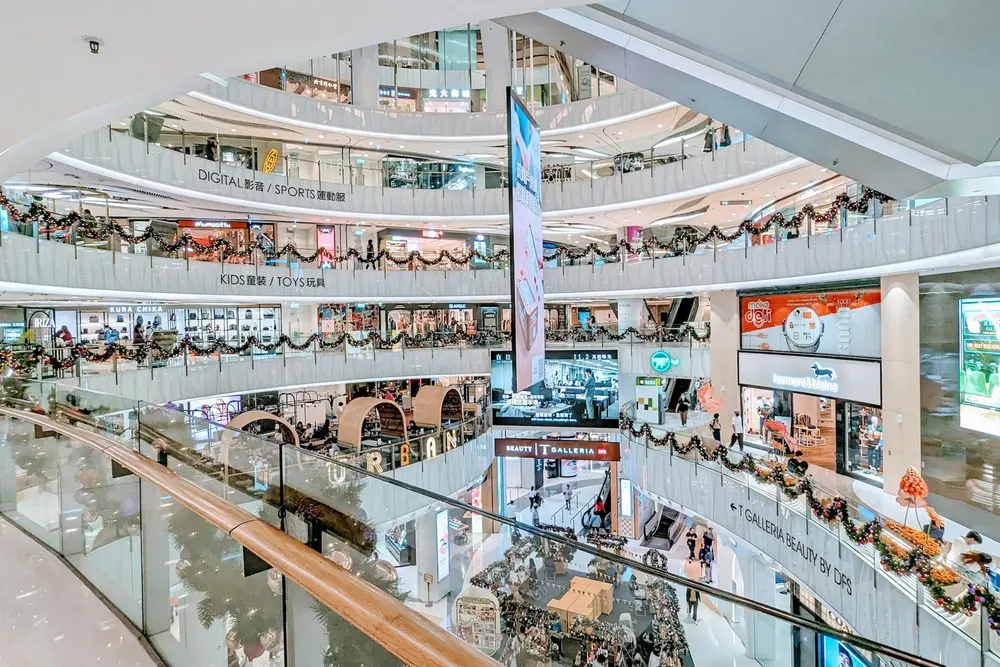
Harbour City in Tsim Sha Tsui, one of Hong Kong's largest malls.
Electronics: where and how to buy
Phones, cameras, laptops and game consoles are sold tax-free, but buy carefully. The safest options are brand stores (Apple has stores in IFC, Festival Walk, Canton Road and Causeway Bay) and the big Hong Kong chains Fortress (豐澤) and Broadway (百老匯), which give printed receipts and local warranties. Sham Shui Po's Golden Computer Arcade and Mong Kok's Sin Tat Plaza (phones) are good for accessories and parts.
- Check the model number and that it works in your country (mobile frequency bands, region-locked games, plug and voltage – Hong Kong uses 220 V and UK-style plugs).
- Ask whether the warranty is local only or international, and get it stamped.
- Insist on an itemised receipt with the shop's name, the model and the price.
- Be wary of shops along Nathan Road that quote very low prices and then pressure you into extras or 'better' models; the Consumer Council has long warned about such practices.
- Check your own country's customs allowance before buying expensive items to take home.
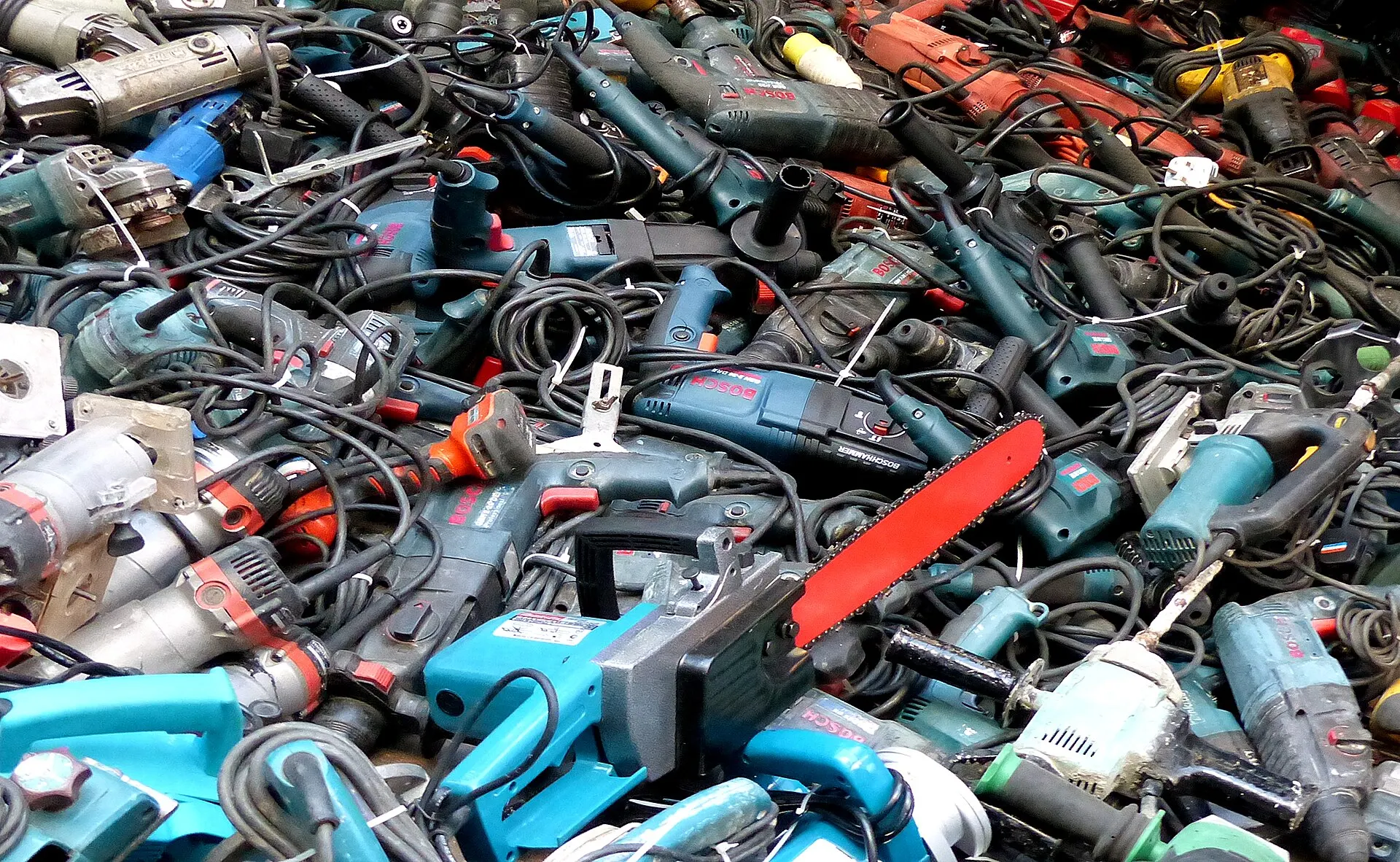
Second-hand tools and electronics for sale in Sham Shui Po.
Gold, jewellery and watches
Hong Kong is one of the world's largest gold markets, and Chinese jewellers such as Chow Tai Fook, Chow Sang Sang and Luk Fook have branches on every shopping street. Gold jewellery is priced by weight at the day's gold price (shown on a board in the shop, per tael (兩) of about 37.4 g, or per gram), plus a labour charge for the design. The common standard is 999.9 'four nines' gold (足金). Ask for the weight, purity and total price in writing before paying, and keep the receipt.
Jade, pearls and diamonds need more care: buy from established shops with QTS accreditation, ask for a certificate for diamonds and expensive jade, and be sceptical of 'bargain' jade in markets. Authorised dealers for Swiss watches cluster in Canton Road, Central and Causeway Bay.
Cosmetics, pharmacy and Chinese medicine
Beauty chains Sasa (莎莎) and Bonjour sell Japanese, Korean and Western skincare and cosmetics at competitive prices, and the pharmacies Watsons (屈臣氏) and Mannings (萬寧) are on every corner. Popular Hong Kong purchases include medicated oils (White Flower Oil, Po Sum On, Tiger Balm) and over-the-counter remedies; note that some medicines legal in Hong Kong are controlled elsewhere, so check your home rules.
For Chinese medicine and dried seafood, walk Des Voeux Road West and Ko Shing Street in Sheung Wan, where shops sell dried scallops, abalone, fish maw, ginseng and herbs, and herbalists make up prescriptions. Prices for premium items are high and set by grade; ask for the price per tael or catty before anything is weighed. Products from endangered species need licences or are banned outright – Hong Kong ended its local ivory trade at the end of 2021 – so check before buying anything made from animals or rare plants.
Gifts and souvenirs worth buying
- Tea: Chinese tea shops in Sheung Wan and Central sell pu'er, oolong and Hong Kong milk-tea blends; the Museum of Tea Ware's shop is a good place to buy teaware.
- Edible gifts: wife cakes and egg rolls from Chinese bakeries, almond cookies, XO sauce and dried mandarin peel.
- Local design: PMQ in Central (a former police married quarters) has small shops of Hong Kong designers; Goods of Desire (G.O.D.) sells witty Hong Kong-themed homeware.
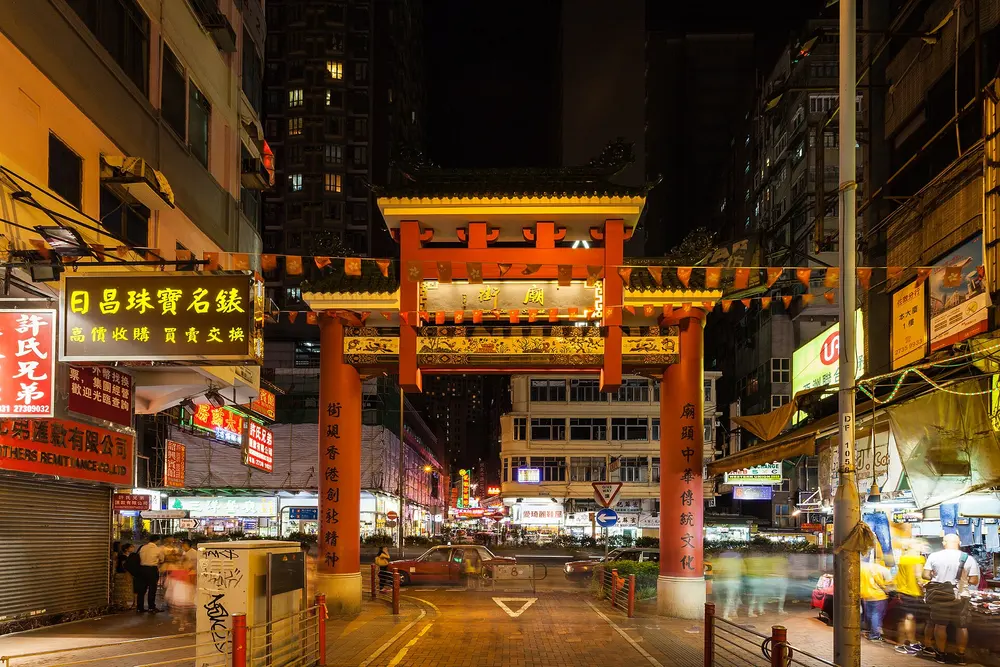
- Markets: Stanley Market and Temple Street for inexpensive souvenirs, chopsticks and silk.
- Craft: handmade signs, mahjong tiles, neon art and Chinese seals – workshops in our Cantonese phrases page teach some of these.
- Museum shops: M+ and the Palace Museum shops are excellent for design gifts (museums).
Tax-free shopping and customs
Hong Kong is a free port: there is no VAT, GST or sales tax, so there is no tax-refund scheme to claim when you leave – the price is already tax-free. Duty applies only to four kinds of goods: liquor with more than 30% alcohol, tobacco, hydrocarbon oil and methyl alcohol. Visitors aged 18 or over may bring in 1 litre of spirits over 30% and 19 cigarettes (or 1 cigar or 25 g of tobacco) duty-free; e-cigarettes and other alternative smoking products are banned from import (see our visa and entry guide).
When you leave, your home country's customs rules apply to what you bring back – check the allowance for electronics, jewellery and alcohol. Visitors returning to the Chinese mainland have separate allowances; our Chinese-language editions cover them.
Consumer protection: QTS, receipts and returns
Most shopping in Hong Kong is straightforward, but a few rules help if something goes wrong.
- Quality Tourism Services (QTS): HKTB accredits shops and restaurants that meet standards for clear pricing and service; look for the QTS sign and search the scheme on discoverhongkong.com.
- Receipts: ask for an itemised receipt showing the shop name, item, model and price, especially for electronics, jewellery and medicine.
- Returns and refunds: there is no general legal right to return goods because you changed your mind; refunds depend on each shop's policy, so ask before you buy. Faulty or misdescribed goods are a different matter.
- Unfair trade practices: false descriptions, bait advertising, misleading omissions and aggressive selling are offences under the Trade Descriptions Ordinance, enforced by the Customs and Excise Department (hotline 2545 6182).
- Complaints and advice: the Consumer Council (2929 2222) handles complaints and mediation; for shopping on a registered tour, the Travel Industry Council has a refund protection scheme for tour-group shops.
- Pay by credit card for big purchases – it gives you a chargeback route if a dispute can't be solved.
Shopping walks and market tours
If you'd like a guide to Kowloon's markets and specialist streets, these walks are run by independent operators and described from their listing titles.
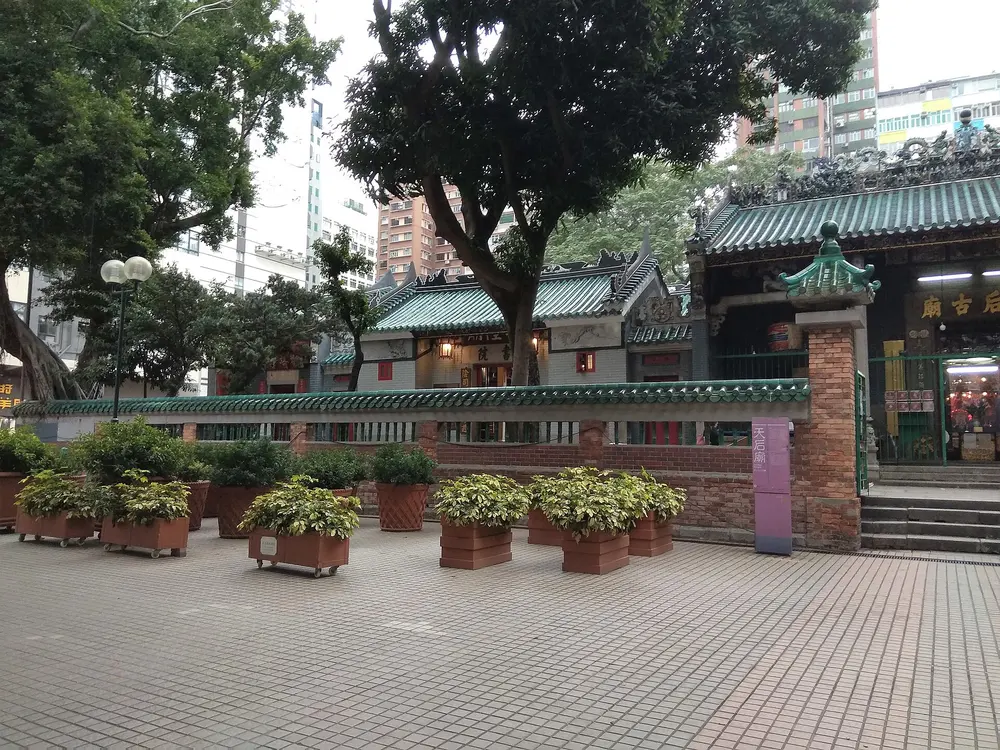
Kowloon temples and markets small-group tour
A small-group walk through Kowloon temples and street markets with a local guide.
Check availabilityBook via GetYourGuide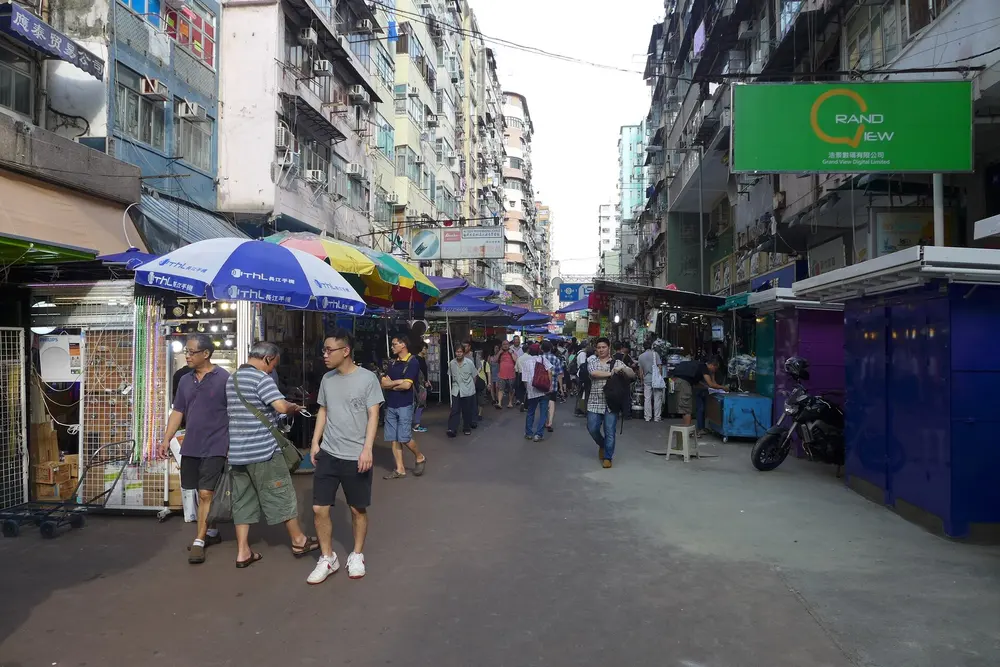
Sham Shui Po and Temple Street half-day tour
A small-group half day in Sham Shui Po's markets and Temple Street.
Check availabilityBook via KlookTour listings are on GetYourGuide. Prices, times and cancellation terms are shown live on each listing and can change; HongKongTravel.com may earn a commission at no extra cost to you.
Frequently asked questions
Is shopping in Hong Kong tax-free?
Yes. Hong Kong has no sales tax or VAT, so prices are already tax-free and there is no refund to claim at the airport. Only alcohol over 30%, tobacco, fuel and methyl alcohol carry duty.
Where is the best shopping in Hong Kong?
Causeway Bay and Tsim Sha Tsui for malls and department stores, Central for luxury, Mong Kok for street markets and sneakers, and Sham Shui Po for electronics parts and bargains.
Is it cheaper to buy electronics in Hong Kong?
Often slightly, because there is no sales tax, but compare with prices at home. Buy from brand stores or major chains, check model and warranty, and get an itemised receipt.
Can I return items in Hong Kong?
Only if the shop's policy allows it; there is no general legal right to return goods for a change of mind. Faulty or misdescribed goods can be reported to Customs or the Consumer Council.
How is gold priced in Hong Kong?
By weight at the day's gold price, per tael (about 37.4 g) or per gram, plus a labour charge for the design. Ask for weight, purity and the total in writing.
What are the shopping hours in Hong Kong?
Most malls and shops open about 10–11 am and close about 9–10 pm, every day; markets and shops in Mong Kok and Causeway Bay often stay open later.
What is a QTS shop?
A shop accredited by the Hong Kong Tourism Board's Quality Tourism Services scheme for transparent pricing and good service.
Sources and official information
Facts were checked against these official sources in November 2026. Opening hours, fares and timetables change, so confirm before you go.
- discoverhongkong.com
- discoverhongkong.com
- consumer.org.hk
- customs.gov.hk
- customs.gov.hk
- tichk.org
- afcd.gov.hk
HongKongTravel.com is an independent guide, not the official site of the Hong Kong Tourism Board, the HKSAR Government or any operator. Some links are affiliate links: tours go to {tours} and hotels go to {hotels}, and we may earn a commission at no extra cost to you.