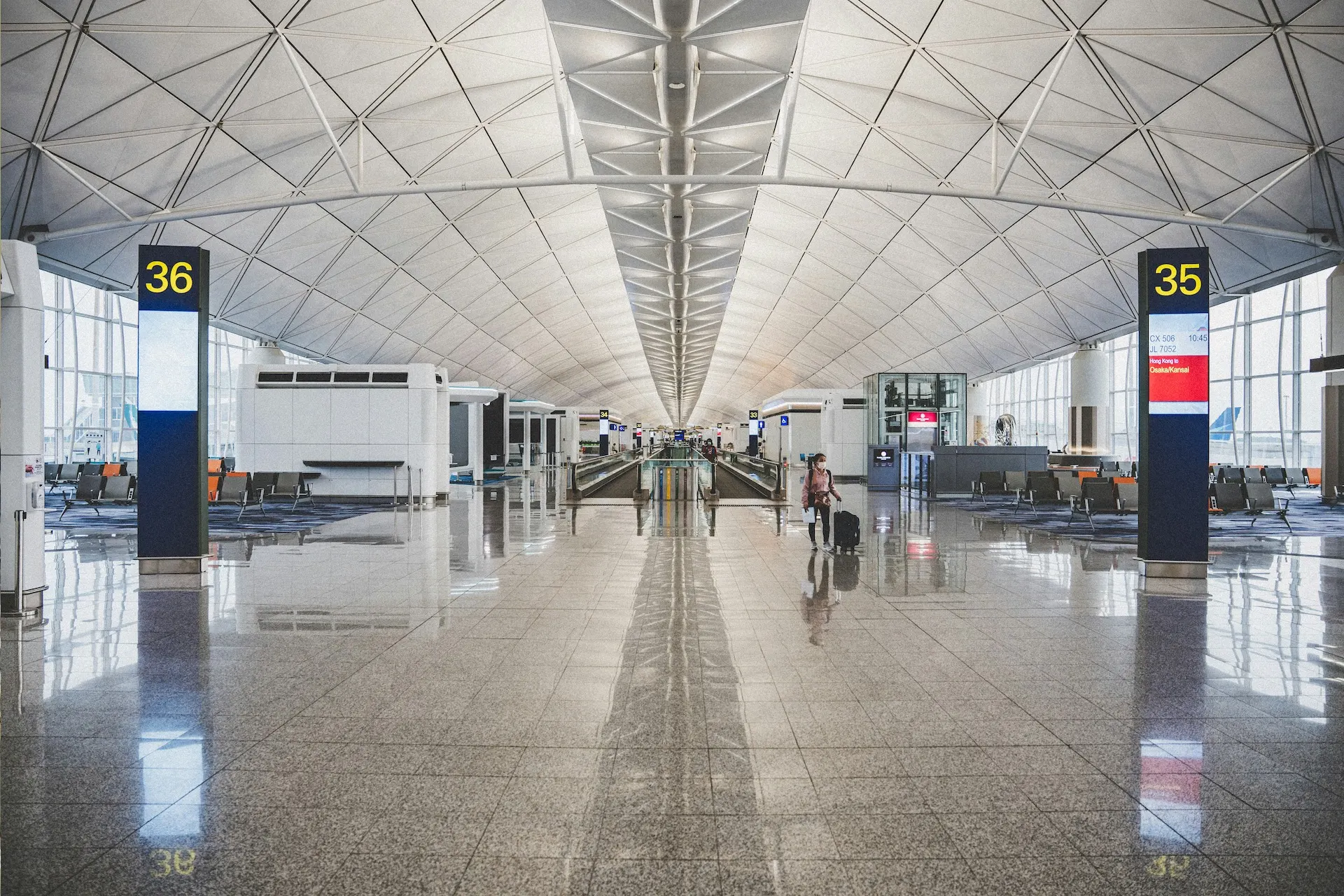
In short
- Most visitors need no visa. British citizens get 180 days; citizens of the USA, Canada, Australia, New Zealand, Japan, South Korea, Singapore, Malaysia, Germany, France, Spain and most of Europe get 90 days; Thailand and Indonesia 30 days; the Philippines and Russia 14 days. Nationalities not listed by the Immigration Department get 7 days.
- India: 14 days visa-free, but only after a free online Pre-arrival Registration (PAR), valid six months for multiple visits. Vietnam: a visa is needed for ordinary passports.
- Mainland Chinese residents travel on the Exit-entry Permit (往来港澳通行证) with an endorsement; Taiwan residents use the Mainland Travel Permit for Taiwan Residents or the free online PAR (30 days per visit).
- There is no arrival card (abolished 16 October 2024). Bring a passport valid for the whole stay plus a margin (at least one month after departure is the common rule), a return or onward ticket and enough money for the stay.
- Customs: e-cigarettes and heated tobacco are banned outright, even for personal use; 1 litre of spirits and 19 cigarettes duty-free; declare cash over HK$120,000. Information checked November 2026 against immd.gov.hk.
Do I need a visa for Hong Kong? The short answer
Hong Kong is a Special Administrative Region of China with its own immigration system, run by the Hong Kong Immigration Department (ImmD, 入境事務處). A Chinese visa does not let you into Hong Kong, and Hong Kong's visa-free arrangements do not let you into mainland China. What decides your entry is the passport you travel on, not where you live or where you fly from.
For most travellers the answer is reassuring: citizens of well over 100 countries and territories can visit Hong Kong without a visa, for between 7 and 180 days. You do not apply for anything in advance, there is no electronic travel authorisation and, since October 2024, there is no arrival card to fill in. You show your passport at the immigration counter (or an e-Channel gate if you have enrolled), and the officer hands you a small paper landing slip that shows your permitted stay.
Three groups do have to act before they fly:
- Indian nationals must complete the free online Pre-arrival Registration before a visa-free visit.
- Mainland Chinese residents need an Exit-entry Permit with a valid endorsement; Taiwan residents need a Taiwan Compatriot Permit or an online Pre-arrival Registration.
- Citizens of the countries marked 'visa required' in the table below (for example Vietnam, Pakistan, Bangladesh, Nepal, Sri Lanka, Nigeria, Cambodia and Laos) must hold a Hong Kong visa before travelling.
The rules below are summarised from ImmD's own country list (updated August 2026, page dated 22 September 2026) and related ImmD, Customs and Department of Health pages, checked in November 2026. ImmD can refuse entry to anyone who does not satisfy the officer, even if every listed requirement is met, so treat this as a guide and confirm on immd.gov.hk before you book.
- Authority
- Immigration Department (ImmD), immd.gov.hk
- Arrival card
- None since 16 October 2024
- Longest visa-free stay
- 180 days (British citizens)
- Shortest
- 7 days (nationalities not on the list)
- Passport validity
- Valid for the whole stay; at least one month beyond departure is the usual guidance
- Currency declaration
- Cash over HK$120,000 (or equivalent)
Visa-free stays by nationality (as checked November 2026)
This table covers more than 80 passports, including every market served by this guide's language editions. The stay is the maximum per visit for ordinary passports; diplomatic and official passports sometimes follow different rules. 'Visa required' means you must obtain a Hong Kong entry visa before travelling. Countries not shown and not in ImmD's visa-required list get 7 days visa-free.
Use your browser's find function (Ctrl+F or Cmd+F) to jump to your country.
| Passport | Visa-free stay | Notes |
|---|---|---|
| Argentina | 90 days | |
| Australia | 90 days | Reciprocal e-Channel available after enrolment |
| Austria | 90 days | |
| Bahrain | 30 days | |
| Bangladesh | Visa required | Also needed for airside transit |
| Belgium | 90 days | |
| Brazil | 90 days | |
| Brunei | 90 days | |
| Cambodia | Visa required | |
| Canada | 90 days | |
| Chile | 90 days | |
| China (mainland residents) | Permit + endorsement | Exit-entry Permit (往来港澳通行证) with a valid endorsement; see below |
| Colombia | 90 days | |
| Czech Republic | 90 days | |
| Denmark | 90 days | |
| Egypt | 90 days | |
| Fiji | 90 days | |
| Finland | 90 days | |
| France | 90 days | |
| Germany | 90 days | Reciprocal e-Channel available after enrolment |
| Greece | 90 days | |
| Hungary | 90 days | |
| Iceland | 90 days | |
| India | 14 days | Only after free online Pre-arrival Registration (PAR) |
| Indonesia | 30 days | |
| Iran | Visa required | Also needed for airside transit |
| Ireland | 90 days | |
| Israel | 90 days | |
| Italy | 90 days | |
| Japan | 90 days | |
| Jordan | 30 days | |
| Kazakhstan | 14 days | |
| Kenya | 90 days | |
| Korea (Republic of) | 90 days | Reciprocal e-Channel available after enrolment |
| Kuwait | 30 days | |
| Laos | Visa required | |
| Macao SAR permanent residents | 180 days | Non-permanent residents: 30 days |
| Malaysia | 90 days | |
| Maldives | 90 days | |
| Mexico | 90 days | |
| Mongolia | 14 days | |
| Morocco | 30 days | |
| Myanmar | Visa required | |
| Nepal | Visa required | |
| Netherlands | 90 days | |
| New Zealand | 90 days | |
| Nigeria | Visa required | Also needed for airside transit |
| Norway | 90 days | |
| Oman | 30 days | |
| Pakistan | Visa required | Also needed for airside transit |
| Peru | 30 days | |
| Philippines | 14 days | |
| Poland | 90 days | |
| Portugal | 90 days | |
| Qatar | 30 days | |
| Romania | 90 days | |
| Russian Federation | 14 days | |
| Saudi Arabia | 90 days | Extended from 30 days in January 2025 |
| Singapore | 90 days | Reciprocal e-Channel available after enrolment |
| South Africa | 30 days | |
| Spain | 90 days | |
| Sri Lanka | Visa required | Also needed for airside transit |
| Sweden | 90 days | |
| Switzerland | 90 days | |
| Taiwan residents | Permit or PAR | Taiwan Compatriot Permit (30 days) or online Pre-arrival Registration; see below |
| Thailand | 30 days | Reciprocal e-Channel available after enrolment |
| Tunisia | 30 days | |
| Türkiye | 90 days | |
| Ukraine | 14 days | |
| United Arab Emirates | 30 days | |
| United Kingdom (British citizens) | 180 days | Other British nationality classes (BOTC, BOC, British subjects, BPP): 90 days |
| United States | 90 days | US diplomatic passports need a visa |
| Uruguay | 90 days | |
| Uzbekistan | Visa required | |
| Venezuela | 90 days | |
| Vietnam | Visa required | Diplomatic and official passports: 14 days |
| Zambia | 90 days | |
| Zimbabwe | 90 days | |
| Any nationality not listed by ImmD | 7 days | Residual category |
What every visitor needs at the border
Visa-free does not mean condition-free. ImmD's general requirements apply to everyone who lands as a visitor:
- A valid passport for the whole stay. The UK government's travel advice states that a passport must be valid for at least one month after the date you plan to leave Hong Kong; many airlines apply a stricter six-month rule for onward travel in the region, so six months of validity is the safe choice.
- A confirmed onward or return ticket, unless you are travelling on to mainland China or Macau.
- Enough money to cover your stay without working. Officers rarely ask, but a bank card and a hotel booking are the usual evidence.
- Entry facilities for your next destination, such as a visa for the country you fly to next.
- No intention to work, study or do business beyond what a visitor may do. Visitors may attend meetings and conferences and sign contracts, but paid or unpaid work requires a work visa.
If you want to stay longer than your visa-free period, you can apply to ImmD for an extension of stay before your permitted stay expires. Approval is not automatic and you need a good reason. Overstaying is an offence and can lead to prosecution, removal and refusal of entry on later trips.
Arriving at Hong Kong International Airport: what happens
Immigration at Hong Kong International Airport (HKIA, 香港國際機場) is usually quick outside the peak hours of early morning long-haul arrivals. Since 16 October 2024 no passenger has to complete an arrival or departure card; any website or older guidebook that tells you to fill one in is out of date.
- Follow the Arrivals / Immigration signs from the gate; transfer passengers who stay airside follow the Transfer signs instead and do not pass immigration.
- Join the Visitors queue (or the e-Channel gates if you are enrolled; see below). Have your passport open at the photo page and your onward ticket and hotel address to hand.
- The officer scans your passport, may take your photo and may ask about your plans and length of stay. Answer simply and truthfully.
- You receive a landing slip, a small printed paper with your name, passport number and the date until which you may stay. Keep it with your passport: some hotels ask for it, and it is your only record of the permitted stay.
- Collect bags, then choose the Green Channel (nothing to declare) or the Red Channel (goods to declare, cash over HK$120,000, or anything you are unsure about).
- Exit to the Arrivals Hall for the Airport Express, buses and taxis; see Hong Kong airport to the city.
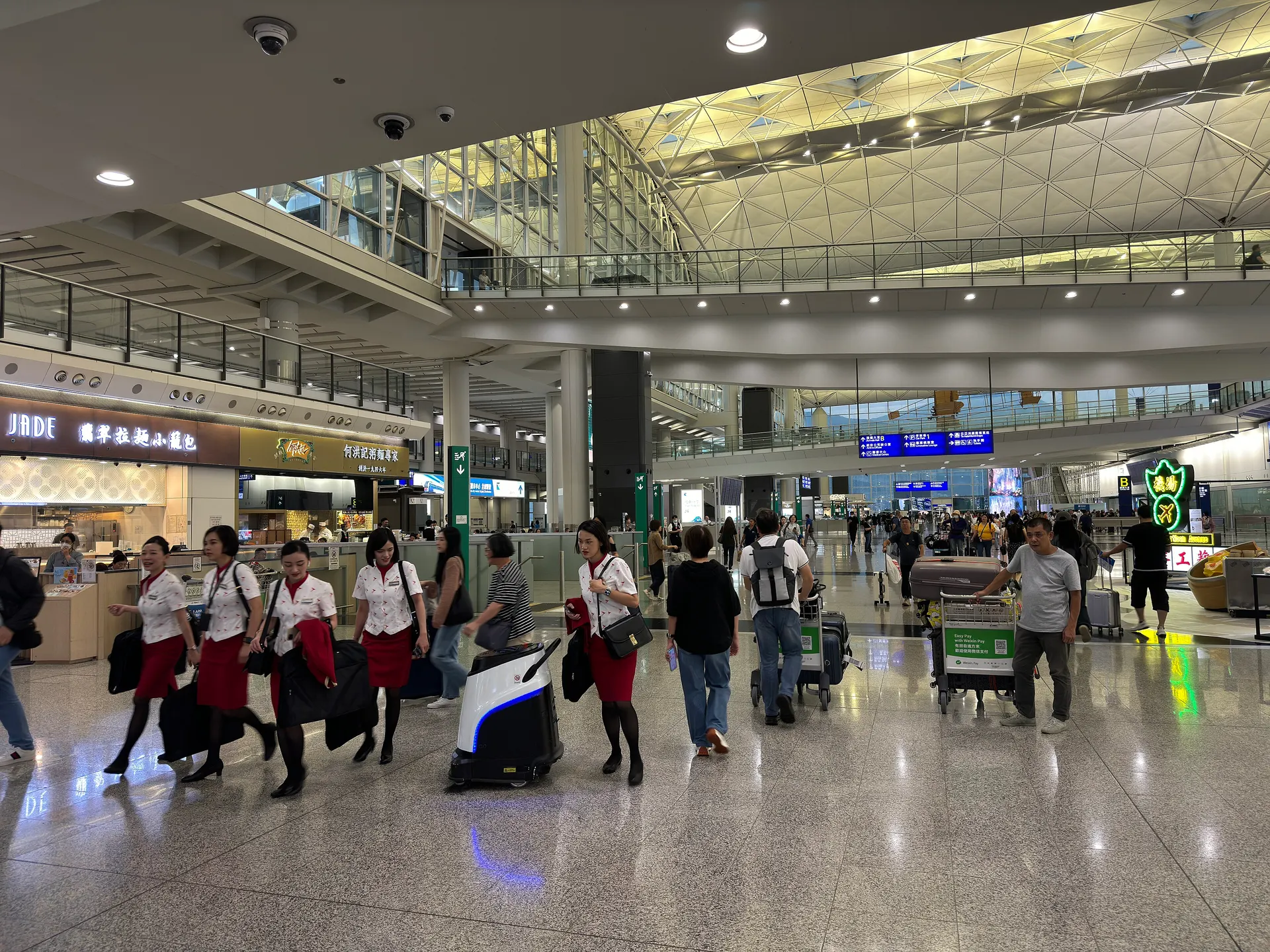
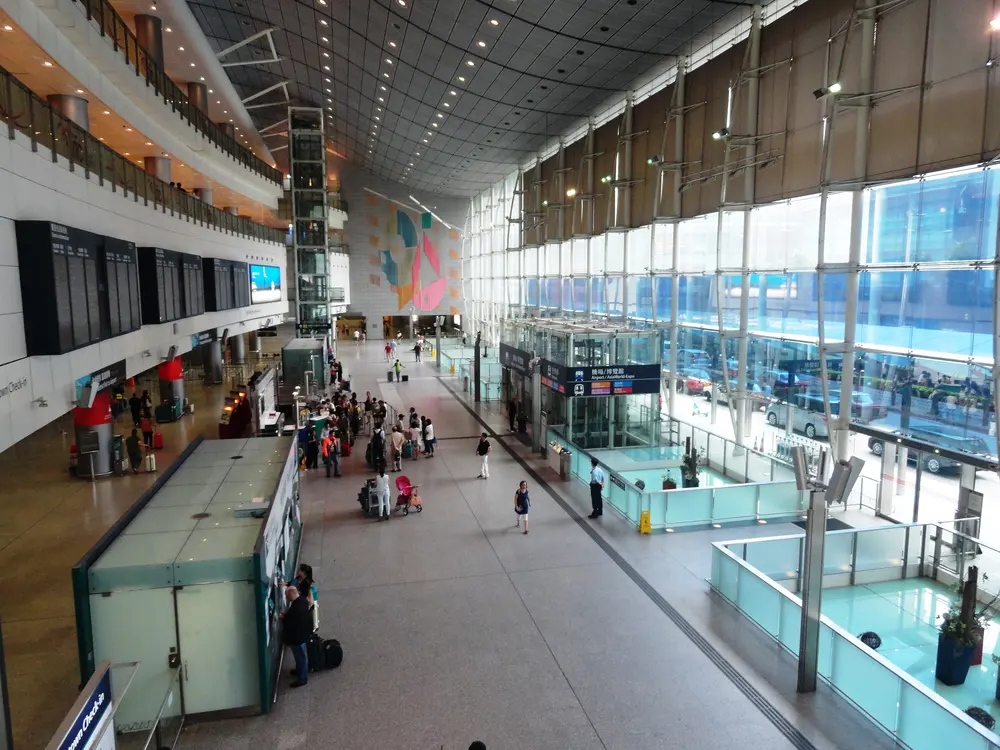
The arrival hall at Hong Kong International Airport. There is no arrival card to fill in; you get a printed landing slip at immigration.
e-Channel and Smart Departure for visitors (2026 changes)
The e-Channel (e-道) gates let enrolled travellers clear immigration in seconds. For visitors, three routes are open, as checked November 2026:
- Frequent Visitor e-Channel: from 27 February 2026, a visitor qualifies after two or more visits through the airport in the past 24 months (previously three visits in 12 months). Enrolment is free at the enrolment offices, including at the airport; electronic-passport holders now only show the passport, are photographed and sign, with no fingerprints.
- 'Go Hong Kong' app (from 16 September 2026): frequent visitors aged 18 or over can enrol before arrival on an NFC-enabled smartphone by reading their passport chip and scanning their face, giving an expected arrival date within three months.
- Reciprocal arrangements: nationals of South Korea, Singapore, Germany, Australia and Thailand can enrol for the e-Channel under mutual arrangements with their own border systems.
Smart Departure lets eligible visitors with electronic passports leave through automated gates without enrolling; since 22 December 2025 the minimum age for Smart Departure and for mainland visitors using the electronic Exit-entry Permit at the e-Channel has been 7 (previously 11). Mainland residents with an electronic EEP and PRC e-passport holders in transit can also use the e-Channel.
None of this is required. A first-time visitor simply queues at the visitor counters.
Mainland Chinese residents: Exit-entry Permit, endorsements and the Individual Visit Scheme
Residents of the Chinese mainland do not travel to Hong Kong on a passport. They need the Exit-entry Permit for Travelling to and from Hong Kong and Macao (EEP, 往来港澳通行证) with a valid exit endorsement (签注) issued by the mainland's exit-entry authorities. The type of endorsement decides how you may travel:
- Individual visit endorsement (个人旅游, 'G' type): for residents of the cities in the Individual Visit Scheme (IVS, 自由行). It now covers 59 mainland cities: all 21 cities of Guangdong plus 38 others, including every provincial capital. Each stay is limited to 7 days.
- Group visit endorsement (团队旅游, 'L' type): for residents of other places, who must arrive and leave as part of a registered tour group.
- Shenzhen one-year multiple-entry endorsement (一签多行): Shenzhen permanent residents and Shenzhen residence-permit holders can obtain a one-year multiple-entry individual endorsement, which resumed on 1 December 2024 (replacing the 'one trip per week' version). A July 2025 Legislative Council reply said extending multiple-entry endorsements to other cities was still under discussion; no further cities had been announced as of November 2026.
- Other endorsements cover visiting relatives, business and study.
Mainland visitors holding the electronic EEP can use the e-Channel at most control points. PRC passport holders in transit through Hong Kong to another country can stay up to 7 days without a prior permit, provided they hold a confirmed onward ticket and the visa or entry facilities for their destination.
Arriving by high-speed rail at West Kowloon, mainland visitors clear mainland exit and Hong Kong entry in the same building under the co-location arrangement; via Lo Wu (罗湖), Lok Ma Chau (落马洲), Shenzhen Bay (深圳湾) or Heung Yuen Wai (莲塘/香园围) they clear both sides on foot.
Taiwan residents: Taiwan Compatriot Permit or online Pre-arrival Registration
Taiwan residents have two ways in, both described on ImmD's arrangements page:
- With a valid Mainland Travel Permit for Taiwan Residents (台胞證), you may enter as a visitor and stay up to 30 days.
- Without it, complete the free online Pre-arrival Registration (PAR, 網上預辦入境登記) at gov.hk before travelling. The result is normally given immediately; a successful registration is valid for two months for two entries, each allowing a stay of up to 30 days. Print the notification slip and carry it with your Taiwan passport. The arrangement is for people born in Taiwan, or who have previously been admitted as Taiwan residents, and who hold no other non-Taiwan travel document. If the registration fails, you must apply for an entry permit instead.
Taiwan travellers who hold another nationality's passport (for example a US or Canadian passport) may enter on that passport under its own visa-free period instead.
Indian nationals: Pre-arrival Registration (PAR)
Indian passport holders may visit Hong Kong visa-free for 14 days, but only after a successful online Pre-arrival Registration on the GovHK portal. Key points from ImmD's page (dated 5 November 2026):
- Registration is free and the result is usually shown immediately.
- A successful PAR is valid for six months and can be used for multiple visits of up to 14 days each during that time.
- Print the notification slip or keep it on your phone; airlines check it at check-in.
- If the registration is unsuccessful, you must apply for a visit visa through the normal route; ImmD says processing normally takes about four weeks after it receives all documents.
- Indian nationals transiting airside without entering Hong Kong do not need the PAR.
Beware of commercial websites that charge a fee to 'process' the PAR: the official form is on gov.hk and costs nothing.
Who needs a visa, and how to apply (including Vietnamese travellers)
Nationals of the countries marked 'visa required' in ImmD's list need a Hong Kong visit visa (entry visa) before they travel. That includes Vietnam, Pakistan, Bangladesh, Nepal, Sri Lanka, Myanmar, Cambodia, Laos, Nigeria, Ghana, Iran, Iraq, Cuba and several others. For some of them (marked *, ^ or ※ by ImmD, such as Afghanistan, Bangladesh, Iran, Nigeria, Pakistan and Sri Lanka) the visa is required even for airside transit.
Applications are made to ImmD, either online (the visa is then issued electronically as an e-Visa) or through Chinese diplomatic and consular missions abroad. Typical requirements are a completed application form, a passport photo, a passport copy, proof of funds, a return ticket and accommodation details; some applicants are asked for a local sponsor. ImmD says processing normally takes four weeks after it has received all required documents, so apply well ahead. The Hong Kong Tourism Board has published a Vietnamese-language guide to the e-Visa for Vietnamese travellers.
ImmD also runs special schemes for some nationalities, for example relaxed multiple-entry visa criteria introduced in September 2025 for nationals of Kyrgyzstan, Tajikistan, Turkmenistan and Uzbekistan. Check the current ImmD page for your nationality before applying.
Transit through Hong Kong without a visa
If you connect between two flights at HKIA without leaving the transfer area, you do not pass Hong Kong immigration and, for most nationalities, need no visa. The exceptions are the nationalities ImmD marks as needing a visa even for airside transit (including Afghanistan, Bangladesh, Iran, Iraq, Nigeria, Pakistan, Sri Lanka, Syria and others).
If you want to leave the airport during a layover, you enter Hong Kong as a visitor under the normal rules for your passport. For most travellers that is simple: you clear immigration, receive a landing slip and can spend the day in the city. Plan the timing with our layover guide.
HKIA's SkyPier links the airport airside with ferry terminals in the Pearl River Delta for transfer passengers, who travel without clearing Hong Kong immigration; scheduled SkyPier sailings to Macau were suspended in November 2026 (charter only), so check with the operators first (see airport).
Customs allowances: alcohol, tobacco, cash and banned items
Hong Kong is a free port. Duty is charged only on liquor, tobacco, hydrocarbon oil and methyl alcohol, so visitors rarely have anything to declare. The duty-free allowances of the Customs and Excise Department, for travellers aged 18 or over, are:
- Alcohol: 1 litre of alcoholic liquor stronger than 30% alcohol by volume. Hong Kong charges no duty on wine or beer, so these have no quota under the duty-free rules.
- Tobacco: 19 cigarettes, or 1 cigar (or 25 g of cigars if more than one), or 25 g of other manufactured tobacco.
- E-cigarettes, heated tobacco products (such as heat sticks) and herbal cigarettes ('alternative smoking products'): importing them is banned in any quantity, including for personal use, and they must be declared. The penalty is a fine of up to HK$500,000 and two years in prison. Passengers who stay airside are exempt. From 30 April 2026, possessing specified alternative smoking products in a public place also carries a HK$3,000 fixed penalty.
- Cash and bearer negotiable instruments: amounts over HK$120,000 (or the equivalent in other currencies) must be declared in writing at the Red Channel on arrival. Customs offers an online form that produces a QR code to speed this up.
Other items are controlled or prohibited: firearms, ammunition and replicas, stun guns, knuckledusters and some bladed weapons, controlled drugs, endangered species products (ivory, some corals, shark fin products under CITES rules), and fresh meat, poultry and eggs above personal amounts. All cannabis products, including CBD, are illegal in Hong Kong.
Medicines: bring prescription medicines in their original packaging with a copy of the prescription or a doctor's letter, in quantities reasonable for your stay. Medicines containing controlled substances (some strong painkillers, sleeping pills and ADHD treatments) are tightly regulated; check with the Department of Health before travelling.
Leaving Hong Kong: each traveller aged 16 or over may take out no more than 1.8 kg of powdered infant formula (roughly two standard tins), a limit introduced in 2013 and still enforced.
| Item | Duty-free allowance (aged 18+) | Notes |
|---|---|---|
| Spirits over 30% ABV | 1 litre | Wine and beer: no duty, no quota |
| Cigarettes | 19 sticks | Or 1 cigar / 25 g cigars / 25 g other tobacco |
| E-cigarettes, heated tobacco, herbal cigarettes | None: import banned | Up to HK$500,000 fine and 2 years; HK$3,000 fixed penalty for possession in public from 30 Apr 2026 |
| Cash / bearer instruments | Declare over HK$120,000 | Red Channel; e-form QR code available |
| CBD and cannabis products | Banned | Includes oils, creams and edibles |
| Powdered infant formula (departing) | Max 1.8 kg per person aged 16+ | Applies when leaving Hong Kong |
Travelling on to Macau from Hong Kong
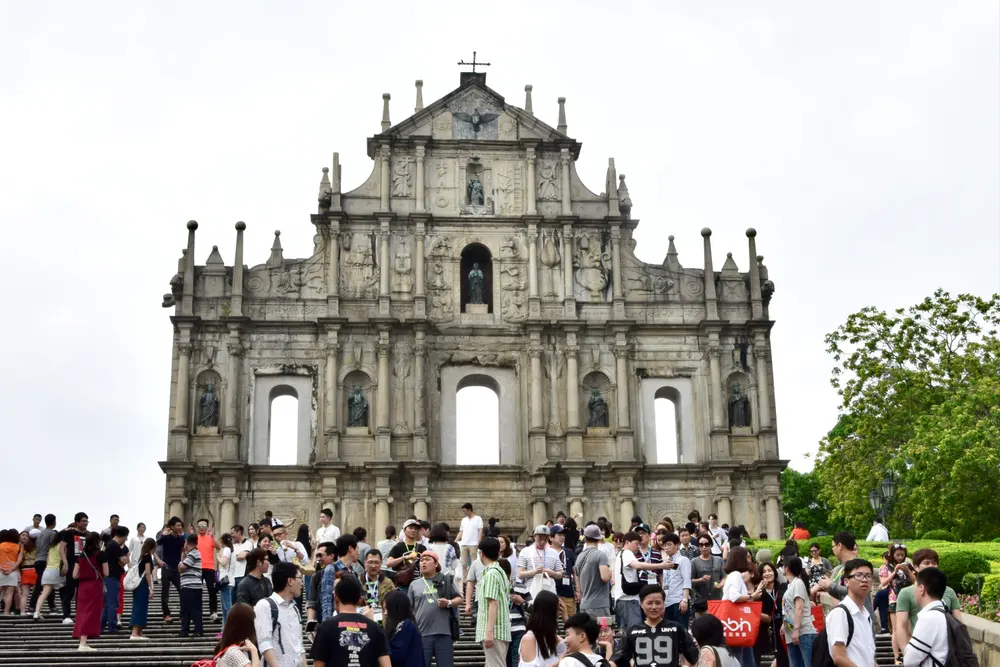
Macau (澳門) is a separate Special Administrative Region with its own border controls, currency (the pataca, MOP, though Hong Kong dollars are widely accepted) and visa rules. You leave Hong Kong through immigration and enter Macau through the Public Security Police Force (PSP) checkpoint. The Macao government lists 88 visa-exempt nationalities (page last modified 20 November 2026):
- British citizens: 6 months.
- 90 days: most EU and Schengen countries, Japan, South Korea, Brazil, Mexico, Egypt, Morocco and others; 3 months for New Zealand, Israel, Cyprus and Lebanon.
- 30 days: USA, Canada, Australia, Singapore, Malaysia, Thailand, Indonesia, the Philippines, India, Russia, Saudi Arabia, the UAE, Qatar, Kuwait, South Africa, Türkiye and others.
- 14 days: Brunei and Kazakhstan.
- Hong Kong residents: holders of a Hong Kong permanent identity card can stay up to one year.
- Mainland residents: need the EEP with a Macau endorsement (stay as endorsed, up to 90 days).
- Taiwan residents: the Taiwan Compatriot Permit is accepted as an entry document.
- Others: can usually get an entry permit on arrival for up to 30 days (MOP 200 for an individual single entry), except nationals of Bangladesh, Nepal, Nigeria, Pakistan, Sri Lanka and Vietnam, who must apply in advance through a Chinese embassy or consulate.
Ferries leave from the Hong Kong–Macau Ferry Terminal in Sheung Wan (as checked November 2026, neither TurboJET nor Cotai Water Jet listed scheduled Macau sailings from the China Ferry Terminal in Tsim Sha Tsui); buses cross the Hong Kong–Zhuhai–Macao Bridge from the bridge's Hong Kong Port near the airport. See day trips from Hong Kong and our Macau guide.
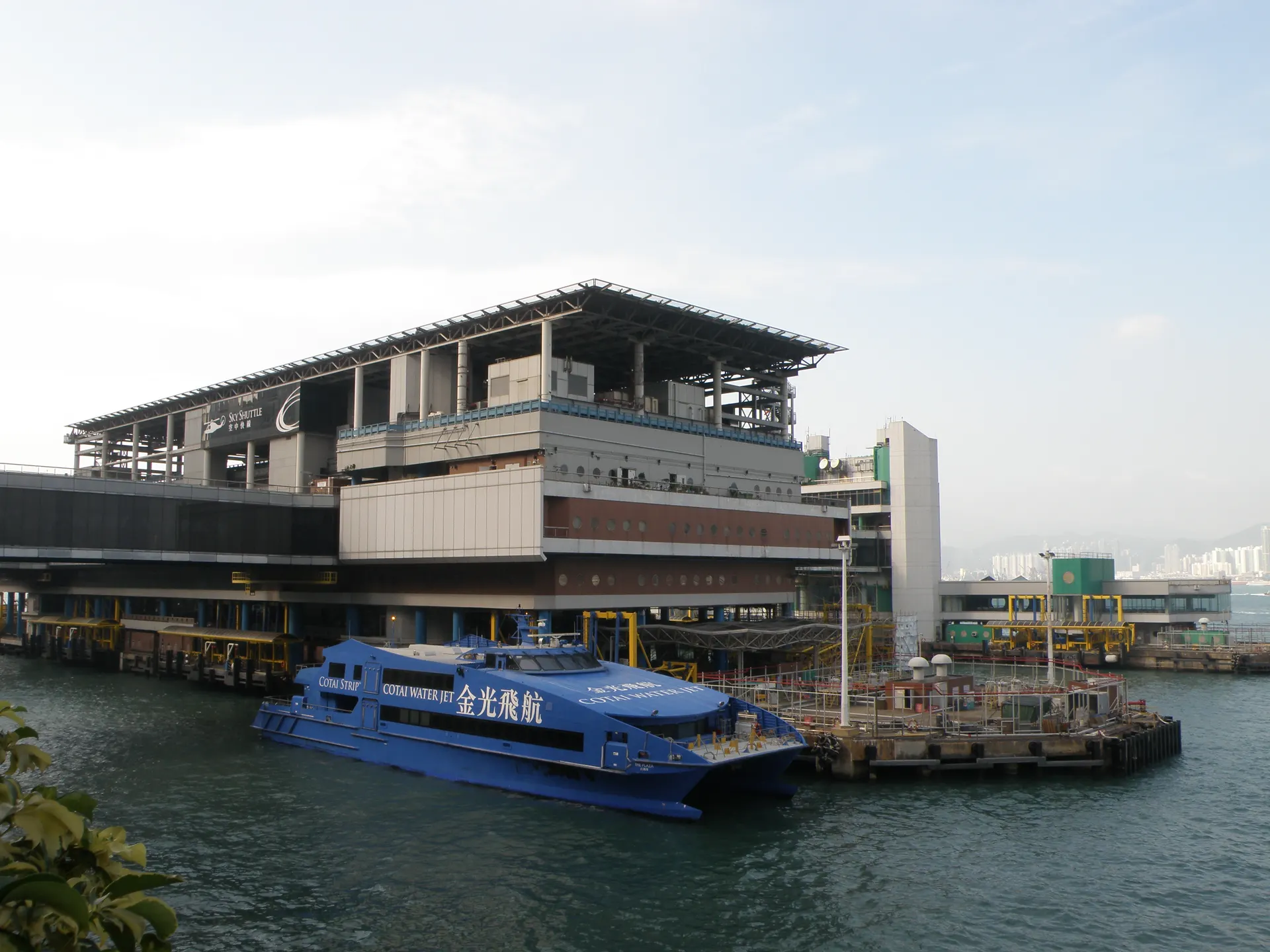
The Hong Kong–Macau Ferry Terminal at Shun Tak Centre, Sheung Wan, where you clear Hong Kong departure immigration.
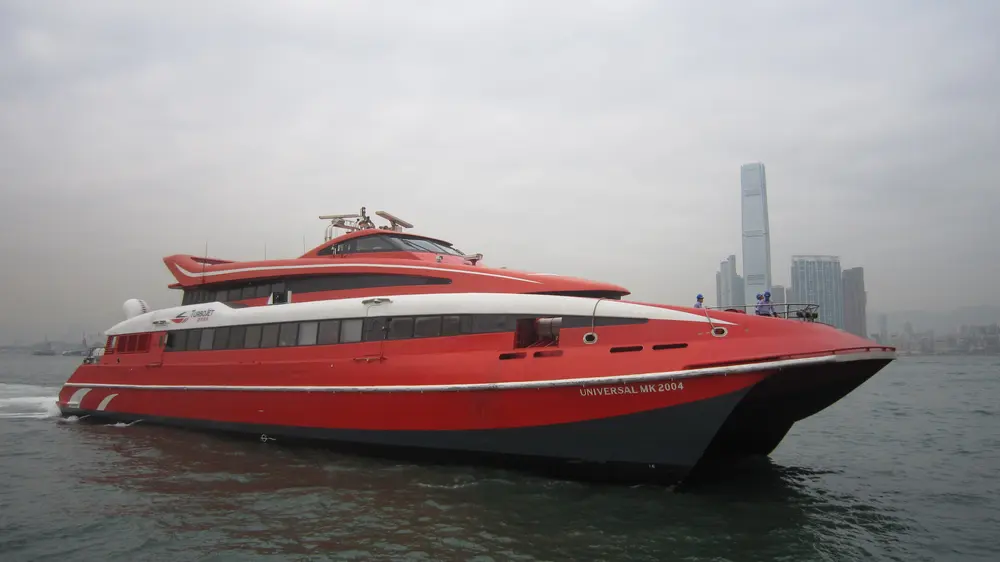
Ferry between Hong Kong and Macau
Ferry ticket between Hong Kong Island (Sheung Wan) and Macau.
Check availabilityBook via GetYourGuide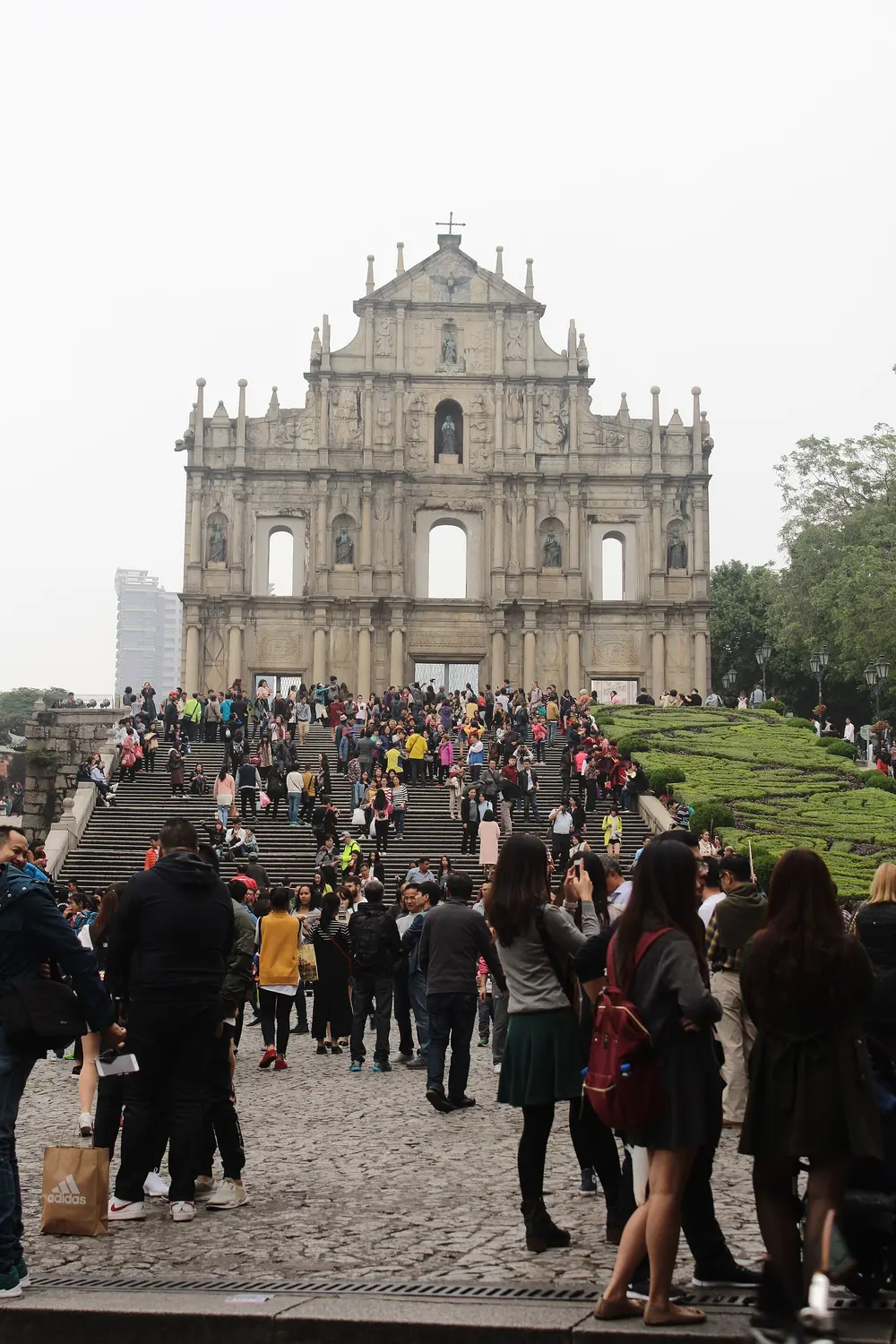
Macau day tour from Hong Kong
Guided day trip to Macau's historic centre and landmarks with transport from Hong Kong.
Check availabilityBook via GetYourGuide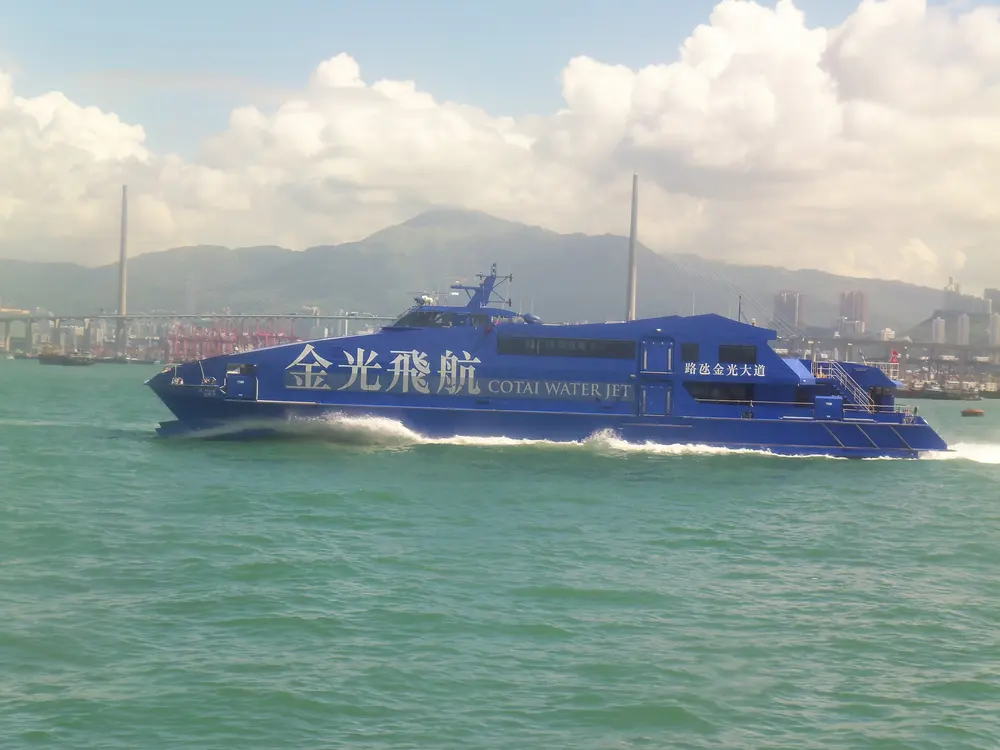
Cotai Water Jet ferry ticket
Ferry ticket between Hong Kong and Macau on Cotai Water Jet.
Check availabilityBook via KlookTour listings are on GetYourGuide. Prices, times and cancellation terms are shown live on each listing and can change; HongKongTravel.com may earn a commission at no extra cost to you.
Travelling on to Shenzhen and mainland China
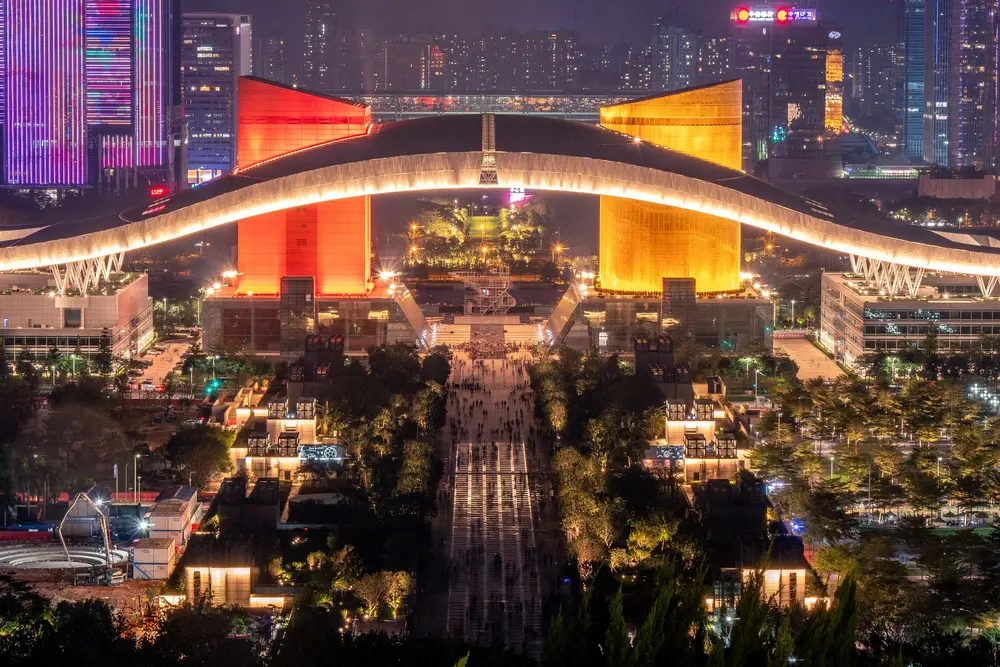
Crossing from Hong Kong into Shenzhen (深圳) means entering mainland China, which has completely separate visa rules. As checked November 2026, the main routes for foreign visitors are:
- 30-day unilateral visa-free entry for ordinary passport holders of 50 countries, including the UK, Canada (both from 17 February 2026), Australia, New Zealand, Japan, South Korea, France, Germany, Italy, Spain, the Netherlands, Switzerland, Ireland, Sweden, Poland, Portugal, Brazil, Argentina, Chile, Peru, Uruguay, Saudi Arabia, Oman, Kuwait, Bahrain and Brunei. China's foreign ministry has extended this policy until 31 December 2026; check whether it has been renewed before travelling in 2027. Russia is also on the National Immigration Administration's 30-day visa-free list; check its end date with the NIA before travelling.
- Mutual visa exemption agreements (30 days per visit) with Singapore, Thailand, Malaysia, the UAE and Qatar, among others.
- 240-hour (10-day) visa-free transit for nationals of 57 countries, including the USA, Canada, the UK, Indonesia, Mexico, Singapore, Qatar, the UAE and Vietnam, if you arrive from one country or region and leave for a different third country or region with a confirmed onward ticket, staying within the permitted areas. Hong Kong and Macau count as separate regions, so a USA → Shanghai → Hong Kong itinerary can qualify, but a Hong Kong → Shenzhen → Hong Kong return trip does not. In November 2025 the list of eligible ports grew to 65, adding West Kowloon Station (high-speed rail), the Hong Kong–Zhuhai–Macao Bridge port, Hengqin and others.
- Shenzhen five-day visa on arrival at Luohu, Huanggang, Shekou and some other Shenzhen ports for some nationalities, valid only within the Shenzhen Special Economic Zone. Eligibility and fees change without notice and several nationalities (including US citizens) are not eligible; confirm with the Chinese visa office before relying on it.
- Everyone else, including Indian and Filipino passport holders, needs a Chinese visa in advance.
Hong Kong and Macau residents use the Home Return Permit (回鄉證); Taiwan residents use the Taiwan Compatriot Permit. Main crossings are Lo Wu and Lok Ma Chau (MTR East Rail line), Shenzhen Bay (buses), Heung Yuen Wai and the high-speed rail from West Kowloon, where mainland immigration sits inside the Hong Kong station. Shenzhen's land ports introduced facial-recognition clearance from November 2025, and foreigners can fill in China's arrival card online before arriving.
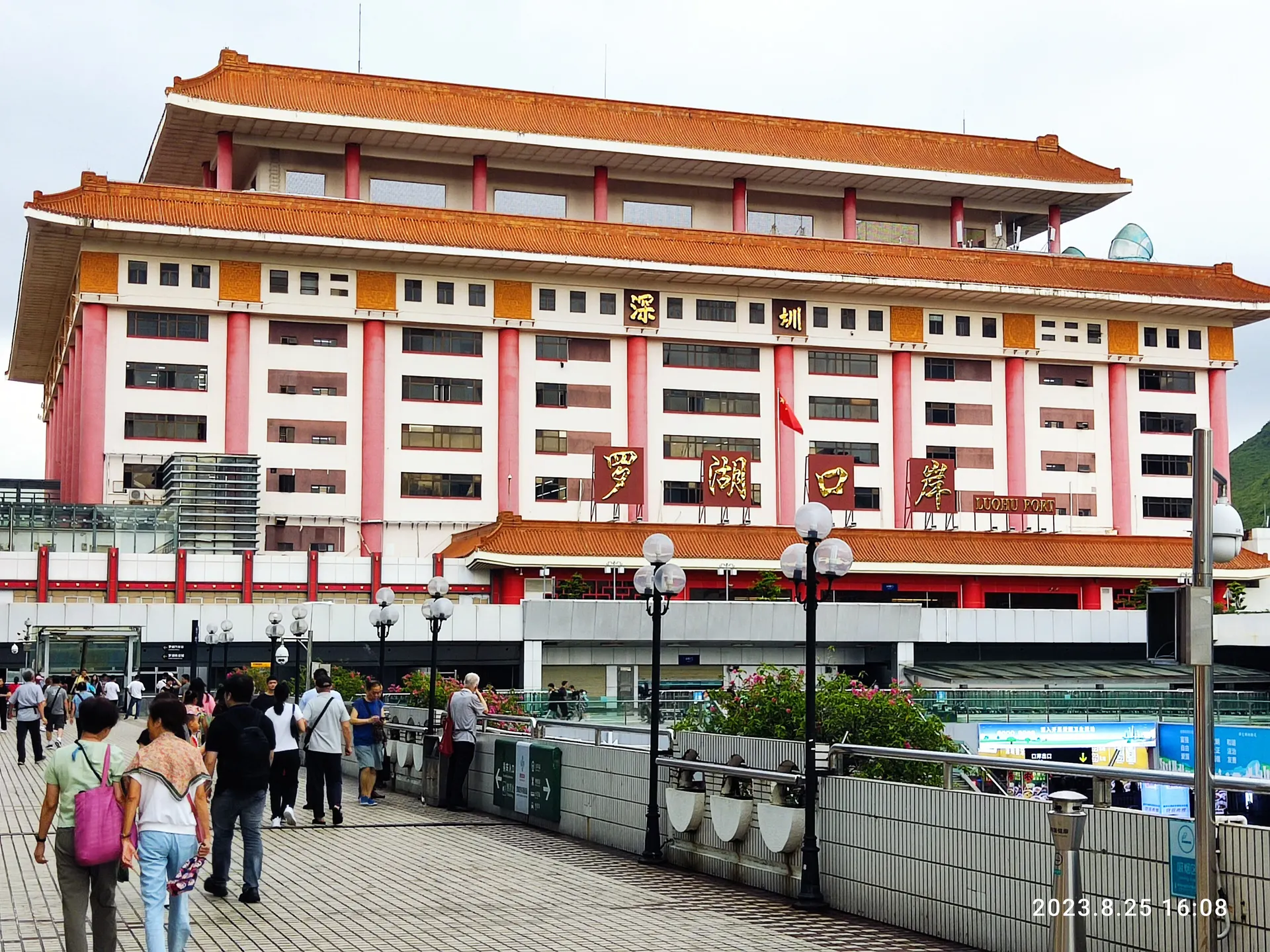
The Luohu (Lo Wu) control point building on the Shenzhen side: the busiest walking border between Hong Kong and the mainland.
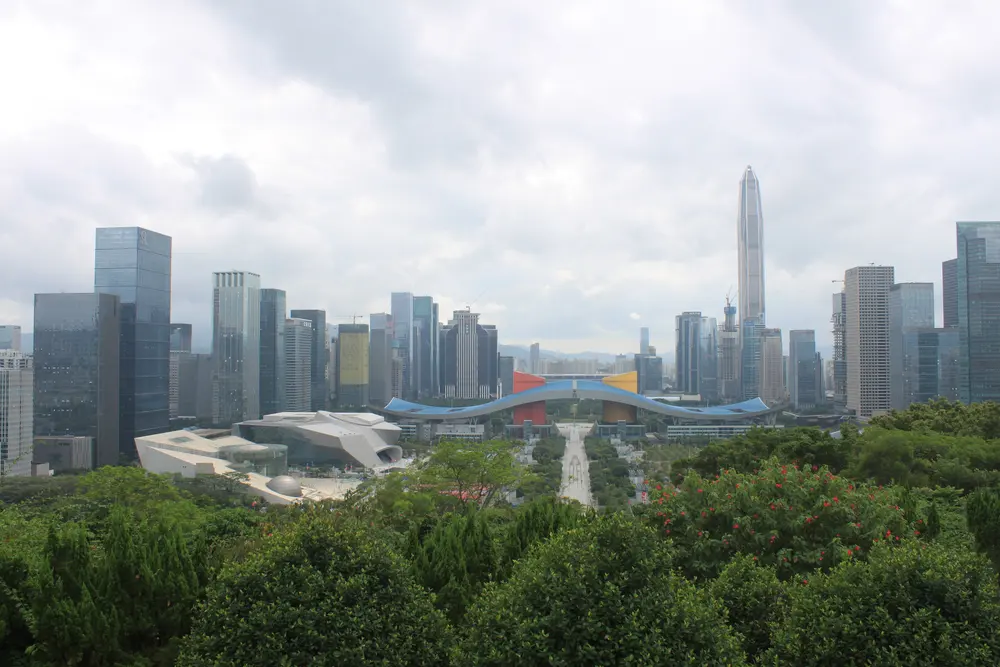
Shenzhen full-day city tour from Hong Kong
Guided day crossing the border to see Shenzhen's main sights.
Check availabilityBook via Klook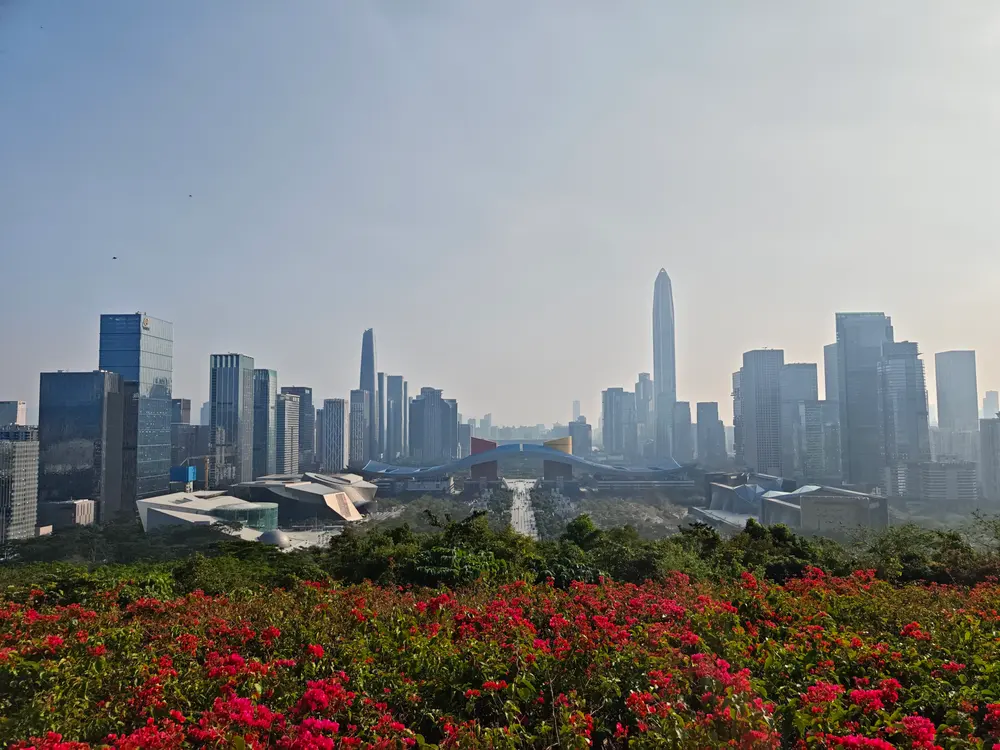
Private Shenzhen day tour from Hong Kong
Private guided day in Shenzhen starting from Hong Kong.
Check availabilityBook via GetYourGuideTour listings are on Klook. Prices, times and cancellation terms are shown live on each listing and can change; HongKongTravel.com may earn a commission at no extra cost to you.
High-speed rail from West Kowloon: one station, two border controls
The Guangzhou–Shenzhen–Hong Kong Express Rail Link (XRL, 高鐵) runs from Hong Kong West Kowloon Station to Shenzhen (Futian about 14 minutes, Shenzhen North about 18 minutes), Guangzhou South (under an hour) and long-distance destinations such as Beijing, Shanghai and Xiamen. Inside the station a marked line divides the Hong Kong Port Area from the Mainland Port Area: you clear Hong Kong departure and mainland entry before boarding, so on arrival in Shenzhen you simply walk out.
This means you need your mainland entry document (visa, visa-free eligibility or permit) before you board in Hong Kong. Arrive at least 45 minutes before departure; tickets are sold at the station, through the MTR website and through mainland railway apps. See Shenzhen getting there.
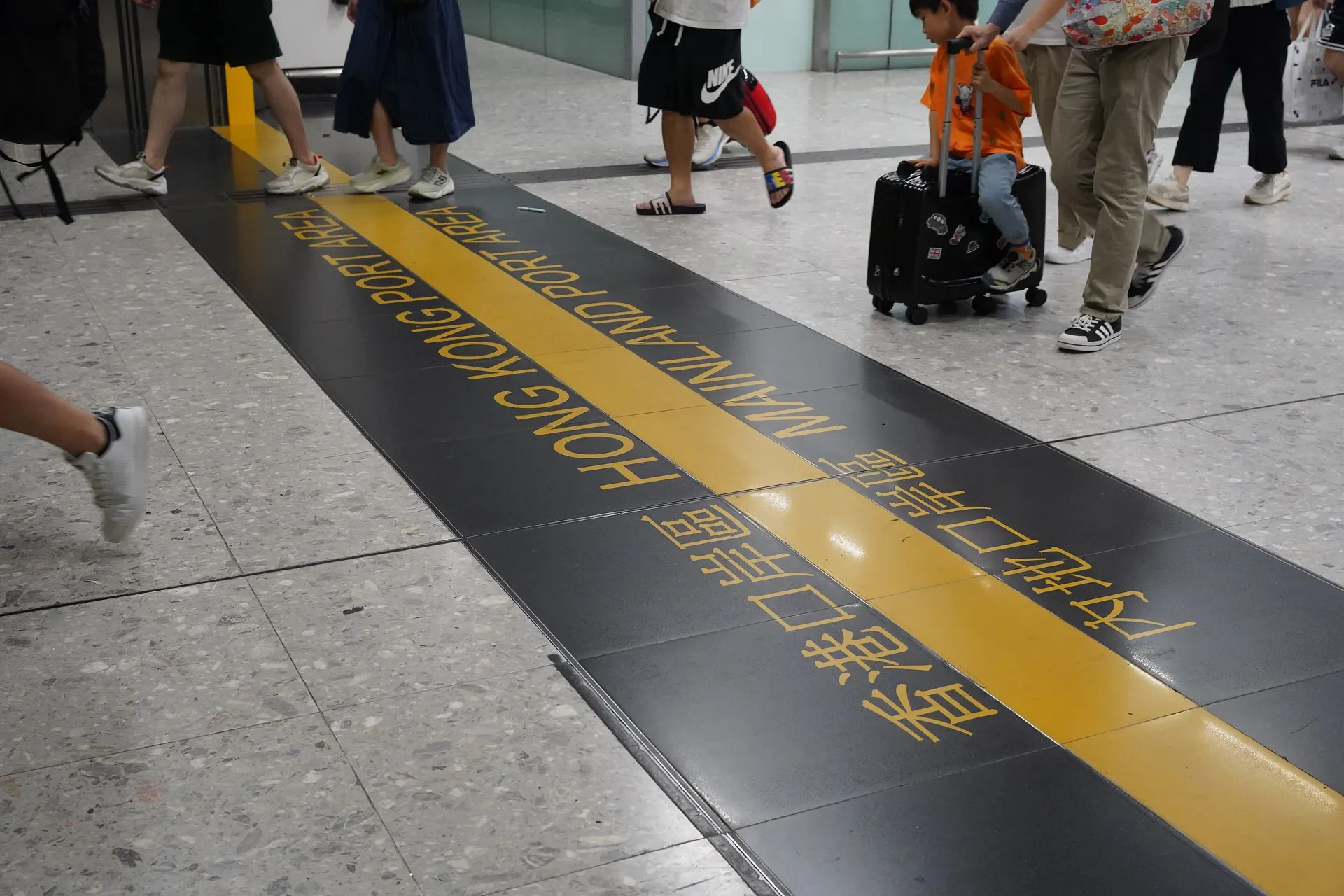
The boundary marking between the Hong Kong and Mainland port areas inside West Kowloon Station.
Health, vaccinations and travel insurance
Hong Kong has no COVID-19 entry rules and no general vaccination requirement. A yellow fever vaccination certificate is required only if you arrive from a country with a risk of yellow fever transmission. Routine vaccinations should be up to date; dengue fever is transmitted by mosquitoes in summer, so use repellent on hikes and in parks.
Public hospitals provide excellent emergency care, but visitors pay non-eligible person fees. Since the public healthcare fees reform of 1 January 2026, an Accident & Emergency attendance costs HK$2,100 for a visitor (Hospital Authority gazette, as checked November 2026), with in-patient days and specialist care charged much higher; private hospitals charge more again. Comprehensive travel insurance with medical cover is strongly advised, especially for hikers and anyone visiting in typhoon season, when flight disruption is common.
Pharmacies (藥房) are everywhere; registered pharmacies with a pharmacist on duty display a red-cross sign. For an ambulance, police or fire service, call 999. More practical advice is in travel tips and typhoon and rainstorm signals.
Before you fly: a checklist
- Check your nationality in the table above, and on immd.gov.hk if your trip is longer than a week or two.
- Indian nationals: complete the free online Pre-arrival Registration. Taiwan residents without a Taiwan Compatriot Permit: complete the PAR. Mainland residents: check that your EEP endorsement is valid.
- Make sure your passport is valid for the whole trip plus at least one month (six months is safer).
- Keep a return or onward ticket and your hotel address ready.
- Leave e-cigarettes, heated tobacco and CBD products at home.
- Plan any trip to Macau or Shenzhen: those borders have their own rules, and mainland China may need a visa.
- Buy travel insurance with medical cover, and set up an Octopus card and a SIM or eSIM for arrival.
Frequently asked questions
What are the requirements to travel to Hong Kong?
A passport valid for your whole stay (at least one month beyond departure; six months is safer), a confirmed return or onward ticket, enough money for your stay and, depending on nationality, either nothing else (most Western and many Asian passports), an online Pre-arrival Registration (India; Taiwan residents without a permit), a mainland Exit-entry Permit with endorsement (mainland residents) or a visa (for example Vietnam, Pakistan, Bangladesh). There is no arrival card and no electronic travel authorisation.
Do I need a visa to travel to Hong Kong?
Probably not. Citizens of well over 100 countries and territories can visit without a visa: British citizens for 180 days; Americans, Canadians, Australians, Japanese, Koreans, Singaporeans, Malaysians and most Europeans for 90 days; Thais and Indonesians for 30 days; Filipinos, Russians and (after registration) Indians for 14 days. Nationalities not on ImmD's list get 7 days, and a minority, including Vietnamese ordinary passport holders, need a visa.
Do US citizens need a visa for Hong Kong?
No. US citizens with ordinary passports can stay up to 90 days visa-free. US diplomatic passport holders need a visa. Mainland China is different: Americans are not on China's 30-day visa-free list but can use the 240-hour visa-free transit if they travel on to a third country or region.
Do Indian citizens need a visa for Hong Kong?
Indian nationals can visit visa-free for 14 days, but only after completing the free online Pre-arrival Registration on the GovHK website. A successful registration is valid for six months for multiple visits. If the registration fails, apply for a visit visa.
Is there a Hong Kong tourist visa or e-visa I should buy online?
Most visitors need nothing. For those who do need a visa, applications are made to the Immigration Department (online e-Visa) or through Chinese diplomatic missions; the Indian and Taiwan Pre-arrival Registrations are free on gov.hk. Ignore websites that sell 'Hong Kong e-visas' or arrival cards to visa-free travellers.
Do I need to fill in an arrival card for Hong Kong?
No. Arrival and departure cards were abolished on 16 October 2024. You receive a printed landing slip at immigration; keep it with your passport.
How long can I stay in Hong Kong without a visa?
Between 7 and 180 days depending on your passport: 180 days for British citizens, 90 days for most Western, Japanese, Korean, Singaporean and Malaysian passports, 30 days for Thailand and Indonesia, 14 days for the Philippines, India (after PAR) and Russia, 7 days for unlisted nationalities.
Can I travel to Shenzhen or Macau with my Hong Kong visa-free entry?
No. Macau and mainland China have their own rules. Macau is visa-free for most nationalities (30 to 180 days). Mainland China offers 30-day visa-free entry to about 50 countries (policy extended until 31 December 2026), 240-hour visa-free transit for 57 nationalities with an onward ticket to a third country or region, and visas for everyone else.
Can I bring my vape or IQOS to Hong Kong?
No. Importing e-cigarettes, heated tobacco products and herbal cigarettes is banned in any quantity, even for personal use, with penalties of up to HK$500,000 and two years in prison; possession in public places carries a HK$3,000 fixed penalty from 30 April 2026. Airside transit passengers are exempt.
How much cash can I bring into Hong Kong?
There is no limit, but amounts over HK$120,000 (or the equivalent) in cash or bearer negotiable instruments must be declared in writing at the Red Channel on arrival.
Is cheap travel to Hong Kong possible with these visa rules?
Yes: entry is free for most nationalities, with no visa fees, no arrival levy and no tourist tax at the border. Budget tips on getting around, eating and sleeping are in our money, transport and accommodation guides.
Sources and official information
Facts were checked against these official sources in November 2026. Opening hours, fares and timetables change, so confirm before you go.
- immd.gov.hk
- immd.gov.hk
- immd.gov.hk
- immd.gov.hk
- tourism.gov.hk
- immd.gov.hk
- immd.gov.hk
- immd.gov.hk
- news.gov.hk
- customs.gov.hk
- customs.gov.hk
- info.gov.hk
- ha.org.hk
- gov.mo
- en.nia.gov.cn
- en.nia.gov.cn
- gov.uk
HongKongTravel.com is an independent guide, not the official site of the Hong Kong Tourism Board, the HKSAR Government or any operator. Some links are affiliate links: tours go to {tours} and hotels go to {hotels}, and we may earn a commission at no extra cost to you.