In short
- Safe and easy: Hong Kong has low violent crime, excellent public transport and bilingual signs everywhere. Watch for pickpockets in crowds and a few classic tourist scams.
- Rules that catch visitors: no eating or drinking on the MTR (fines up to HK$2,000), no smoking in most public places, e-cigarettes and heated tobacco are banned, no jaywalking, heavy fixed penalties for littering and spitting.
- Practical basics: UK-style Type G plugs (220 V), time zone UTC+8 all year, traffic on the left, tap water meets WHO standards, and 10% service charge instead of tipping.
- Emergencies: call 999 for police, fire and ambulance; the HKTB visitor hotline is +852 2508 1234.
Before you go: the essentials
- Entry: most nationalities need no visa; check entry requirements for your passport and remember there is no arrival card.
- Money: Hong Kong dollars; cards and mobile payments almost everywhere; see money.
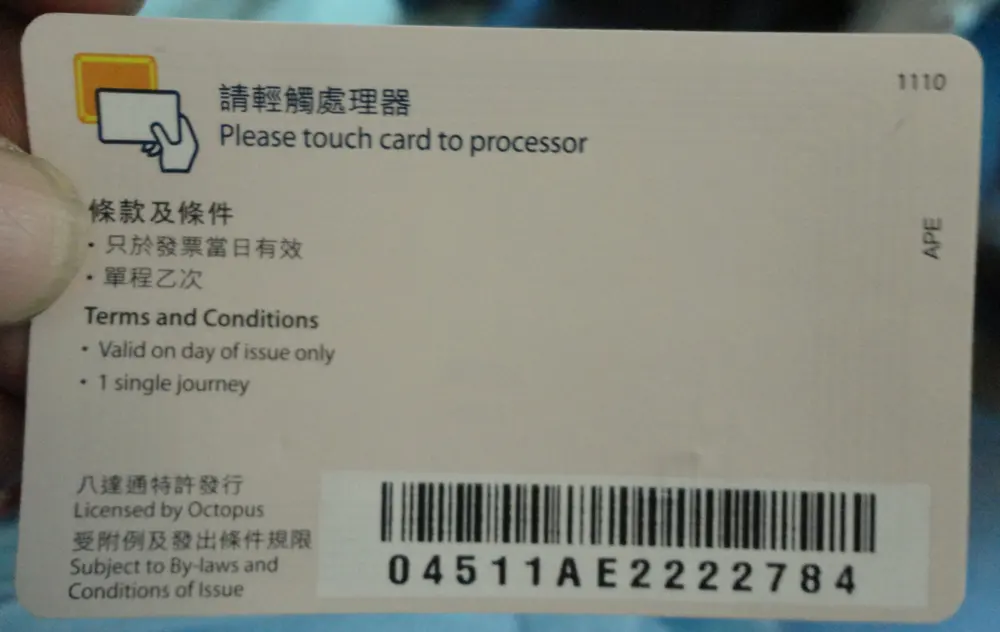
- Transport card: get an Octopus or use a contactless bank card.
- Data: buy a SIM or eSIM; no VPN needed in Hong Kong.
- Weather: check weather and, from May to November, typhoon signals.
- Insurance: visitors pay full fees in public hospitals (HK$2,100 per A&E visit since January 2026); buy cover.
- Time zone
- UTC+8 (HKT), no daylight saving
- Plugs
- Type G, 220 V, 50 Hz
- Driving
- On the left
- Languages
- Cantonese, English (official); Putonghua widely spoken
- Emergency
- 999 (police, fire, ambulance)
- Visitor hotline
- HKTB +852 2508 1234
Etiquette: how to fit in
Hong Kong is fast, crowded and efficient, and its manners follow from that. Nobody expects visitors to know everything, but these habits help:
- Queue. Hong Kongers queue for buses, minibuses, taxis, lifts and popular restaurants, often in neat lines marked on the pavement. Join the end.
- Keep moving. On escalators, pavements and MTR platforms, step aside to check your phone or map.
- Share tables. In busy cha chaan teng and dim sum halls you may be seated with strangers; a nod is enough, no conversation expected.
- Be quick at the counter. Order and pay promptly in cafés and noodle shops; staff are brisk, not rude.
- Chopsticks: don't stand them upright in rice (it recalls funeral offerings) or point with them. Pour tea for others before yourself; tapping two fingers on the table is a thank-you when someone fills your cup.
- Gifts and money: give and receive with both hands. At Chinese New Year, red packets (lai si, 利是) are given by married people to children and juniors.
- Temples: dress modestly, don't touch offerings or altars, and ask before photographing people praying.
- Volume: keep phone calls and conversations moderate on the MTR.
Safety and scams
Hong Kong is one of the safest big cities in the world to walk around, day or night. Normal big-city care is enough:
- Pickpockets operate in very crowded places: Mong Kok at weekends, night markets, the MTR at rush hour, New Year's Eve and festival crowds.
- Fake monks asking for donations in exchange for a blessing or amulet in Tsim Sha Tsui and Central; genuine monks in Hong Kong do not solicit like this.
- Tailor and electronics touts on Nathan Road: shop at stores with clear prices and receipts, and check warranties on electronics.
- Tour-shopping traps: very cheap group tours that include compulsory shopping stops.
- Phone and online scams: callers pretending to be officials or couriers; Hong Kong police never ask for money transfers by phone.
Hiking and the sea are the real risks for visitors: heat, steep wet trails and strong currents cause most serious incidents. See hiking and beaches.
Laws visitors break without knowing
Several everyday rules are stricter than in many countries and are enforced with on-the-spot fixed penalties:
- Eating or drinking on the MTR (including bottled water) in paid areas and on trains: fines up to HK$2,000 under MTR by-laws.
- Smoking is banned in indoor workplaces and public places, restaurants and bars, public transport and its facilities, many parks and beaches, and outside designated areas at bus interchanges. Fixed penalties apply.
- E-cigarettes and heated tobacco cannot be brought into Hong Kong at all, and from 30 April 2026 possessing them in public places carries a HK$3,000 fixed penalty.
- Littering and spitting carry heavy fixed penalties; bins are everywhere.
- Jaywalking: cross at signals and zebra crossings; traffic comes from the right.
- Feeding wild monkeys and other wild animals in country parks is illegal.
- Drones: flying is regulated by the Civil Aviation Department and banned in many areas, including near the airport and over Victoria Harbour; check before you fly.
- Cannabis and CBD products are illegal, even in tiny amounts.
- Working on a visitor status, even unpaid, is not allowed.
Hong Kong's National Security Law (2020) and the Safeguarding National Security Ordinance (2024) apply to everyone in Hong Kong, including visitors. Several governments' travel advice pages explain them; read your own government's advice before travelling.
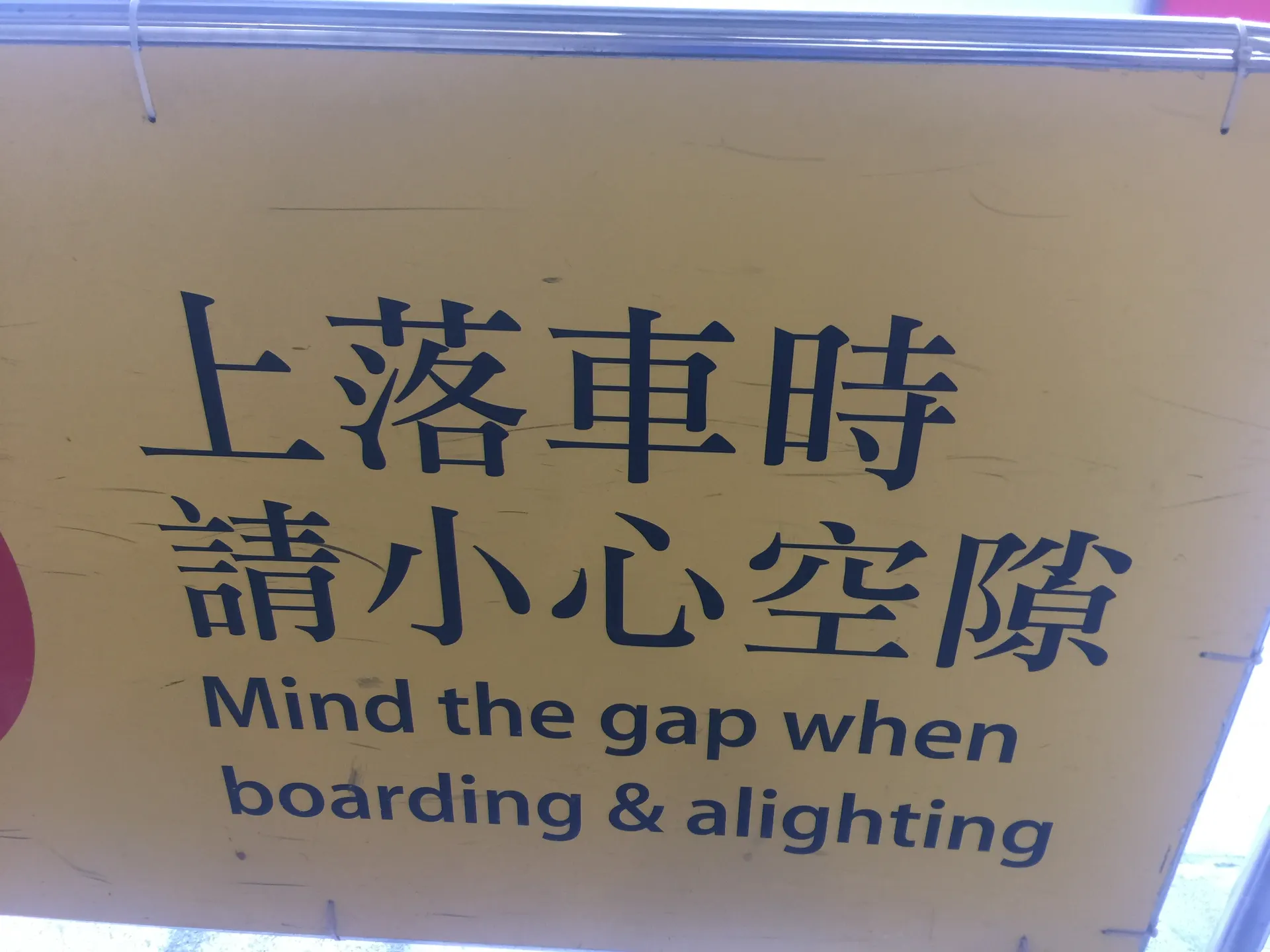
Bilingual signs everywhere: the MTR's famous 'Mind the gap' reminder in Chinese and English.
Water, food hygiene and health
- Tap water supplied by the Water Supplies Department meets the World Health Organization's guidelines at the point of supply. In practice, many residents boil or filter it because of the pipes in older buildings; hotels supply bottled or filtered water, and refill stations are increasingly common.
- Food hygiene is generally excellent; licensed restaurants display their licence. Street snacks from busy stalls are safe for most visitors.
- Pharmacies (藥房) are everywhere; look for the red cross and a registered pharmacist for prescription medicines. Mannings and Watsons sell common remedies.
- Mosquitoes: use repellent in parks and on hikes, especially in summer.
- Heat: drink more than you think, wear a hat and plan midday breaks indoors from May to October.
Language: getting by in English
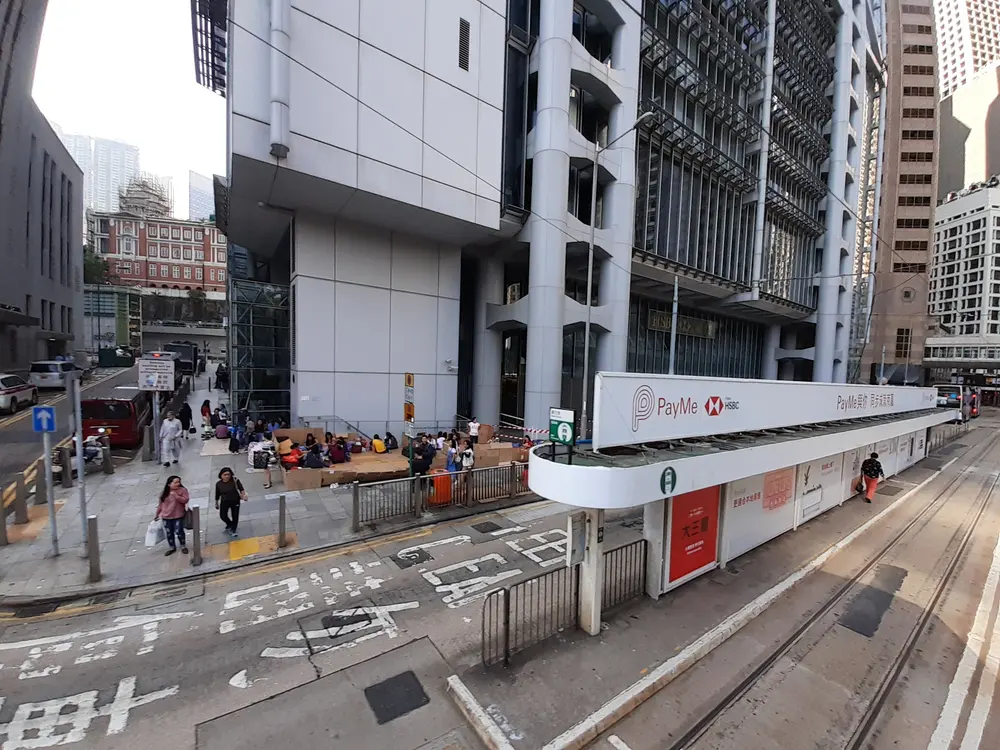
Chinese (in practice Cantonese in speech and traditional characters in writing) and English are both official languages. Road signs, MTR announcements, menus in tourist areas and all government services are bilingual; staff in hotels, airlines and big shops speak English, while taxi drivers, market traders and small family restaurants may speak little. Putonghua (Mandarin) is widely understood.
A few Cantonese words go a long way: m4 goi1 (唔該, thank you for a service / excuse me), do1 ze6 (多謝, thank you for a gift), mai4 daan1 (埋單, the bill please). See Cantonese phrases. Have your hotel address in Chinese for taxis.
Plugs, toilets, opening hours and other practicalities
- Plugs: Type G, the three-pin British design, 220 V. Adaptors cost a few dollars in convenience stores.
- Toilets: free public toilets in parks, MTR interchange stations, malls, ferry piers and markets; carry tissues, as some don't supply paper.
- Opening hours: shops open late (around 10–11 am) and close late (10 pm in busy districts); many restaurants serve until 10 or 11 pm. Markets and temples keep their own hours.
- Public holidays: banks and government offices close; shops and restaurants stay open but are busier. Chinese New Year closes many small family businesses for several days. See events.
- Smoking areas and bins: outdoor rubbish bins often have an ashtray on top; smoking is only allowed where not prohibited.
- Dress: casual; smart casual for upscale bars and restaurants; modest clothing in temples.
- Luggage: pavements are crowded and hilly; a backpack or a light suitcase is easier than a large hard case.
Accessibility
Modern Hong Kong is largely accessible: the MTR, Airport Express, most buses (low-floor), the airport, malls, museums and newer hotels have step-free access, lifts and accessible toilets. Older districts are harder: steep streets in Sheung Wan and Mid-Levels, stepped lanes, crowded pavements and trams with steps. The Star Ferry has ramps at the main piers. Taxis can carry folded wheelchairs at no charge, and some wheelchair-accessible taxis (Diamond Cab) can be booked in advance. Ocean Park and Hong Kong Disneyland publish detailed accessibility guides.
Ten tips we'd give a friend
- Ride the Star Ferry at dusk and the tram upstairs at the front.
- Go to the Peak only on a clear day; check the webcam or the sky first.
- Eat dim sum early: by 11:30 am the best places have queues.
- Carry a layer: the MTR and malls are cold even in August.
- Learn the exits: check the exit letter before leaving the MTR platform.
- Use In-Town Check-in on your last day and enjoy the city without bags.
- Leave a buffer day in typhoon season before long-haul flights.
- Hike before 10 am in summer and always carry water.
- Keep HK$300–500 in cash for markets and minibuses.
- Get out of the centre: the islands, Sai Kung and the New Territories show a different Hong Kong.
Frequently asked questions
Is Hong Kong safe for tourists?
Yes. Violent crime against visitors is rare and streets are busy late into the night. Watch for pickpockets in crowds, avoid 'monks' asking for donations and buy electronics from reputable shops.
Can you drink tap water in Hong Kong?
The Water Supplies Department's water meets WHO guidelines at the point of supply, but many residents boil or filter it because of older building pipes. Hotels provide bottled or filtered water.
What plug is used in Hong Kong?
Type G, the British three-pin plug, at 220 V and 50 Hz.
Can I vape in Hong Kong?
No. Importing e-cigarettes and heated tobacco products is banned, and possessing them in public places carries a HK$3,000 fixed penalty from 30 April 2026.
Do people speak English in Hong Kong?
Yes, in hotels, transport, shops and tourist areas; signs are bilingual. Taxi drivers and small eateries may speak little English, so carry addresses in Chinese.
What should I avoid doing in Hong Kong?
Eating or drinking on the MTR, smoking or vaping in public places, littering, jaywalking, feeding wild monkeys and flying drones without checking the rules. Also avoid hiking in the midday heat or swimming at unguarded beaches.
What is the emergency number in Hong Kong?
999 for police, fire and ambulance. The government's general enquiry line is 1823 and the HKTB visitor hotline is +852 2508 1234.
Sources and official information
Facts were checked against these official sources in November 2026. Opening hours, fares and timetables change, so confirm before you go.
HongKongTravel.com is an independent guide, not the official site of the Hong Kong Tourism Board, the HKSAR Government or any operator. Some links are affiliate links: tours go to {tours} and hotels go to {hotels}, and we may earn a commission at no extra cost to you.