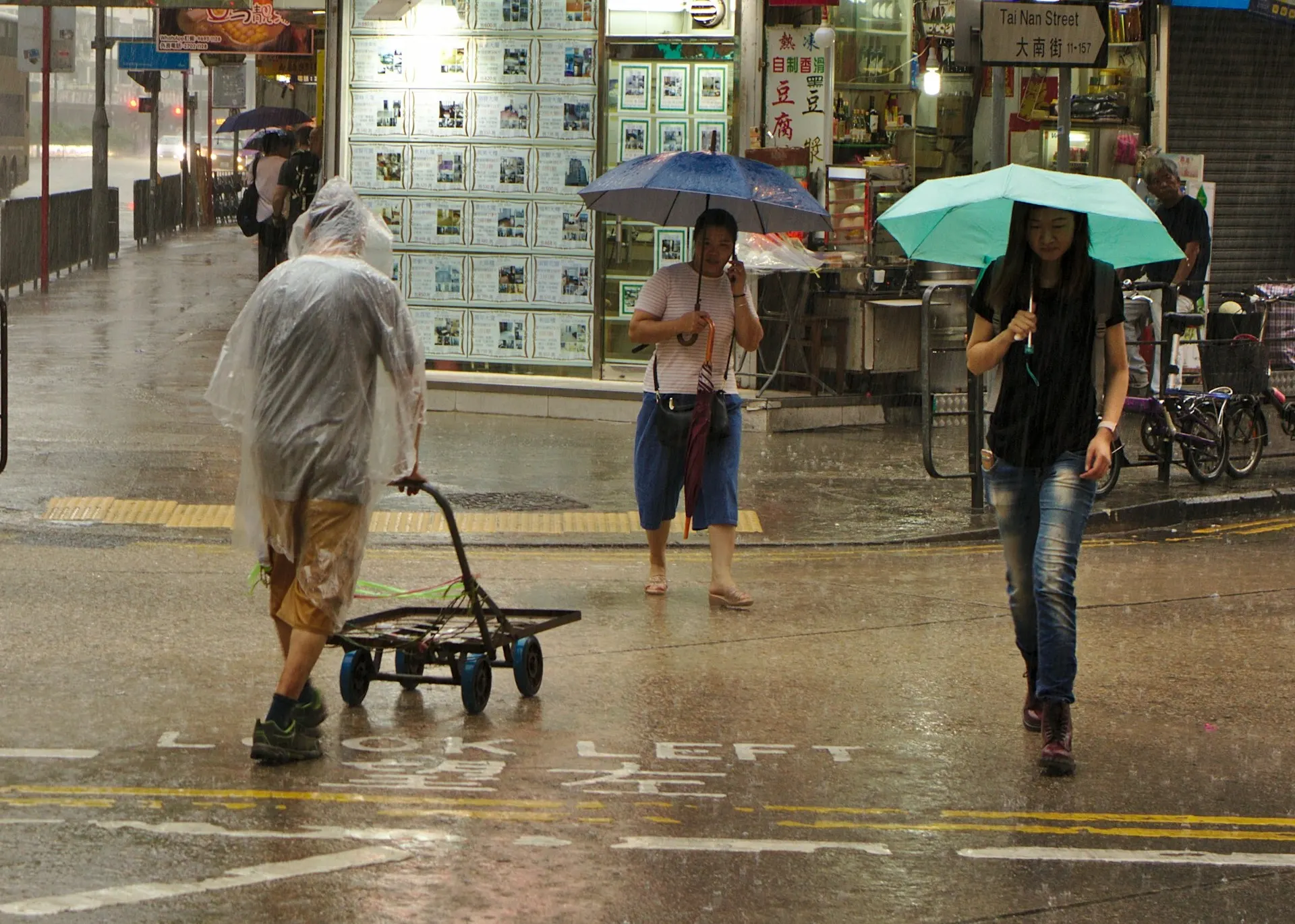
In short
- Typhoon signals are numbered 1, 3, 8, 9 and 10. Life carries on under No. 1 and mostly under No. 3; under No. 8 or above the city effectively stops: offices, schools, most shops and attractions close, buses and ferries are suspended and flights are heavily disrupted.
- Rainstorm warnings are Amber (rain over 30 mm in an hour), Red (over 50 mm) and Black (over 70 mm). Under Black, stay indoors.
- Season: tropical cyclones can affect Hong Kong from about May to November, most often July to September; heavy rain peaks from May to September.
- Install the Observatory's free MyObservatory app, keep travel insurance and leave a buffer day before long-haul flights in summer.
Why this matters for your trip
Hong Kong sits on the south China coast in the path of tropical cyclones from the western Pacific and the South China Sea. Most summers bring a few; some bring a direct hit. The Hong Kong Observatory (HKO, 香港天文台) warns the public with a long-established system of tropical cyclone warning signals and rainstorm warning signals, and the whole city, from the MTR to employers, schools and theme parks, reacts to them in predictable ways.
For a visitor the effect can range from nothing at all to a lost day and a cancelled flight. Knowing the signals turns that into a plan. In July 2026, for example, Typhoon Noul led the Observatory to raise No. 8 late on 25 July and No. 9 overnight before the storm moved away the next day; arrivals and departures that weekend were heavily disrupted.
- Authority
- Hong Kong Observatory, hko.gov.hk
- App
- MyObservatory (free, English and Chinese)
- Typhoon season
- About May–November, peak July–September
- Wettest months
- June (≈ 492 mm) and August (≈ 453 mm), 1991–2020 normals
- Emergency
- 999
Tropical cyclone warning signals
The signals describe the wind expected in Hong Kong, not the strength of the storm itself. They are displayed on TV, radio, the HKO app and website, and at MTR stations and hotel lobbies.
| Signal | Meaning | What it means for you |
|---|---|---|
| No. 1 (T1) Standby | A tropical cyclone is centred within about 800 km and may affect Hong Kong | Normal life. Watch the forecast and keep plans flexible. |
| No. 3 (T3) Strong Wind | Strong wind of 41–62 km/h expected or blowing near sea level, gusts may exceed 110 km/h | City runs; some ferries, outdoor attractions and the Ngong Ping 360 cable car may suspend; kindergartens close. Avoid beaches and the sea. |
| Pre-No. 8 Special Announcement | Issued before No. 8 to give the public time to get home | Head back to your hotel; transport becomes crowded as everyone leaves work. |
| No. 8 (T8) Gale or Storm: NE, NW, SE or SW | Gale or storm force wind of 63–117 km/h from the quarter shown, gusts may exceed 180 km/h | Shops, offices, schools and most attractions close; buses and ferries are suspended; MTR keeps underground lines running, open-air sections may stop; many flights cancelled. |
| No. 9 (T9) Increasing Gale or Storm | Gale or storm force wind increasing or expected to increase significantly | Stay indoors, away from windows. |
| No. 10 (T10) Hurricane | Hurricane force wind of 118 km/h or more, gusts may exceed 220 km/h | Stay indoors in a safe room until the signal is lowered. |
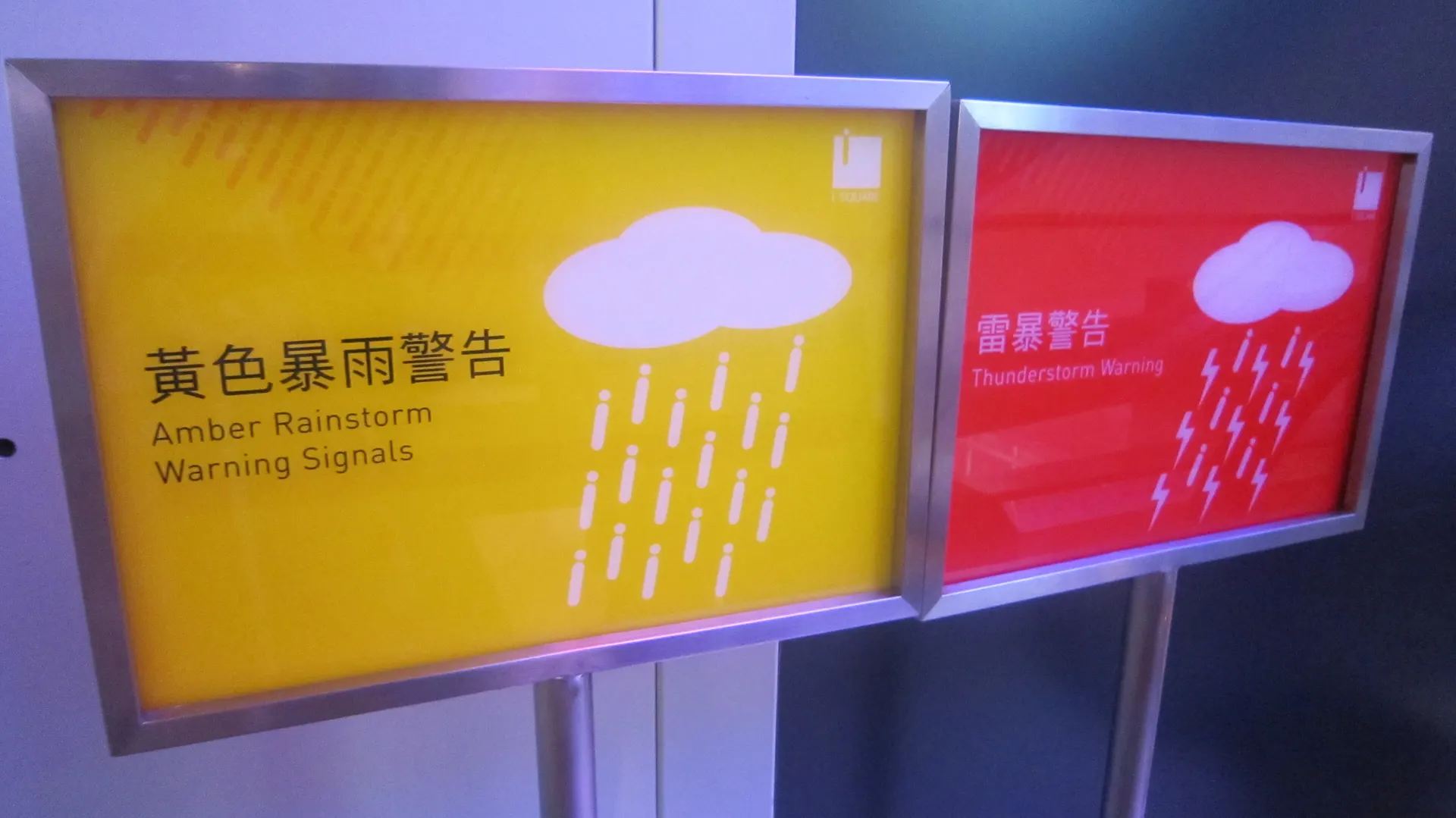
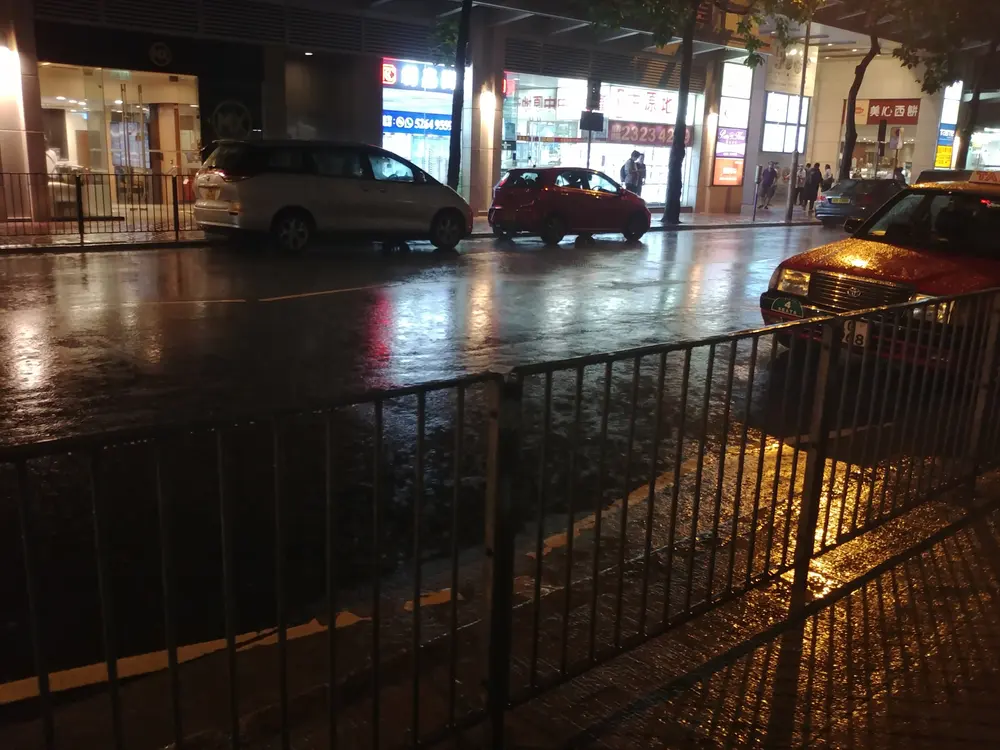
Warning signs light up across the city: here, an Amber Rainstorm Warning on a wet evening.
What closes, and what keeps running, under No. 8
No. 8 is the signal that changes everything. Typically:
- MTR: underground sections keep running at reduced frequency; open-air sections and the Airport Express may be cut back or suspended if wind speeds become too high.
- Buses, minibuses, trams, the Star Ferry and outlying-island ferries are gradually withdrawn before or soon after No. 8 is hoisted; Macau ferries stop. Taxis are scarce and may charge more by agreement.
- Flights: airlines cancel or delay many flights at Hong Kong International Airport during and after the storm; check your airline's app and don't go to the airport without a confirmed departure.
- Attractions: Hong Kong Disneyland, Ocean Park, the Peak Tram, Ngong Ping 360, museums, beaches and country-park facilities close.
- Shops and restaurants: most close; convenience stores, some supermarkets, hotel restaurants and room service usually keep going.
When No. 8 is lowered, the city restarts fast, but the Government may announce 'extreme conditions' after a severe storm (as after Mangkhut in 2018), asking workers to stay home for a couple of hours while debris is cleared and transport resumes. Allow for a slow first morning after a big storm.
Rainstorm warnings: Amber, Red and Black
Separately from typhoons, the Observatory issues rainstorm warnings when heavy rain falls or is expected. Summer downpours from troughs and the monsoon can be as disruptive as a typhoon. On 7–8 September 2023 the Observatory headquarters recorded 158.1 mm of rain in one hour, the highest hourly total since records began in 1884, and the Black Rainstorm warning stayed up for more than 16 hours.
| Warning | Rainfall | What to do |
|---|---|---|
| Amber | Heavy rain over 30 mm in an hour, widespread, and likely to continue | Normal life with caution; expect flooding in low-lying areas, avoid streams and hiking trails. |
| Red | Heavy rain over 50 mm in an hour | Avoid unnecessary travel; some schools close; outdoor activities stop. |
| Black | Very heavy rain over 70 mm in an hour | Stay indoors or take shelter; schools and many workplaces close; serious flooding and landslides possible. |
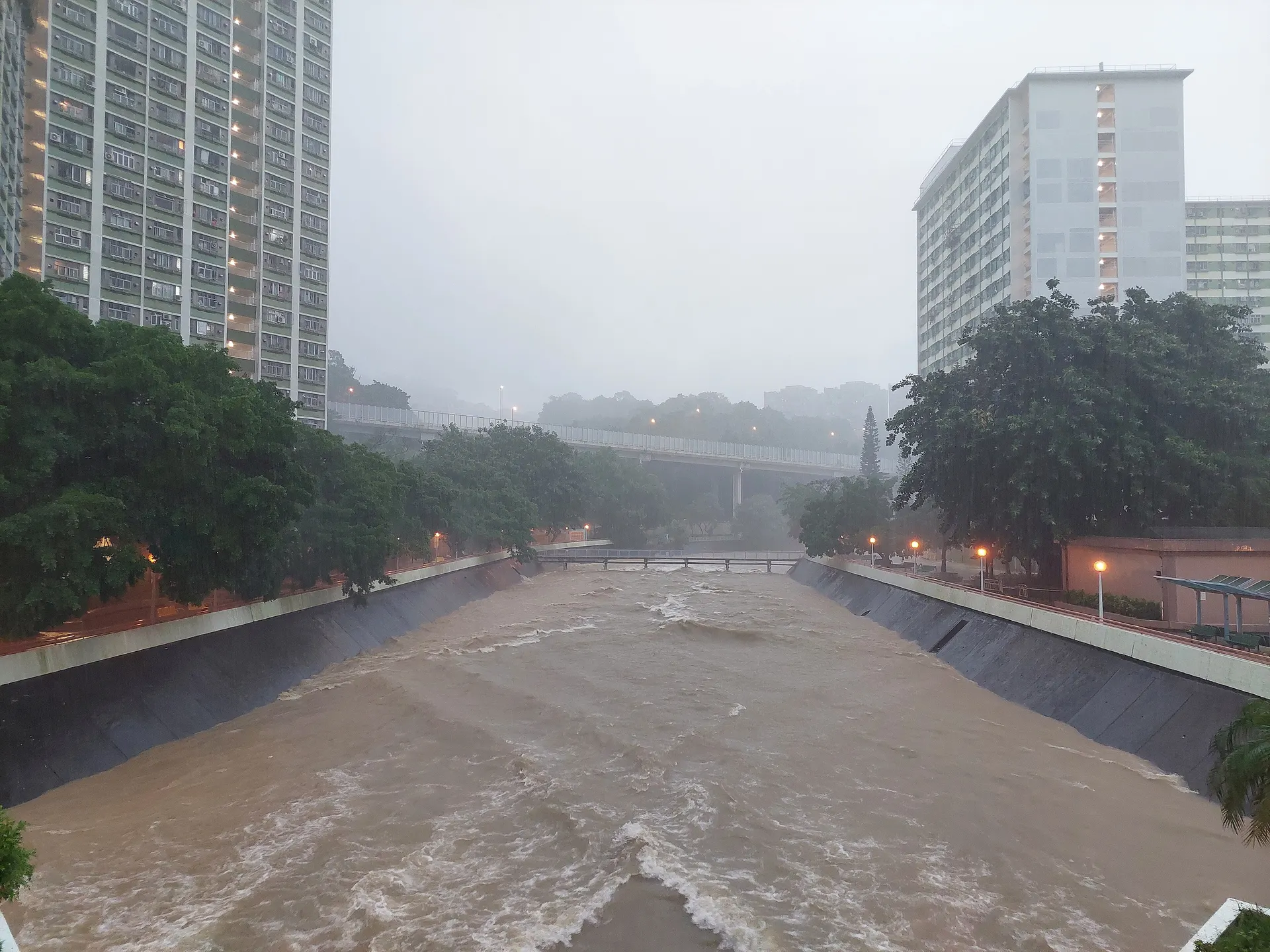
The Shing Mun River in Sha Tin in flood during the record Black Rainstorm of 8 September 2023.
Other warnings worth knowing
- Thunderstorm Warning: lightning expected; leave beaches, swimming pools and exposed ridges.
- Landslip Warning: issued with heavy rain; keep away from steep slopes and stay off hiking trails.
- Special Announcement on Flooding in the Northern New Territories: avoid low-lying areas near the border and rivers.
- Very Hot Weather Warning: frequent from June to September; drink plenty, avoid midday hikes and look out for heat stroke symptoms.
- Cold Weather Warning: occasional in January and February, when temperatures can dip below 12°C; buildings rarely have heating.
- Strong Monsoon Signal: strong winds from the winter or summer monsoon; rough seas for ferries and boats.
- Red and Yellow Fire Danger Warnings: dry-season fire risk in the country parks; no open fires.
When is typhoon season?
Tropical cyclones can affect Hong Kong in any month from about May to November, but the most likely months are July, August and September. The rainy season, with the highest monthly rainfall, runs from May to September (June is the wettest month in the 1991–2020 normals). October and November are usually the calmest, driest and clearest months, which is why they are the most popular time to visit. See weather for the month-by-month picture.
Visiting in summer is still worthwhile: most days are simply hot, humid and showery, and hotel rates are lower outside major holidays. Just build in flexibility.
How to plan around the weather
- Install MyObservatory and check the 9-day forecast and any tropical cyclone track before each day.
- Buy travel insurance that covers weather delays and cancellations, and read what it covers before the season.
- Book flexible tickets for Ngong Ping 360, harbour cruises and outdoor tours, or keep them to the start of your trip so you can move them.
- Leave a buffer day between a summer stay in Hong Kong and a long-haul flight or cruise departure.
- Have an indoor plan ready: museums, malls, dim sum and spas (see rainy day ideas).
- If a No. 8 signal is likely on your departure day, contact your airline early: rebooking queues are long once the signal is up.
Frequently asked questions
What does Typhoon Signal No. 8 mean in Hong Kong?
Gale or storm force winds of 63–117 km/h are expected or blowing in Hong Kong, with gusts that may exceed 180 km/h. Offices, schools, most shops and attractions close, buses and ferries are suspended, and many flights are cancelled. Stay indoors.
Does the MTR run during Typhoon Signal No. 8?
Usually yes on underground sections, at reduced frequency. Open-air sections and the Airport Express may be reduced or suspended if winds become too strong. Buses and ferries are normally suspended.
What is a Black Rainstorm in Hong Kong?
The highest rainstorm warning: very heavy rain of more than 70 mm in an hour has fallen or is expected. Stay indoors or take shelter; flooding and landslides are possible.
When is typhoon season in Hong Kong?
Roughly May to November, most often July to September. October and November are usually calmer and drier.
Are Disneyland and Ocean Park open during a typhoon?
Both close under Typhoon Signal No. 8 or above, and may adjust operations under other warnings. Check the parks' websites on the day.
Will my flight be cancelled if a typhoon hits Hong Kong?
Often, during a No. 8 signal or higher. Airlines publish waivers and rebooking options; check your airline's app before going to the airport.
Sources and official information
Facts were checked against these official sources in November 2026. Opening hours, fares and timetables change, so confirm before you go.
HongKongTravel.com is an independent guide, not the official site of the Hong Kong Tourism Board, the HKSAR Government or any operator. Some links are affiliate links: tours go to {tours} and hotels go to {hotels}, and we may earn a commission at no extra cost to you.