In short
- Cheung Chau is small enough to see on foot in a day: the sights lie along one loop from the ferry pier.
- Pak Tai Temple (1783) and the Praya are in the north; Tung Wan and Kwun Yam Wan beaches on the east side; the Mini Great Wall and Cheung Po Tsai Cave in the hilly south.
- Allow 4–6 hours including eating; add a swim in summer.
- Kaito boats from the main pier to Sai Wan save the walk back from the cave.
The Praya and the harbour
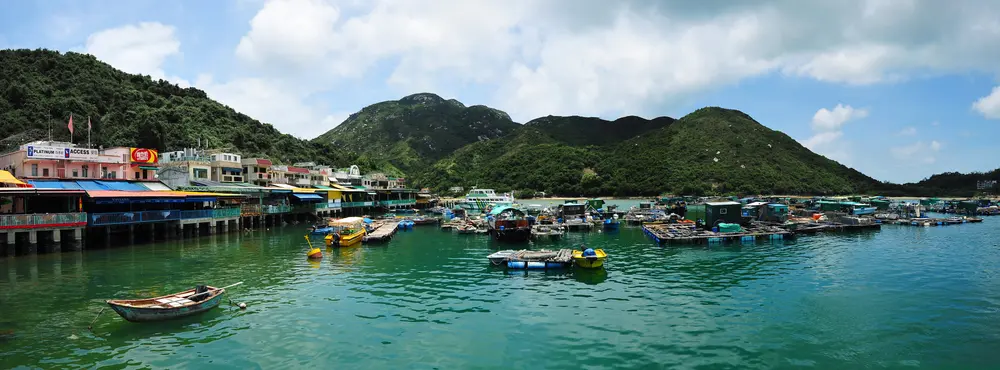
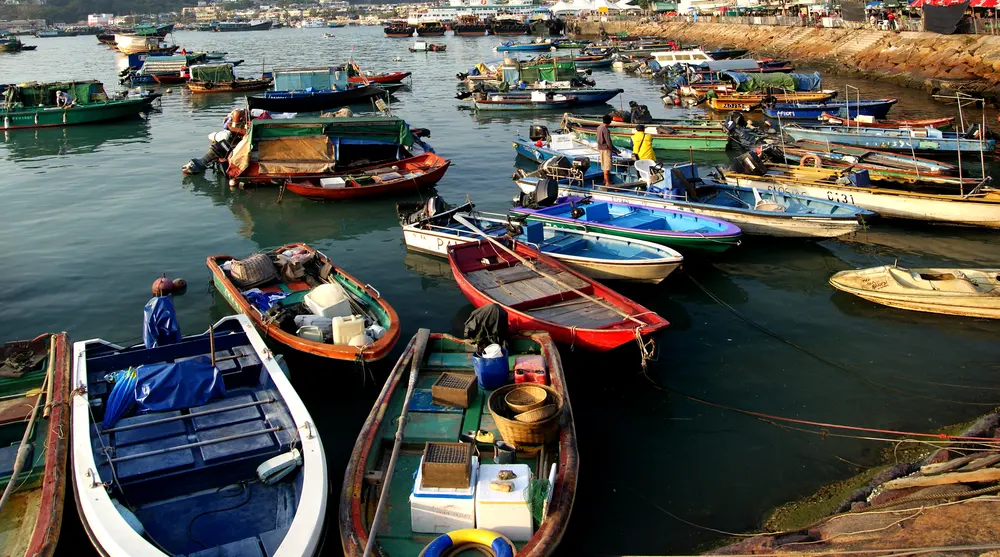
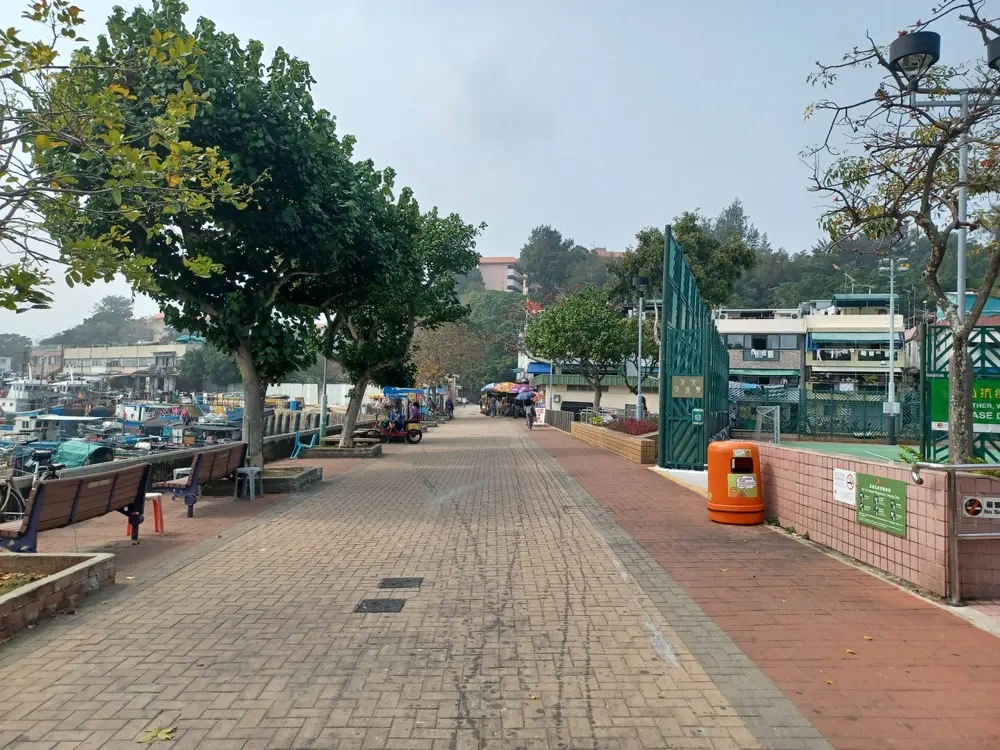
Step off the ferry and you are on Praya Street (海傍街) and its continuation, Pak She Praya Road: a working waterfront facing Cheung Chau Wan, the island's typhoon shelter. Fishing boats raft up several deep, and you can watch catches being landed in the morning. Seafood restaurants line the northern stretch, with tanks of live fish on the pavement. Bicycle-hire shops cluster near the pier.
Walk north for about eight minutes to reach Pak Tai Temple. On the way, small lanes lead inland to the market and the old shophouse streets.
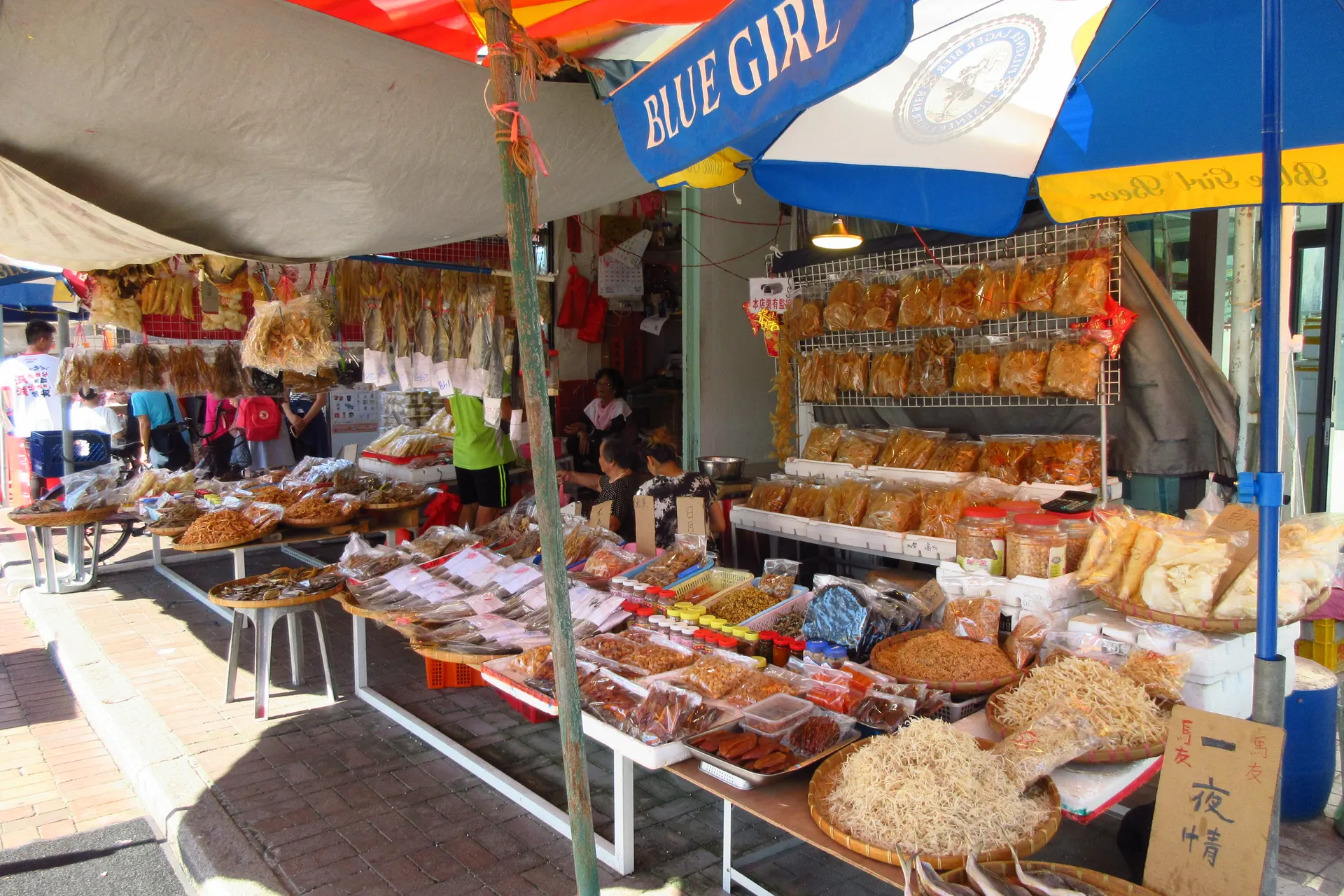
Shops and restaurants along the Praya
Book tours in Cheung ChauLive times, prices and cancellation terms on GetYourGuide.
Check availabilityPak Tai Temple (Yuk Hui Temple)
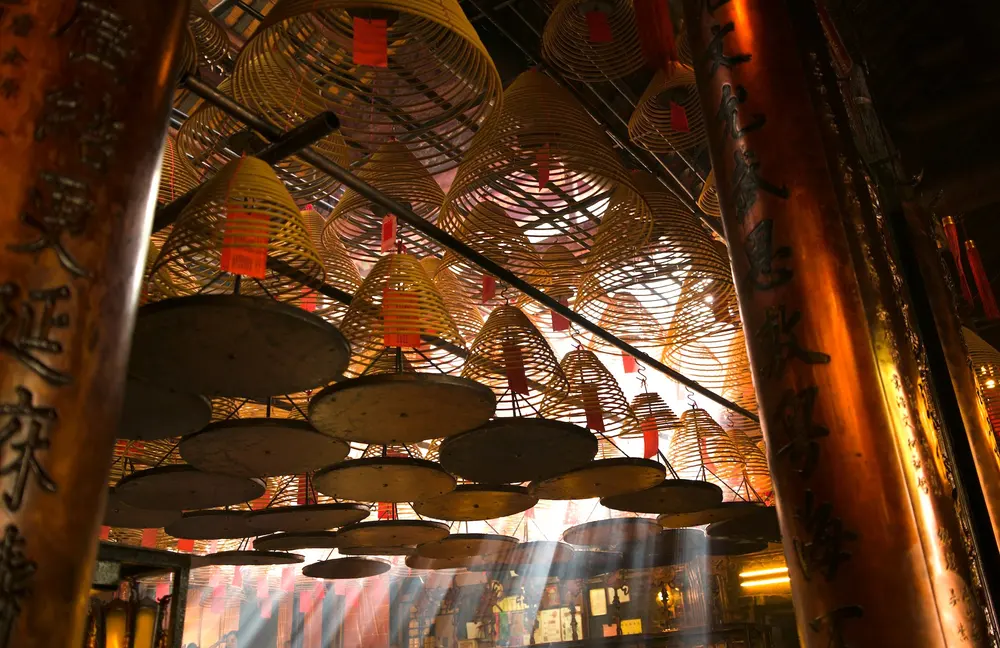
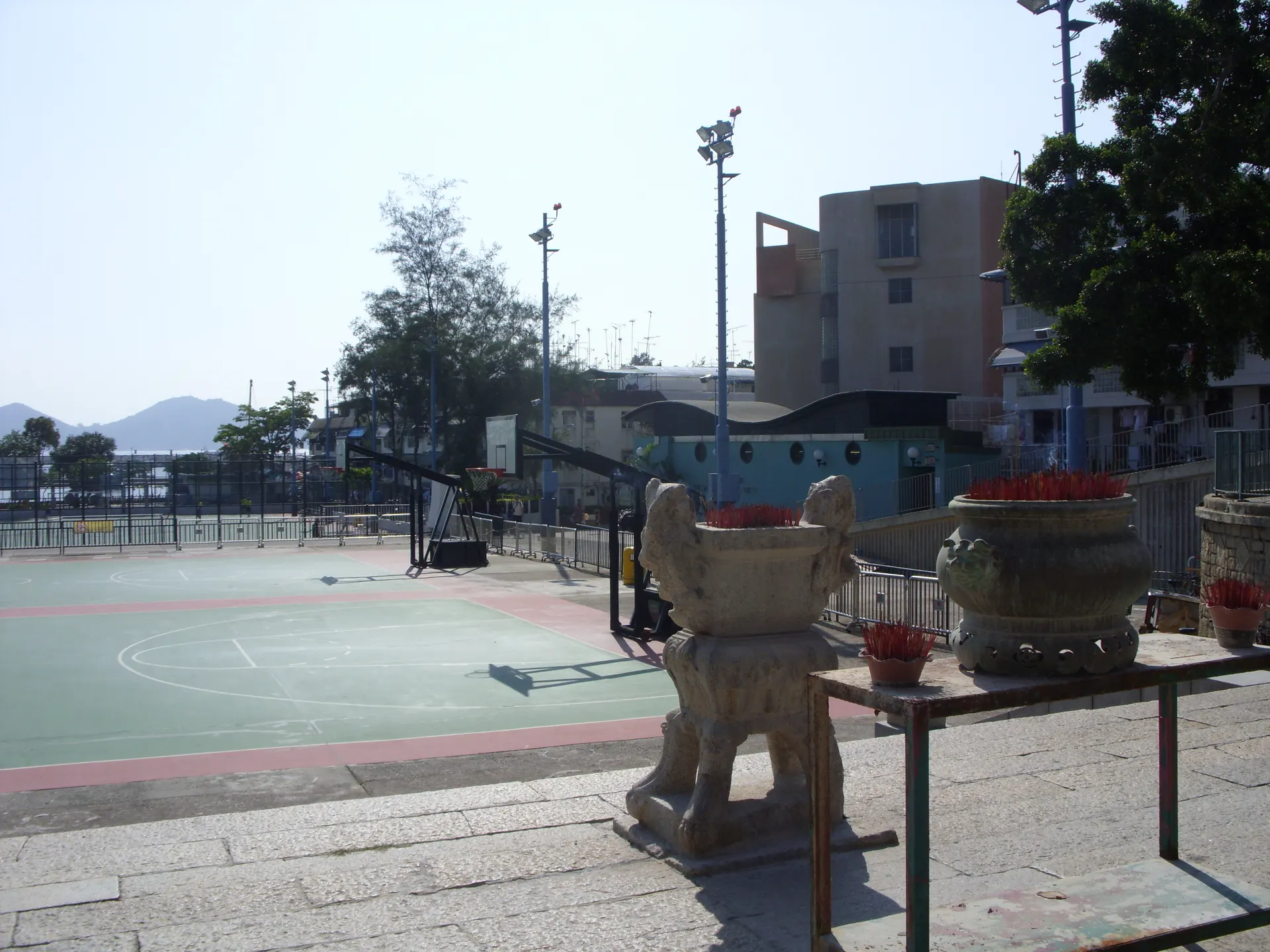
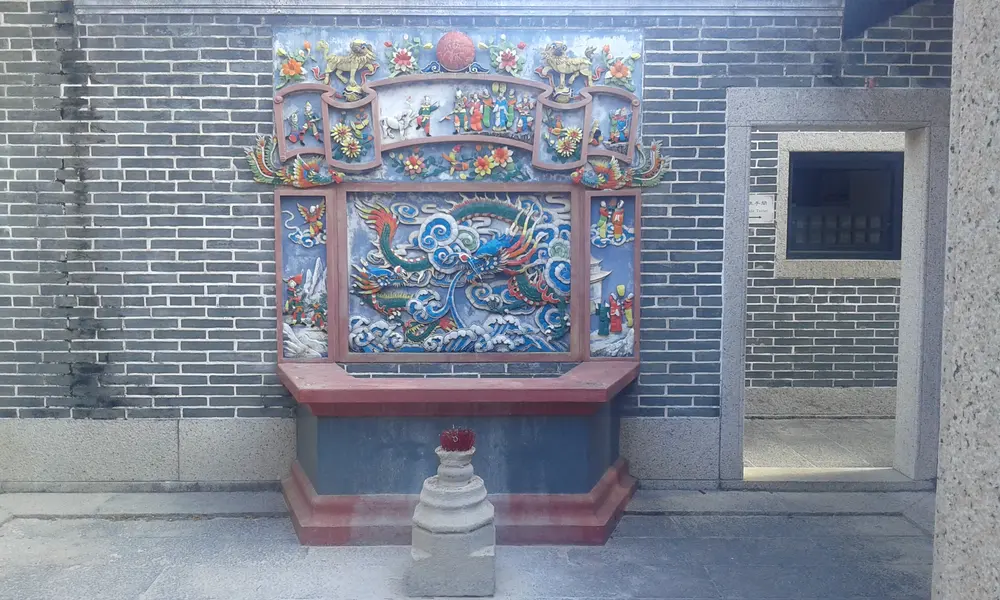
The Pak Tai Temple (北帝廟), formally Yuk Hui Temple (玉虛宮), was built in 1783 by settlers from Huizhou and is dedicated to Pak Tai, the Taoist Emperor of the North and a protector of seafarers. It is a Grade I historic building. Inside, look for the carved stone dragon and tiger reliefs and the old iron sword said to have been found by fishermen. The temple forecourt and the playground in front of it host the Bun Festival every spring, when the bun towers stand beside the temple and the bun-scrambling final takes place on the football pitch.
The temple is active: incense smoke, offerings and fortune-telling sticks are part of daily life. Entry is free; be discreet with photography inside.
- Chinese name
- 玉虛宮 (北帝廟) · juk6 heoi1 gung1
- Built
- 1783
- Status
- Grade I historic building
- Location
- Pak She Fourth Lane, 8 min walk north of the ferry pier
- Entry
- Free
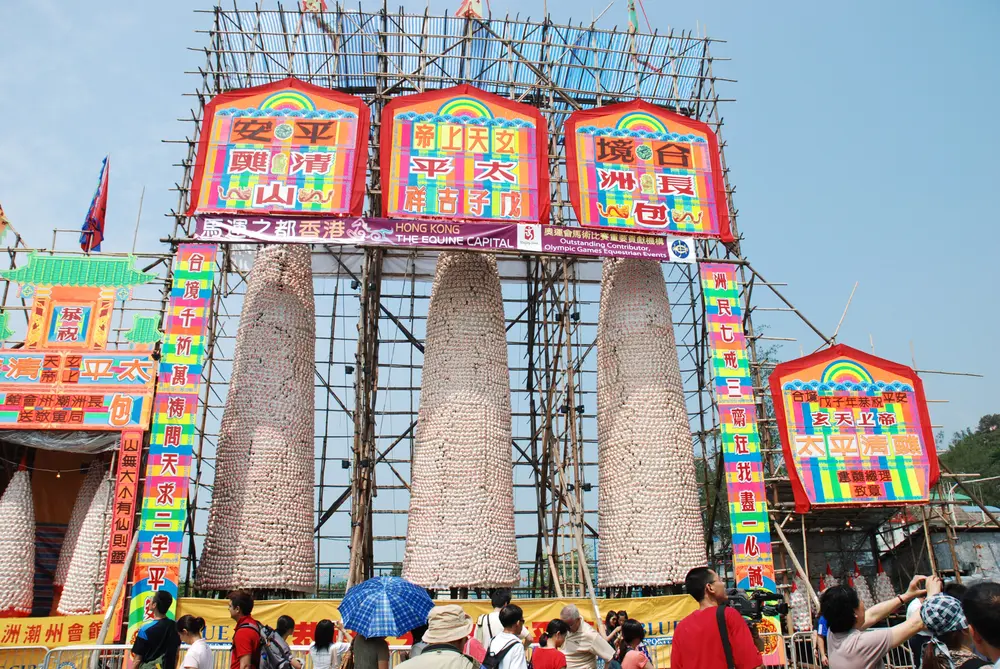
The Bun Festival in May
If your dates allow, plan around the Cheung Chau Bun Festival. In 2027 it is expected from 10 to 14 May, with the Piu Sik parade on the afternoon of 13 May (Buddha's Birthday) and the bun-scrambling final that night. During the festival the island keeps a vegetarian tradition, even at chain restaurants, and Ping On buns are sold everywhere. The festival and its history are covered on the Cheung Chau overview and in our events calendar.
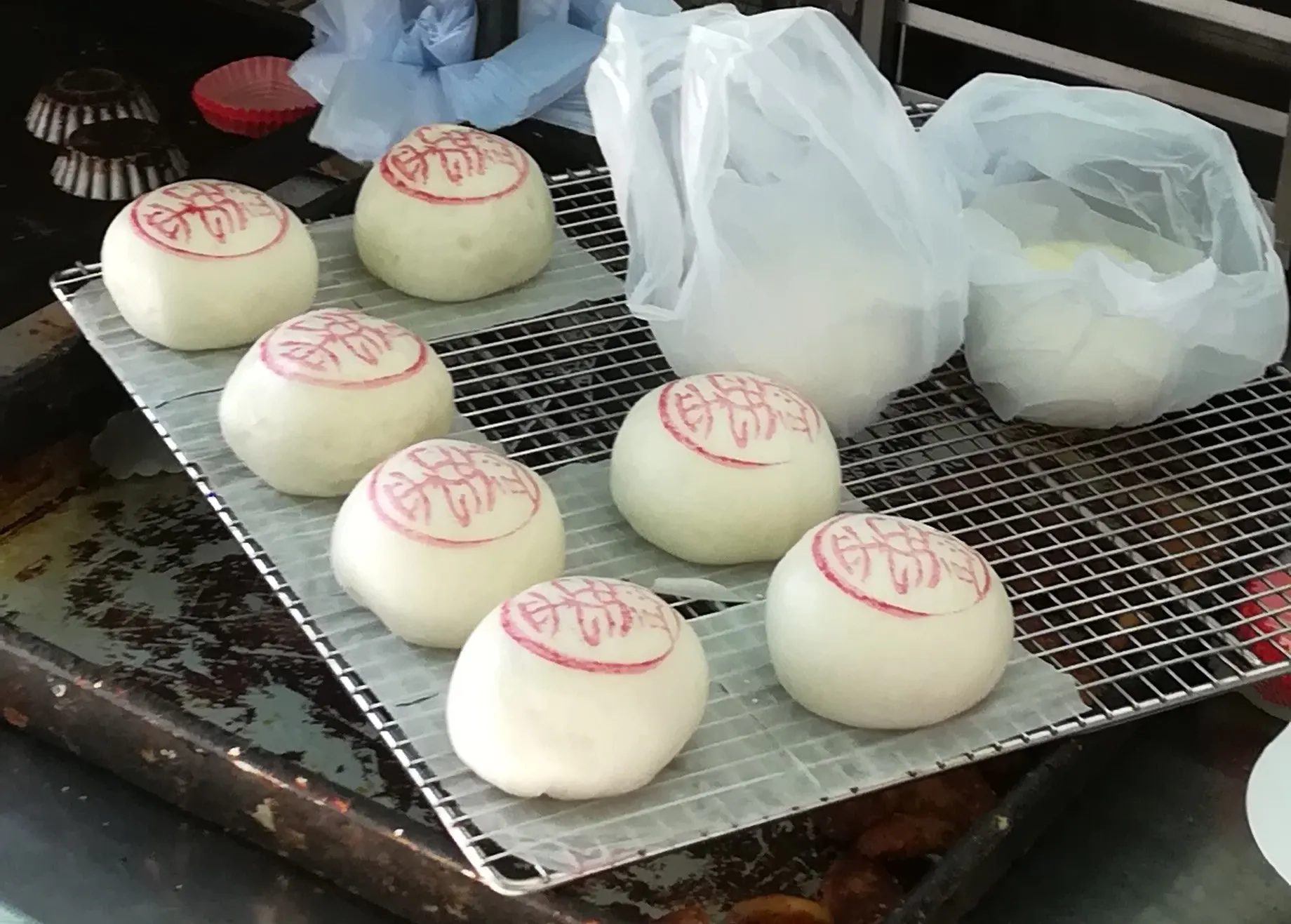
Ping On buns, sold all year but everywhere during the festival
Tung Wan Beach and Kwun Yam Wan
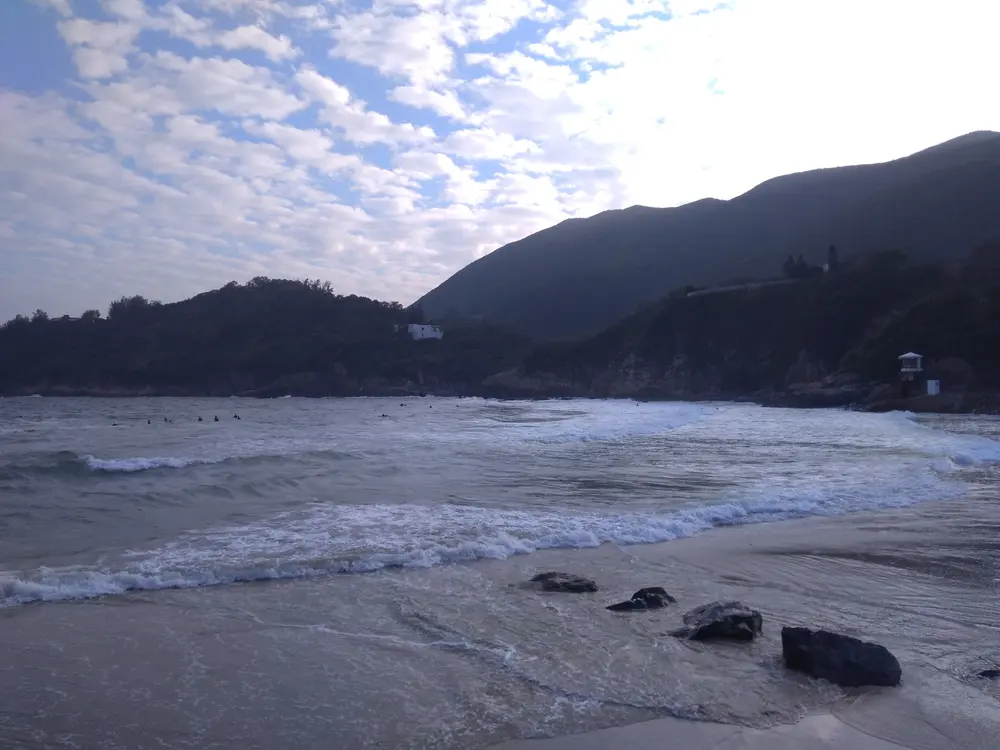
Tung Wan Beach (東灣泳灘) is a broad curve of sand on the east side of the isthmus, ten minutes' walk from the pier. It is a gazetted beach with lifeguards, changing rooms and showers in the swimming season, and the Warwick Hotel sits at its southern end. Cafés and snack shops line Tung Wan Road behind it.
A few minutes south, Kwun Yam Wan (觀音灣) is smaller and quieter, with a windsurfing centre. It is linked with Lee Lai-shan (李麗珊), the Cheung Chau windsurfer who won Hong Kong's first Olympic gold medal at Atlanta in 1996. A small Kwun Yam (Guanyin) temple stands above the beach.
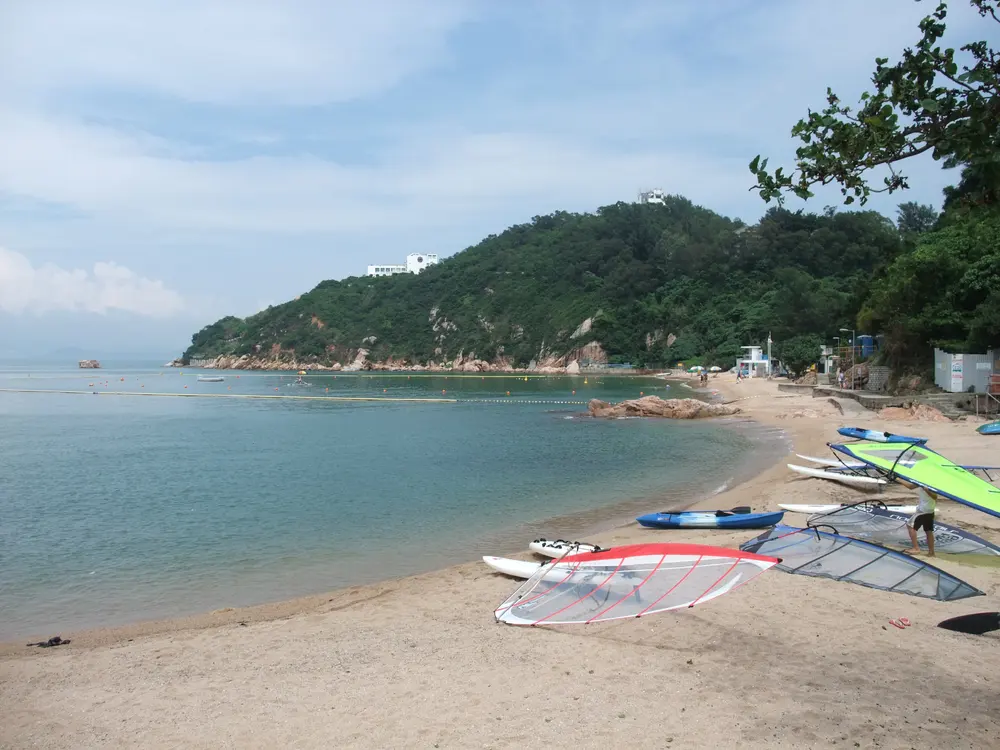
Mini Great Wall and the rock trail
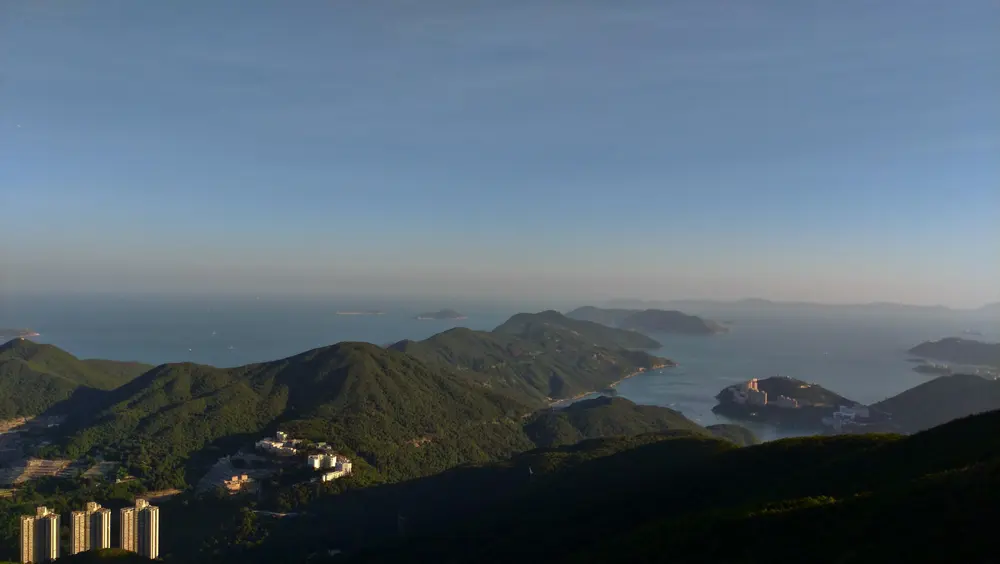
From Kwun Yam Wan a signposted path climbs onto the Mini Great Wall (小長城), a stone walkway with crenellated railings built in 1997 along the cliffs of the southern lobe. It is about 850 m long and passes a series of granite boulders weathered into shapes with names such as Human Head Rock, Loaf Rock and Tortoise Rock. The views across to Lantau and the open sea are the reason to come; the "wall" itself is modern.
The path is uneven in places and exposed to the sun. Allow 45–60 minutes at a relaxed pace, wear proper shoes and carry water. It joins Peak Road, which leads west towards Sai Wan and Cheung Po Tsai Cave or back north to the village.
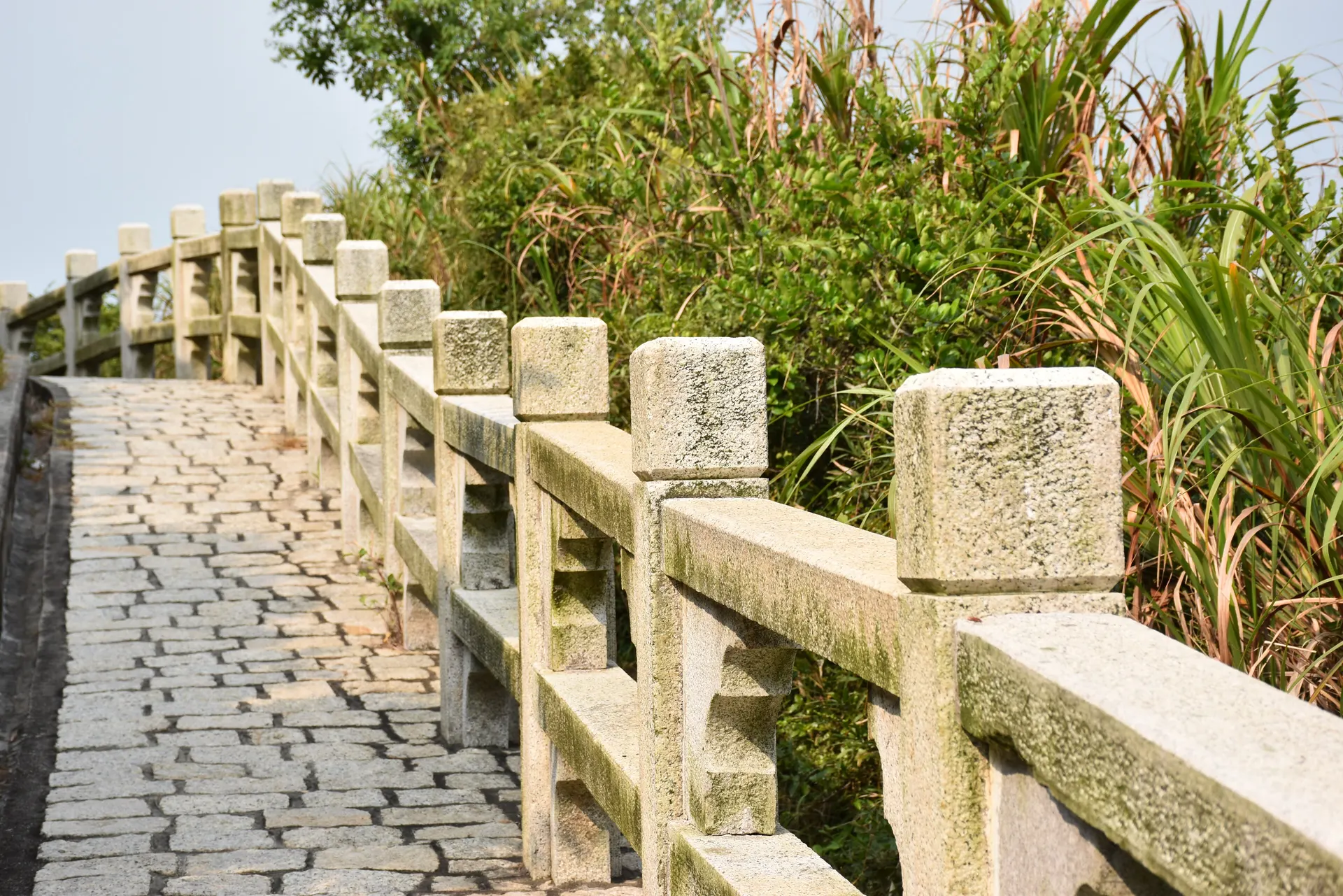
The Mini Great Wall path above the southern coast
Cheung Po Tsai Cave
On the south-west tip of the island, near Sai Wan (西灣), a narrow fissure in the rocks is known as Cheung Po Tsai Cave (張保仔洞). Legend says the pirate Cheung Po Tsai, who commanded a large fleet in the Pearl River estuary in the early 19th century before surrendering to the Qing authorities, hid treasure here. Nothing has ever been found, and a cave of the same name exists on Lamma too.
You squeeze through a short, dark passage (a torch or phone light helps) and climb out at the top; it takes a few minutes and is not suitable for anyone uncomfortable in tight spaces. Queues form on weekends. From Sai Wan, kaito boats run back to the main ferry pier area, saving a 30-minute walk.
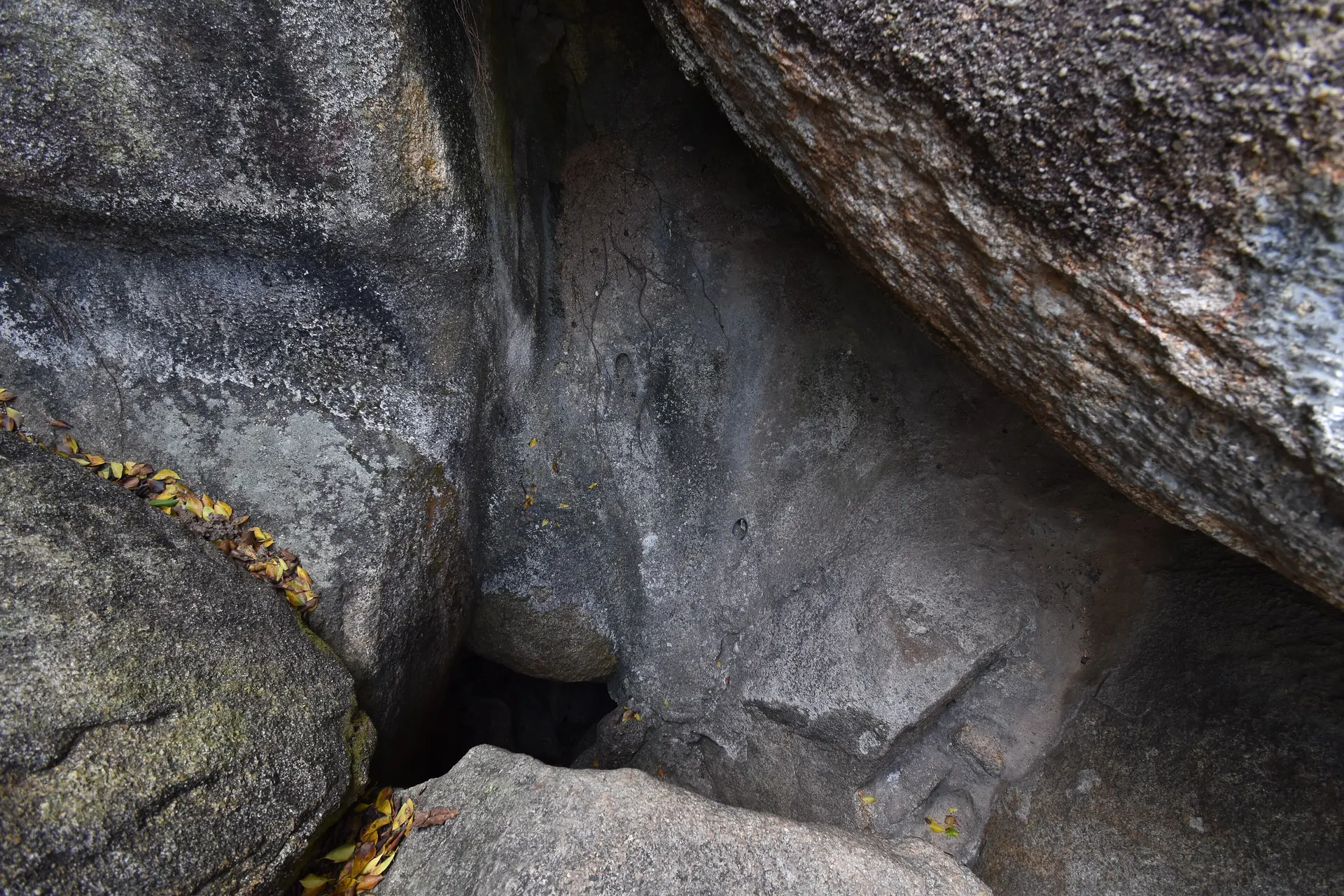
The rocky entrance to Cheung Po Tsai Cave
Other things to see
- Tin Hau temples – several small temples to the sea goddess stand around the island, including one at Sai Wan near the kaito pier.
- The market and lanes – San Hing Street (新興街) and Pak She Street (北社街) are lined with bakeries, herbalists and snack shops.
- Cheung Chau Peak Road – a quiet road over the southern hill with a cemetery, old villas and sea views.
- Island cycling – hire a bike near the pier for the flat isthmus; much of the south is steep and stepped.
- Sunset on the west side – the harbour faces west, so evenings on the Praya are bright and golden.
A suggested loop
- Ferry pier → north along the Praya (10 min).
- Pak Tai Temple (20–30 min).
- Back south through Pak She Street and San Hing Street for snacks (45 min).
- Across the isthmus to Tung Wan Beach (10 min); swim or rest.
- South to Kwun Yam Wan and onto the Mini Great Wall (1 h).
- Peak Road west to Sai Wan and Cheung Po Tsai Cave (40 min).
- Kaito from Sai Wan back to the main pier (a few minutes); dinner on the Praya.
Book a guided visit
One listing combines a half-day Cheung Chau heritage walk with Central; others are hands-on workshops on the island. Guided Lamma tours are the nearest alternative.
Cheung Chau and Central half-day heritage tour
A guided half day combining Cheung Chau's harbour and temples with Central, as the listing describes.
Check availabilityBook via Klook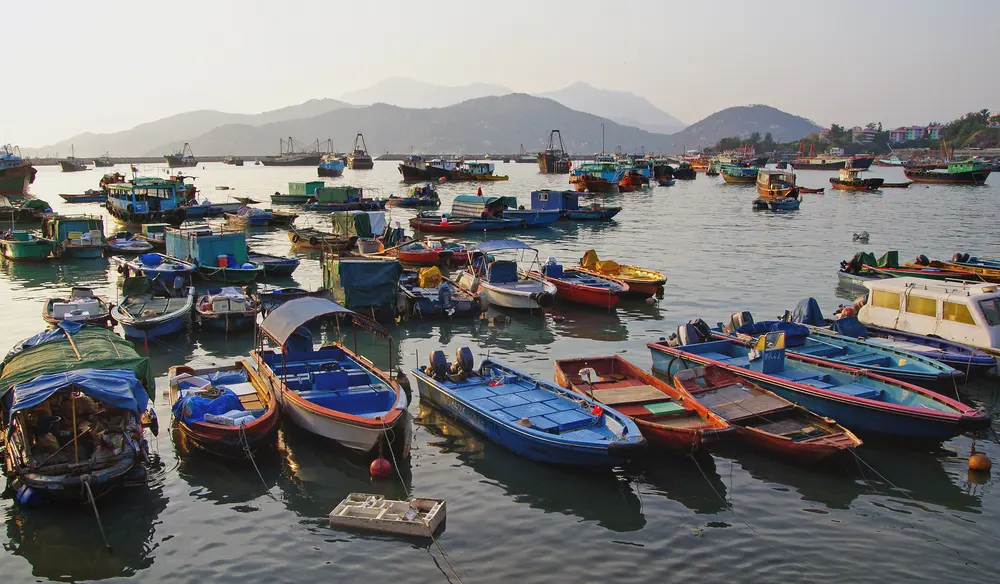
Fishing-net and leather bag workshop on Cheung Chau
Make a small leather bag with woven fishing-net details in an island studio.
Check availabilityBook via Klook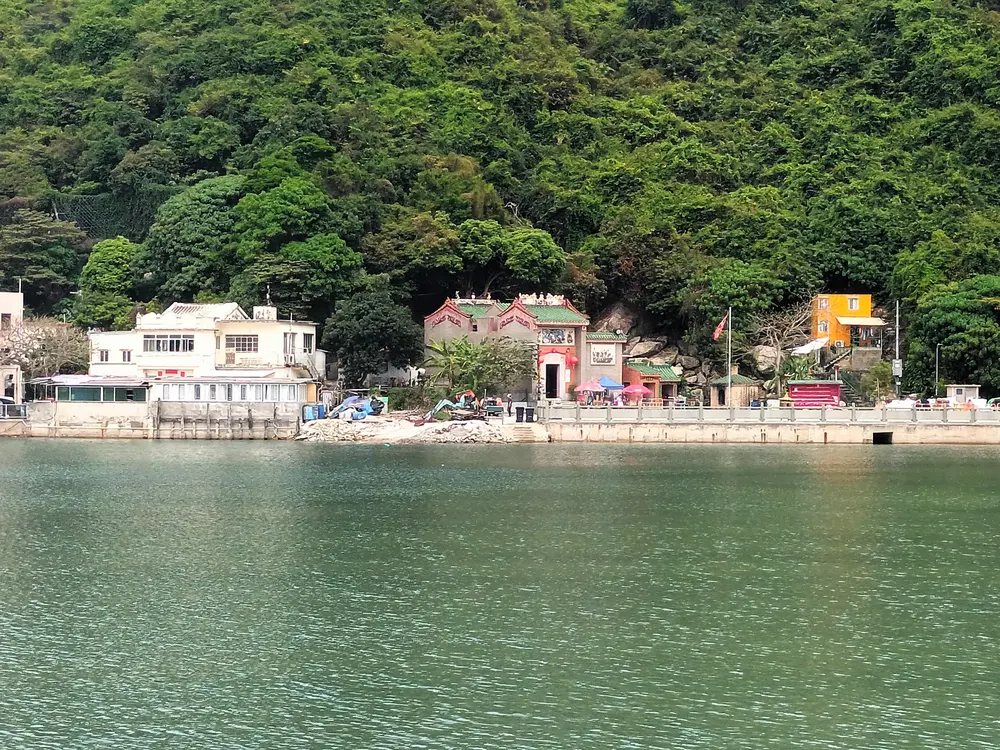
Lamma Island day tour
A guided day on Lamma Island from Hong Kong, as the listing describes.
Check availabilityBook via GetYourGuideTour listings are on Klook. Prices, times and cancellation terms are shown live on each listing and can change; HongKongTravel.com may earn a commission at no extra cost to you.
Frequently asked questions
What is Cheung Chau famous for?
The Bun Festival (Cheung Chau Jiao), with its bun towers, Piu Sik parade and midnight bun-scrambling race; also its fishing harbour, Pak Tai Temple, beaches and snacks such as fish balls and Ping On buns.
Is Cheung Po Tsai Cave worth it?
It is a short, fun scramble through a narrow rock passage rather than a big sight. Combine it with the Mini Great Wall walk and the kaito ride back from Sai Wan.
How long is the Mini Great Wall walk?
The path itself is about 850 m; allow 45–60 minutes including stops at the rock formations.
Is Pak Tai Temple free?
Yes, entry is free. It is an active temple – keep voices low and avoid photographing worshippers without permission.
Can you cycle around Cheung Chau?
You can cycle on the flat central isthmus and along some paths; the southern and northern hills are steep and stepped, so most visitors walk.
Is there a beach on Cheung Chau?
Two gazetted beaches: Tung Wan, the largest, and Kwun Yam Wan, a short walk south.
Sources and official information
Facts were checked against these official sources in November 2026. Opening hours, fares and timetables change, so confirm before you go.
HongKongTravel.com is an independent guide, not the official site of the Hong Kong Tourism Board, the HKSAR Government or any operator. Some links are affiliate links: tours go to {tours} and hotels go to {hotels}, and we may earn a commission at no extra cost to you.